
POTS in sport: build exercise around posture, heat and symptom response
POTS can make upright exercise difficult. A gradual, individualized plan can start with supported work while preserving diagnosis, safety and recovery.
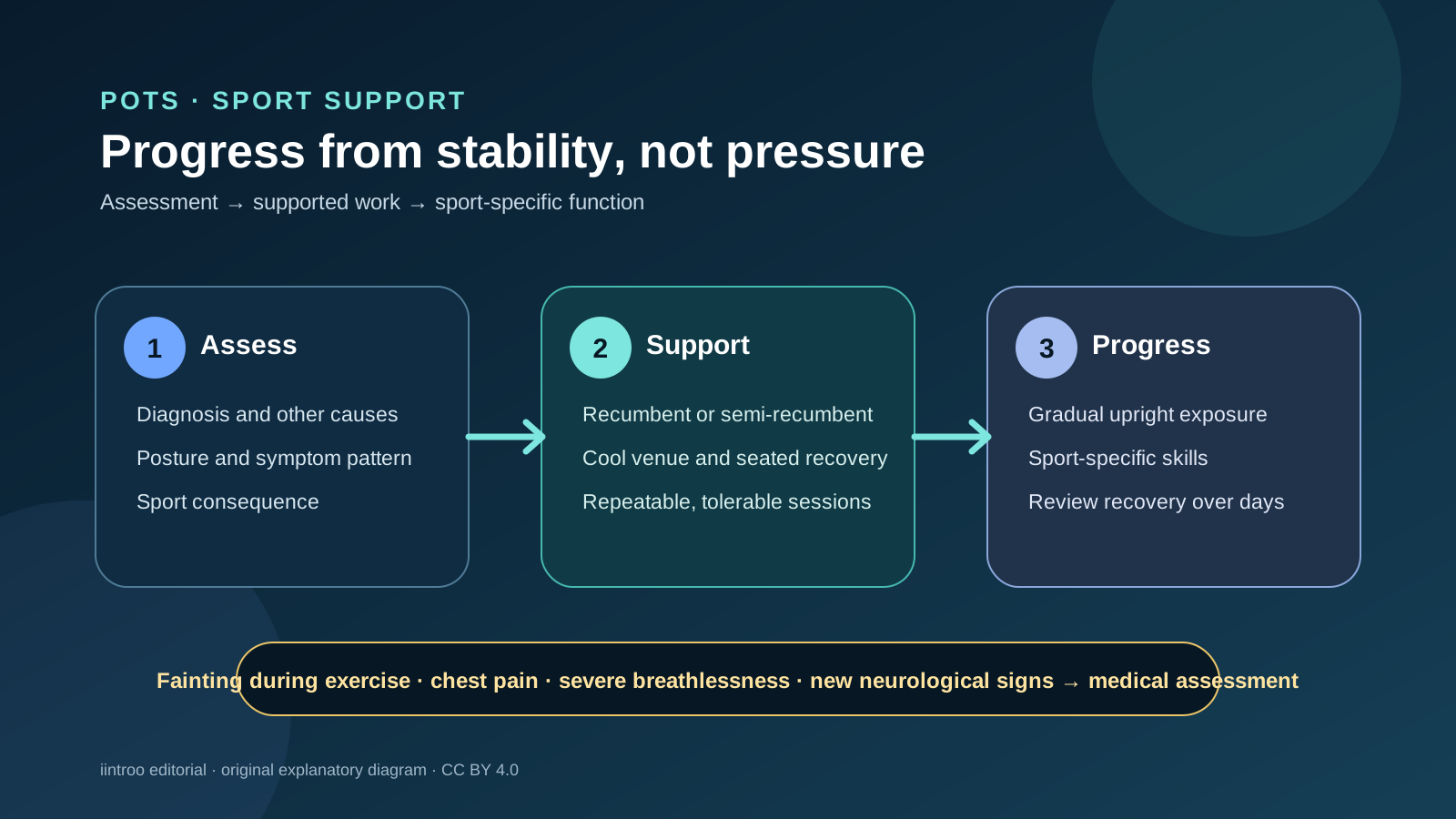
Key points
- POTS is a clinical syndrome, not simply a high heart-rate reading from a wearable or one difficult training session.
- Recumbent or semi-recumbent exercise can reduce the initial upright challenge, but progression should be individualized and monitored.
- Fainting during exercise, chest pain, severe breathlessness or new neurological symptoms needs medical assessment rather than a tougher session.
Confirm the problem before building a training solution
This guide is for athletes with diagnosed or suspected postural orthostatic tachycardia syndrome, and for coaches working with the athlete’s permission. POTS is characterized by orthostatic symptoms together with an excessive sustained rise in heart rate after standing, without the blood-pressure fall that defines orthostatic hypotension. Criteria differ by age, and diagnosis requires history, examination and exclusion of other explanations. A watch alert, poor race, dehydration episode or fast pulse alone cannot establish POTS.
Symptoms may include light-headedness, palpitations, fatigue, cognitive difficulty, exercise intolerance and near-fainting, but people vary. Anaemia, infection, medication effects, endocrine disease, arrhythmia and other conditions can overlap. The clinical team should identify the athlete’s baseline, likely triggers and any restrictions before a programme is used as treatment. Fainting during exercise, chest pain, severe or unexplained breathlessness, a sustained irregular rhythm or new neurological symptoms warrants prompt medical assessment.
Begin where circulation and symptoms allow useful work
Exercise reviews commonly begin with horizontal or semi-recumbent modes such as a recumbent cycle, rowing ergometer or swimming, then add upright work as tolerance develops. This can reduce the early gravitational challenge and help rebuild aerobic and strength capacity. The principle is not a fixed internet calendar: starting mode, duration, intensity, rest and progression should reflect symptom severity, time away from training and other diagnoses.
Recent reviews find that structured training can improve fitness and some haemodynamic or symptom outcomes for some people. The literature is small, programmes vary, completion can be difficult, and participants with severe symptoms are often underrepresented. Exercise is therefore a useful component of care rather than proof that POTS is deconditioning, a guaranteed cure or a test of effort. A flare after an over-ambitious start is information to review, not a character judgement.
Plan for heat, fluids and the sporting environment
Heat, prolonged standing, illness and inadequate fluid intake can worsen orthostatic symptoms. Coaches can reduce avoidable exposure by choosing cooler times, providing shade and seated recovery, shortening standing briefings and making fluids accessible. Transition gradually after floor-based work, and avoid leaving a symptomatic athlete alone near water, traffic, heights or moving equipment. A venue plan should identify who can help and when emergency care is needed.
Some clinical plans include increased fluid, sodium or compression, but these are not universal sport prescriptions. Kidney, heart or blood-pressure conditions and medicines can change what is safe. Do not copy a salt target, use electrolyte products as treatment or change prescribed medicine without the treating clinician. During heat acclimation, travel or illness, reassess the plan instead of assuming the athlete’s usual strategy will transfer unchanged.
Progress by repeatable function, not one heart-rate number
Track posture, symptoms, session type, recovery and function across several days. Heart rate can add context but is affected by device error, temperature, stress, medication and training status. Useful milestones include tolerating a planned supported session, recovering predictably and gradually completing more upright sport-specific work without a concerning symptom pattern. A clinician or physiotherapist can adapt the programme if progress stalls or symptoms escalate.
Research has not established one return-to-competition threshold for POTS or shown that every athlete benefits from the same protocol. Collision, open-water, motor, climbing and endurance settings carry different consequences if presyncope occurs. Revisit supervision and rescue access whenever the venue, season or symptom pattern changes. This page provides general education, not a diagnosis, sodium or fluid dose, medication advice or personal clearance. Participation decisions should combine clinical review, the athlete’s goals and the actual risks of the sport.