
Primary ovarian insufficiency in athletes: missed periods need diagnosis beyond training load
Missed periods in an athlete are not automatically REDs. Primary ovarian insufficiency needs clinical testing, long-term health care and sensitive support.
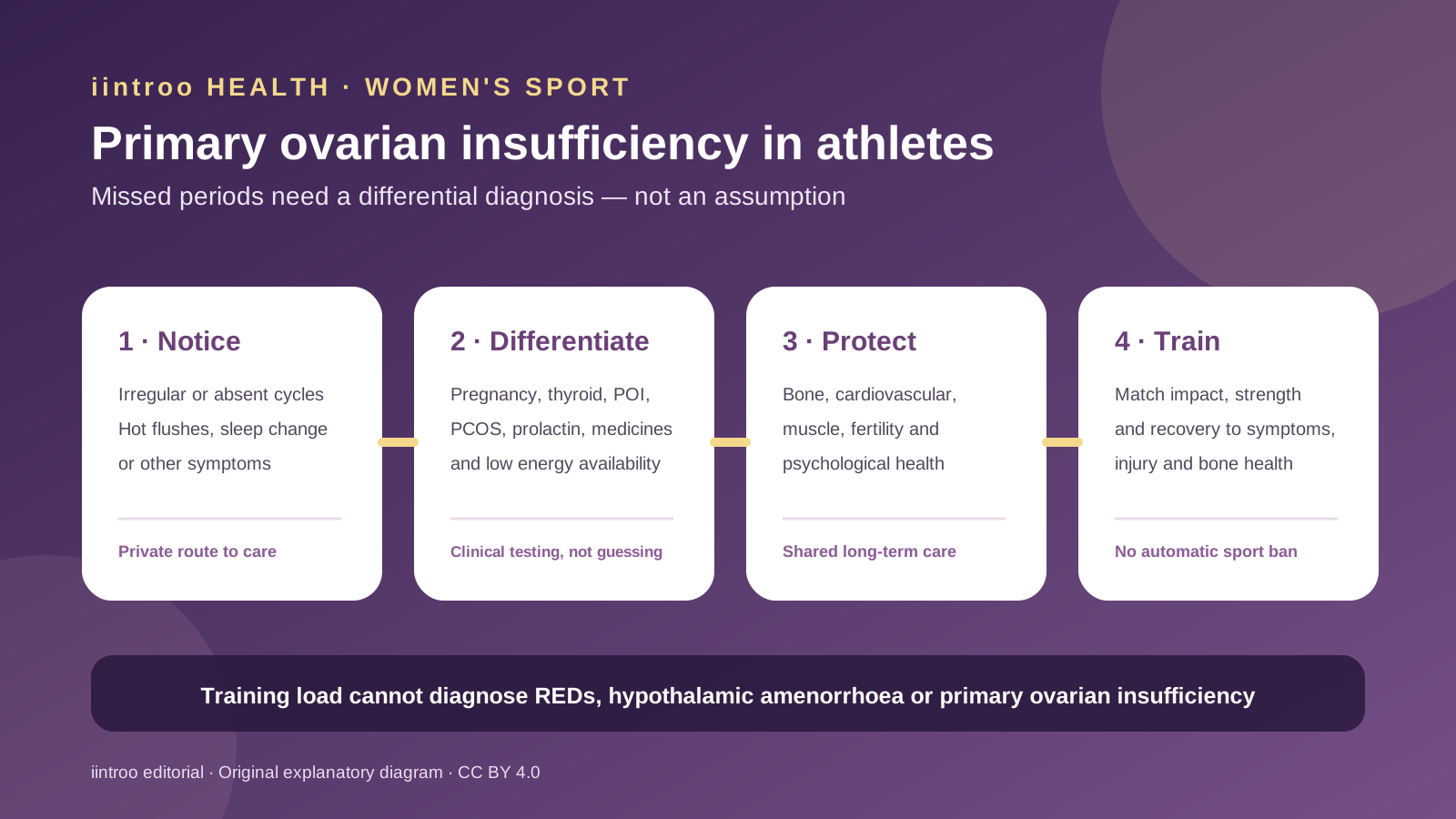
Key points
- Amenorrhoea or irregular cycles in an athlete can have several causes; training load cannot diagnose REDs, hypothalamic amenorrhoea or primary ovarian insufficiency.
- Primary ovarian insufficiency affects more than fertility and can require long-term bone, cardiovascular, psychological and hormonal care.
- Coaches should protect privacy and refer; they should not order hormone tests, prescribe supplements or demand menstrual disclosure to the team.
A missed period is a signal to assess, not a diagnosis
This guide is for athletes under 40 with absent or irregular menstrual cycles, and for the people supporting them. Primary ovarian insufficiency, or POI, means loss or major disruption of ovarian activity before age 40. It can involve irregular cycles, hot flushes, sleep disturbance, vaginal symptoms, mood changes or fertility concerns, but presentation varies. Hormonal contraception can alter bleeding patterns, and some people have few obvious symptoms. A coach cannot diagnose POI from a calendar.
Amenorrhoea in sport is often associated with low energy availability or functional hypothalamic amenorrhoea, but pregnancy, thyroid disease, raised prolactin, polycystic ovary syndrome, medicines, chronic illness and POI are among the alternatives clinicians consider. The 2024 ASRM amenorrhoea opinion and 2025 Female Athlete Triad update both support a proper differential diagnosis. Lab patterns and history differ between conditions; assuming every missed period is caused by training can delay the right care.
Use current diagnostic guidance and explain uncertainty
The international POI guideline bases diagnosis on disordered cycles with biochemical confirmation and advises excluding pregnancy and considering the effects of hormonal therapy. It also updates the role of FSH and states that AMH should not be used as the primary diagnostic test. Those details belong to a clinician because timing, medicines and diagnostic uncertainty matter. Online hormone panels or a single wearable estimate cannot confirm ovarian function.
A diagnosis can carry emotional weight around health, identity and fertility. The guideline emphasises sensitive communication and shared decision-making, including investigation of cause where appropriate. Teams should provide a private referral route and allow the athlete to decide what is shared. Avoid promising fertility outcomes, asking intrusive questions in group settings or framing the diagnosis as a failure of toughness, nutrition or commitment.
Protect bone and whole-person health without inventing a supplement plan
POI is associated with reduced bone mineral density and possible later fracture risk. Current guidance recommends assessing bone-health risk and, where available, bone-density measurement at diagnosis. It also addresses cardiovascular, muscle, sexual, psychological and neurological health. Weight-bearing activity and resistance training can be part of healthy living, but sport-specific evidence in POI is limited. Training cannot replace clinical management of estrogen deficiency or another contributing condition.
Do not prescribe calcium, vitamin D, hormones, contraceptives or bone medicines from this page. Intake, blood results, bone density, pregnancy plans, contraindications and the person's preferences change the decision. The international guideline recommends hormone therapy for most women with POI until the usual age of menopause unless contraindicated, but the product, route and dose are medical choices. A team dietitian can assess energy and nutrient sufficiency without treating every athlete as if low energy availability were proven.
Keep training support flexible while care is established
The athlete may continue activity when clinically appropriate, using symptoms, recovery, injury history and bone-health assessment to shape load. Persistent fatigue, sleep disruption, pain, recurrent bone stress injury or reduced recovery deserves review rather than punishment or extra conditioning. If bone health is impaired, the medical and rehabilitation team may temporarily change impact or collision exposure while maintaining safe strength, aerobic or skill work. There is no universal ban on running, lifting, dance or competition.
Seek urgent care for severe abdominal or pelvic pain, heavy bleeding with faintness, chest pain, marked breathlessness or other acute symptoms. Otherwise, arrange timely evaluation for sustained cycle change or estrogen-deficiency symptoms. There is no single FSH value, DXA score, symptom-free period or hormone regimen that clears every athlete. This page provides general education, not diagnosis, fertility advice, a laboratory order, hormone or supplement prescription, or personal sport clearance.