
Psoriasis in sport: reduce friction without treating movement as the problem
Psoriasis can make sweat, kit and repeated contact uncomfortable. A sport plan should protect skin, preserve treatment and keep movement achievable.
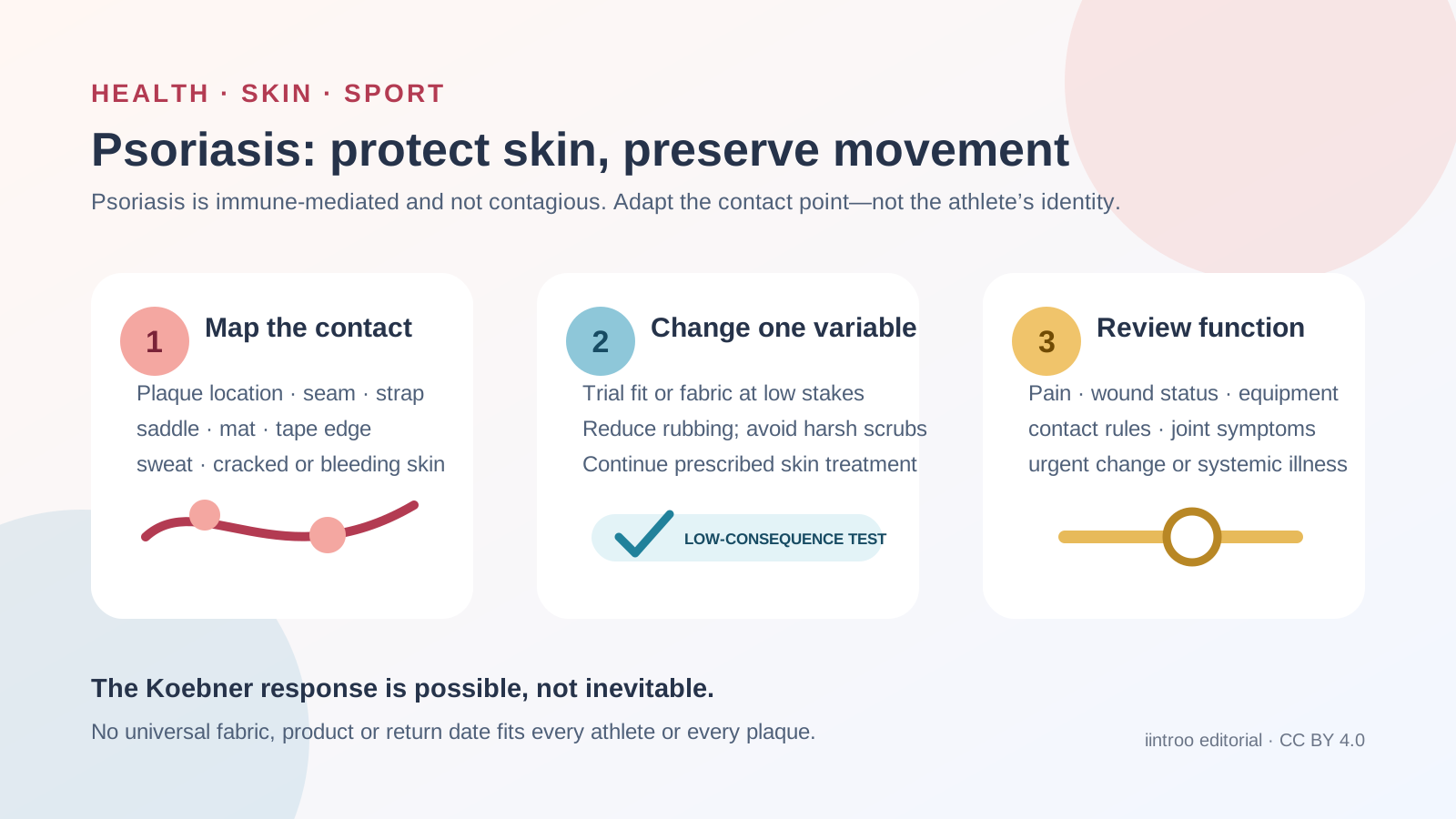
Key points
- Psoriasis is a chronic immune-mediated disease, not poor hygiene or a contagious skin infection.
- Skin trauma can trigger new plaques in some people, but this Koebner response varies and is not a reason to ban exercise.
- Widespread rapidly worsening redness, fever, severe illness or extensive pustules needs urgent medical assessment.
Separate psoriasis from infection and selection
This guide is for athletes living with psoriasis and for coaches or support staff working with the athlete’s permission. Psoriasis is a chronic immune-mediated condition that can cause raised, scaly, itchy or painful areas of skin. It is not caused by poor hygiene and is not contagious. Appearance alone does not show how much a person can train, and visible plaques should not become a reason for exclusion or public discussion.
A clinician should confirm the diagnosis because contact-sport skin infections, eczema and other rashes can look different or overlap. Follow the sport’s communicable-disease rules when infection is suspected, but do not apply an infection restriction automatically to established psoriasis. Rapidly spreading redness, fever or systemic illness, widespread pustules, extensive skin shedding, severe pain, or a sudden major deterioration needs prompt medical assessment; some uncommon severe psoriasis patterns can be emergencies.
Map the exact trauma instead of banning the sport
Some people with psoriasis develop new lesions at sites of skin injury, a response known as the Koebner phenomenon. In sport, relevant trauma may come from a seam, saddle, mat abrasion, strap, brace, tape edge, prosthetic interface or repeated skin-on-skin rubbing. The response is variable, may appear after a delay and does not mean that every contact creates a plaque. Record the exact movement, surface and body site before changing all equipment at once.
Use a low-consequence session to test one adjustment: a different seam position, clean soft barrier, altered strap tension, smoother surface or temporary change of drill. Loose clothing is not always better if it increases rubbing, and tight technical kit is not automatically safer. Do not tape directly over fragile plaques or apply an unfamiliar anti-chafing product to cracked skin without suitable advice. In shared-contact environments, normal cleaning and infection-control procedures still matter, but harsh scrubbing can add trauma.
Keep exercise while managing sweat, skin and treatment
Exercise supports cardiovascular, metabolic and mental health, which matters because psoriasis is associated with important comorbidities. Reviews suggest that people with psoriasis are often less active, while intervention evidence is heterogeneous and rarely designed for competitive athletes. Movement should therefore be supported as general health care, not sold as a cure or as proof that a flare reflects inadequate fitness.
Sweat may sting cracked or inflamed skin. Practical options include cooler training times, breathable clothing, changing damp kit, gentle washing after a session and patting rather than rubbing the skin dry. A dermatologist can advise on emollients, topical treatment and timing when a product could affect grip or equipment. Continue prescribed systemic or topical treatment as directed; do not skip a medicine for competition, combine remedies, or use ultraviolet exposure as improvised treatment.
Return by function, wound status and real sport demands
The decision to modify or resume full training should consider pain, cracking or bleeding, plaque location, equipment contact, treatment effects and the consequences of the discipline. A runner with a painful sole, a cyclist with a saddle-area plaque and a wrestler with exposed broken skin face different problems. Contact rules may require intact coverage or clinical review even when psoriasis itself is not infectious. Agree on a private way to request a kit, drill or schedule change without forcing disclosure to the whole team.
New joint swelling, prolonged morning stiffness, swollen fingers or toes, or persistent tendon-area pain can be features of psoriatic arthritis and deserve clinical assessment rather than repeated self-treatment. Evidence does not establish one psoriasis-specific return interval, fabric or training dose. This page provides general education, not diagnosis, product selection, infection clearance, drug advice or a personal return date.