
Systemic lupus and sport: train with disease status, fatigue and sun exposure in view
Stable lupus can be compatible with aerobic and strength training. Flares, organ involvement, fatigue, medication and ultraviolet exposure change the plan.
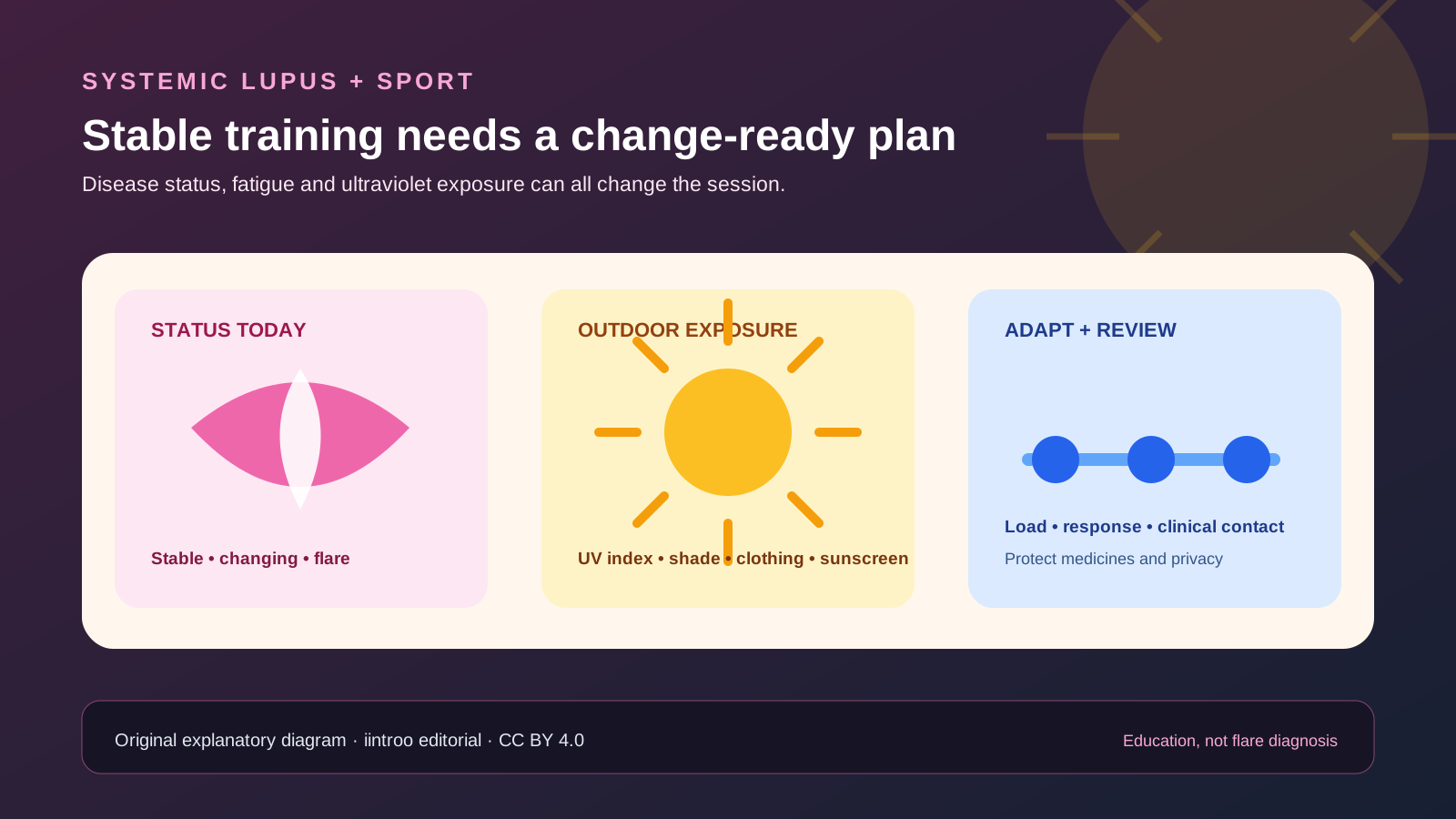
Key points
- Consensus recommendations support gradual aerobic and resistance activity for many people with stable systemic lupus.
- Trial evidence mainly involves adults with stable disease and cannot be generalized to every flare, organ complication or competitive workload.
- Ultraviolet exposure, infection risk, bone health and medication effects can alter an athlete’s venue, recovery and medical plan.
Start from today’s disease status, not the diagnosis alone
This guide is for athletes living with systemic lupus erythematosus, plus coaches and support teams working with consent. Lupus can affect the joints, skin, blood, kidneys, heart, lungs, nervous system and other tissues, and its course varies. Fatigue, pain and reduced capacity can also have more than one cause. A stable athlete preparing for a race and a person with new organ involvement do not belong on the same generic training plan.
The 2024 international consensus on physical activity and exercise in lupus recommends assessment of contraindications and individualized progression. The recommendations support aerobic and resistance exercise, but emphasize disease activity, comorbidities and the person’s preferences. Establish what is stable, what has changed and which consequences matter in the sport. New chest pain, severe breathlessness, fainting, neurological symptoms, marked swelling or signs of serious infection require medical assessment rather than a reduced session.
Use the encouraging exercise evidence within its limits
Systematic reviews generally find that planned exercise is well tolerated in stable lupus and can improve aerobic fitness, function or quality of life without a clear increase in disease activity. Some studies also report improvements in fatigue or mood. Programmes, samples and outcomes differ, and competitive athletes, active major-organ disease and severe flares are underrepresented. Exercise should not be advertised as a treatment that guarantees control of lupus or fatigue.
For a medically stable athlete, combine manageable aerobic work, progressive strength and mobility or balance needs, then add sport-specific intensity. Monitor response during training and over the following day rather than judging success by one hard session. If fatigue, pain or function deteriorates repeatedly, review load, sleep, nutrition, infection, anaemia, medication effects and disease activity with the clinical team instead of assuming that more discipline is required.
Design outdoor training around ultraviolet exposure
Photosensitivity is common in lupus, and ultraviolet exposure can worsen skin symptoms and may contribute to broader disease activity in some people. Outdoor sport therefore needs a layered plan: check the UV index, choose lower-exposure times or shade where possible, use suitable covering clothing and apply broad-spectrum sunscreen according to local medical advice and the product label. Sweat, water, friction and long events can shorten practical protection, so plan access to reapplication rather than relying on a single pre-start layer.
Cloud, cool weather and training near water, snow or reflective surfaces do not remove ultraviolet exposure. Some medicines can also affect photosensitivity. The athlete’s rheumatology or dermatology advice takes priority over a team’s standard sun routine. Indoor training can be a useful alternative on high-risk days, but it should be chosen collaboratively rather than used to exclude an athlete from outdoor sport without considering controls.
Adapt during flares and protect the wider medical plan
A flare can range from a manageable increase in symptoms to major organ disease. Significant change may require a large reduction, temporary pause or a clinician-led programme; complete bed rest is not automatically helpful, and gentle movement may still be appropriate for some people. Bone density, fracture history, kidney or cardiovascular involvement, infection risk and recent glucocorticoid exposure can change loading choices. Do not stop immunosuppressive or steroid treatment abruptly to compete.
Agree who to contact, which symptoms end a session and how return will be staged after illness or a flare. Coaches should protect privacy and avoid interpreting a fluctuating condition as unreliable commitment. Current trials support appropriately prescribed activity but do not supply a universal intensity, flare rule or return date. This page is educational and cannot diagnose a flare, prescribe sun protection or medication, or clear an athlete with organ involvement.