
Raynaud symptoms in cold-weather sport: warm the athlete, not only the fingers
Cold-triggered colour change and numbness can fit Raynaud phenomenon. Prepare whole-body warmth and know when persistent or asymmetric symptoms need care.
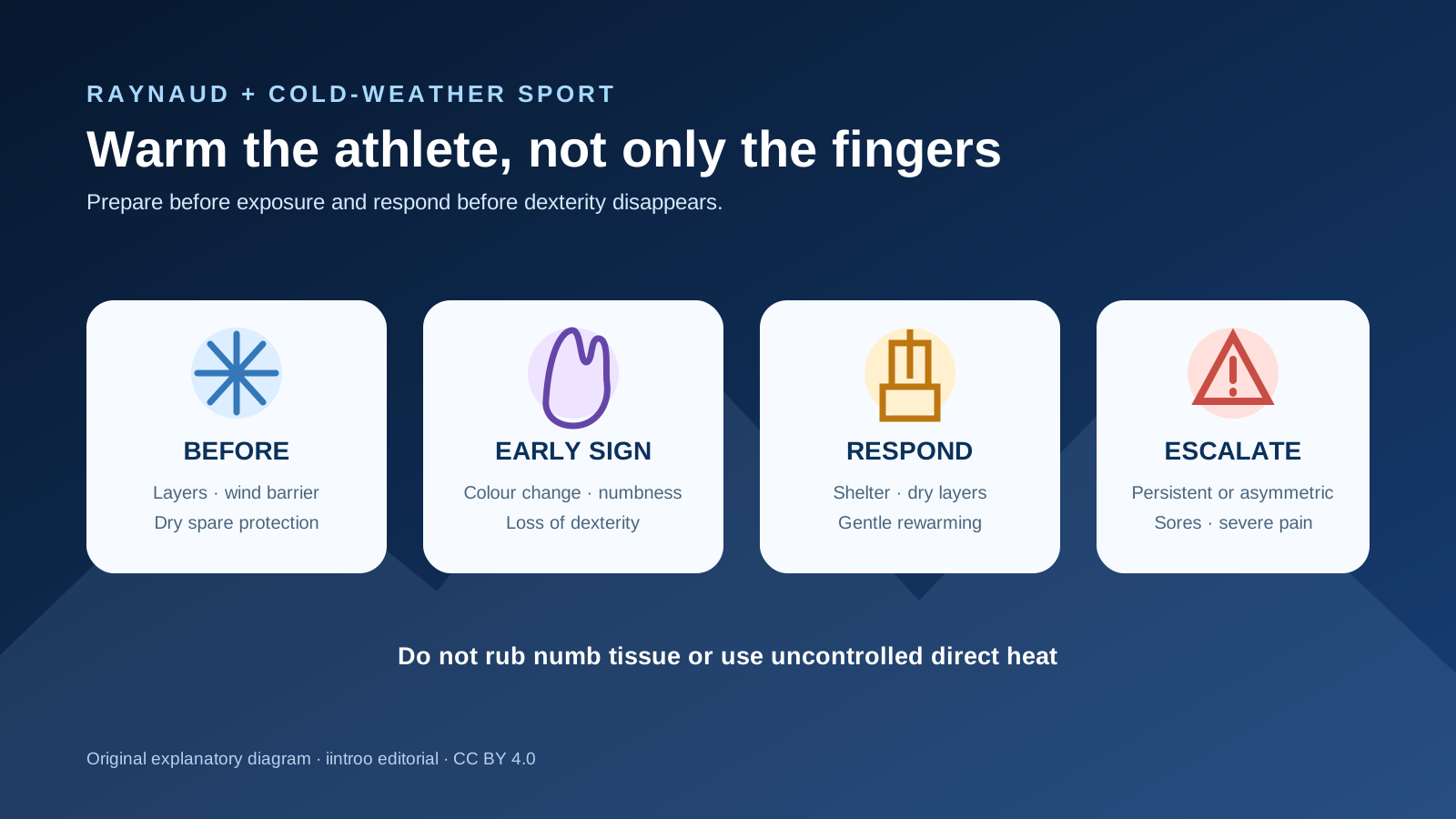
Key points
- Raynaud attacks can cause sharply demarcated colour change, coldness, numbness, tingling or pain in fingers or toes after cold or emotional stress.
- Keeping the whole body warm, limiting rapid temperature change and protecting extremities are sensible controls, but direct sport trials are sparse.
- Persistent colour change, severe pain, sores, black tissue, one-sided symptoms or new onset with other illness signs needs medical assessment.
Recognise the pattern without self-diagnosing every cold hand
This guide is for skiers, runners, cyclists, climbers and support teams when cold exposure triggers finger or toe colour change, numbness, tingling or pain. Raynaud phenomenon involves episodic narrowing of small blood vessels, often in response to cold or emotional stress. Skin may become pale, blue and then red as blood flow returns, but not every person has every colour phase. Ordinary cold discomfort, frostnip, frostbite, nerve compression and equipment pressure can look or feel different and may coexist.
Primary Raynaud phenomenon is not linked to another disease and is often milder. Secondary Raynaud phenomenon can occur with connective-tissue or vascular disease, medicines, vibration exposure or other conditions and can threaten tissue. A symptom photo and record of weather, duration, sides affected, equipment and recovery can help a clinician. They do not establish the type. New symptoms, attacks mainly on one side, severe pain, thumb involvement, sores or other systemic symptoms deserve assessment.
Protect the whole thermal system before the start
NIAMS and NHS guidance emphasise avoiding cold exposure where possible and keeping warm. For sport, that can mean layered clothing, wind protection, a dry spare system, mittens or gloves appropriate to the task, insulated footwear with room for circulation and a sheltered warm-up. Protect the head and torso as well as hands and feet because whole-body cooling drives peripheral vasoconstriction. Pre-plan where an athlete can stop, change wet layers and rewarm rather than relying on willpower far from shelter.
Fit matters. Tight boots, straps, cuffs or gloves can add local pressure and reduce dexterity, while oversized equipment can undermine control. Practise fastening, pole handling, brakes or bindings with the chosen protection. Chemical or electric warmers can cause burns, especially when sensation is reduced; follow instructions, keep them from direct skin contact when required and inspect skin. Smoking and vaping can worsen vasoconstriction. Medication choices should be reviewed with a clinician, not adjusted on race day.
Respond early without aggressive reheating
At the first familiar warning signs, reduce exposure, move to shelter and warm the whole body gradually. Replace wet gloves or socks and use gentle movement if safe. Do not rub, slap or massage numb tissue, and do not put it against a stove, radiator or very hot water. Reduced sensation makes burns easier, while rough handling can injure cold tissue. If the athlete still needs the hands for poles, brakes, ropes or rescue, impaired sensation or dexterity is itself a reason to stop.
Raynaud is not the only cold injury. Frostbite may involve hard, waxy, white or grey skin, persistent numbness or blisters after rewarming; hypothermia can cause shivering, poor coordination, slurred speech, confusion or reduced consciousness. These need the appropriate emergency pathway. Do not thaw tissue if refreezing is likely, and do not ask an athlete to walk on a potentially frostbitten foot unless required for immediate safety. Follow trained rescue and local emergency guidance.
Keep the evidence boundary visible
Clinical reviews support cold avoidance, whole-body warmth and trigger management as first-line measures, but direct trials showing that a particular glove, warm-up or exercise routine prevents attacks are limited. An older evidence review found no controlled evidence for lifestyle measures despite their face validity and widespread recommendation. A figure-skating and ice-hockey review describes Raynaud among cold-related conditions in winter athletes but does not provide an athlete-specific treatment trial.
If prevention is insufficient, a clinician can assess for secondary causes and discuss treatment. Medicines used for Raynaud can have side effects and may interact with other conditions or sport requirements; online dosing is not appropriate. Persistent colour change, skin breakdown, infection, severe or escalating pain, black tissue, major asymmetry or attacks with chest pain, breathlessness or neurological symptoms require prompt care. Return to exposure should respond to the diagnosis, healing, equipment and rescue access, not a universal temperature cutoff.