
Systemic sclerosis and sport: match exercise to Raynaud symptoms and organ health
Exercise may help people with systemic sclerosis, but Raynaud symptoms, digital ulcers and heart or lung involvement make assessment and adaptation essential.
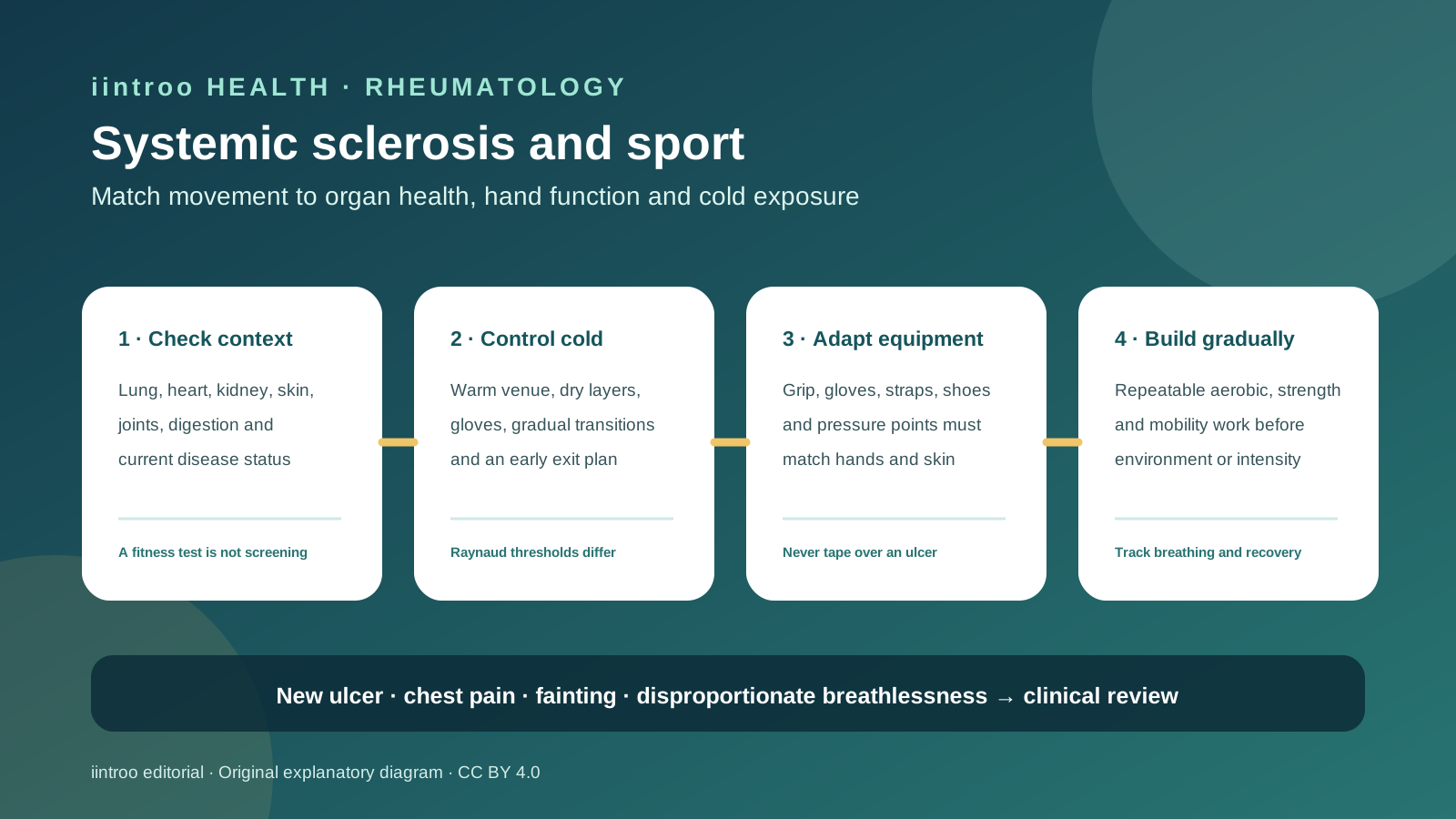
Key points
- Systemic sclerosis can affect blood vessels, skin, joints, lungs, heart, kidneys and digestion, so today's organ status matters more than a generic diagnosis.
- Cold exposure can aggravate Raynaud symptoms; new digital ulcers, chest pain, fainting or disproportionate breathlessness needs clinical review.
- Exercise evidence is encouraging but small and heterogeneous and does not clear untreated cardiopulmonary disease or severe vascular symptoms.
Define the current organ and vascular context first
This guide is for athletes living with systemic sclerosis, also called scleroderma, and teams working with consent. The condition can affect small blood vessels, skin, hands, joints, lungs, heart, kidneys and the digestive tract in different combinations. A person with stable limited skin disease and another with interstitial lung disease or pulmonary arterial hypertension do not belong on the same training prescription. Establish current symptoms, clinical follow-up, medicines and functional goals before changing load.
The 2023 EULAR treatment update covers Raynaud phenomenon, digital ulcers, pulmonary arterial hypertension, interstitial lung disease and other organ domains. Those medical pathways cannot be replaced by a fitness test. New chest pain, fainting, severe or unexplained breathlessness, a marked fall in capacity, palpitations with collapse, rapidly rising blood pressure or neurological symptoms needs prompt assessment. Exercise intolerance may be important even when resting measures look familiar.
Design around cold, hand function and skin integrity
Raynaud episodes can be triggered by cold exposure or abrupt temperature change and may cause fingers or toes to change colour, feel numb or painful and recover slowly. EULAR non-pharmacological recommendations support avoiding cold exposure, especially when Raynaud symptoms are severe. Choose a warm venue, allow gradual transitions, keep dry layers and gloves accessible and plan an early exit. Open-water, snow and ice environments require a specific clinical discussion rather than confidence based on another athlete's tolerance.
Check grips, gloves, straps, footwear and pressure points because skin tightening, reduced hand opening, calcinosis or digital ulcers can change fit. A new ulcer, black or very pale tissue, drainage, spreading redness, fever or escalating pain warrants clinical review. Do not rub, aggressively rewarm, puncture or tape over a lesion to continue. Equipment adaptations should preserve skill and autonomy without pretending to treat vascular disease.
Use exercise evidence at the scale it can support
EULAR recommends considering physical exercise with cardiorespiratory status, contraindications, preferences and risk-benefit balance in view. Trials and reviews report possible improvements in aerobic capacity, strength, hand function, fatigue or quality of life from supervised or home programmes. Samples are generally small, interventions vary and competitive athletes or people with unstable major-organ disease are underrepresented. The evidence supports access to tailored activity, not one ideal programme or a claim that exercise reverses fibrosis.
Start with repeatable aerobic, strength, mobility or hand work that matches current function. Indoor cycling, walking, water-based exercise or supported resistance can each be useful in the right context, but water temperature, balance, grip, reflux and breathlessness can change the choice. Pulmonary hypertension rehabilitation evidence applies to clinically stable, treated populations under specialist care; it is not permission to self-test unexplained breathlessness with harder intervals.
Progress by function and re-check meaningful change
Track the task as well as symptoms: hand opening and grip, skin pressure, joint comfort, Raynaud recovery, breathing, heart-rate response, fatigue and next-day function. Progress duration, resistance, environmental exposure and technical consequence separately. A flare, infection, digital ulcer, medicine change or new cardiopulmonary finding may require a temporary reduction or clinician-led rehabilitation. Do not stop vasodilator, immunosuppressive or antifibrotic treatment to compete.
Return after an acute complication should restore stable clinical status, everyday function and low-consequence exercise before remote venues, cold, altitude, maximal effort or competition pressure. Travel, recovery facilities and access to specialist care also change consequence. There is no universal oxygen saturation, six-minute walk distance, hand score or waiting period that clears every athlete. This page provides general education, not diagnosis, Raynaud treatment, cardiopulmonary screening, wound care, exercise prescription or personal sport clearance.