
Autoimmune hepatitis and sport: train around liver status, fatigue and treatment
Autoimmune hepatitis needs specialist treatment. Exercise can support health, but liver status, fatigue, bone health and medicine effects shape the plan.
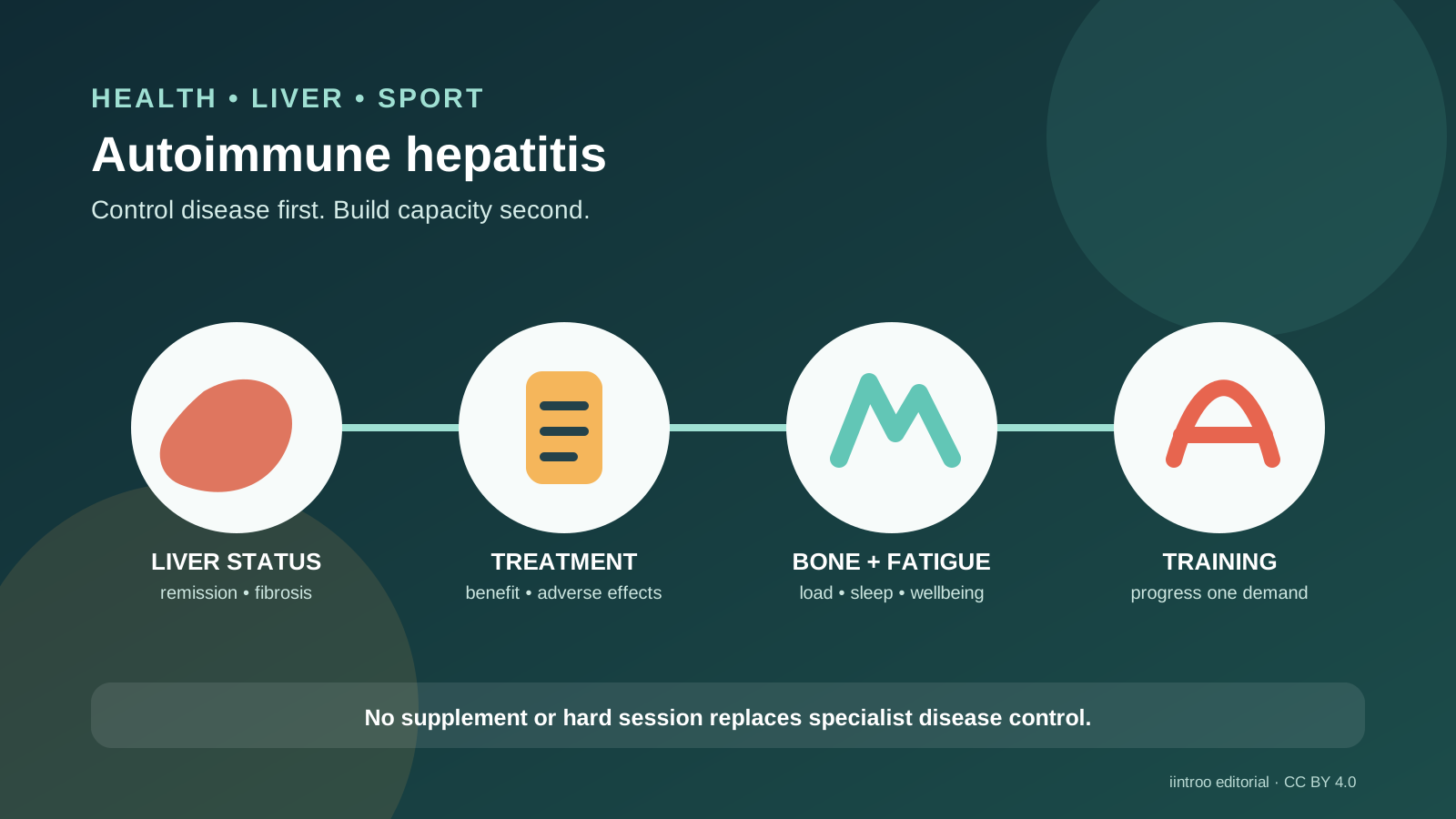
Key points
- Autoimmune hepatitis is an immune-mediated liver disease; symptoms and liver tests alone do not establish the diagnosis or show whether training is safe.
- Current guidance supports physical activity as part of a healthy lifestyle, while cirrhosis, active inflammation and treatment effects require individual assessment.
- Exercise does not replace immunosuppression, and supplements marketed for energy, recovery or detoxification can create avoidable liver risk.
Control the liver disease before chasing performance
This guide is for active people with autoimmune hepatitis and the teams supporting them. Autoimmune hepatitis is an immune-mediated inflammatory liver disease that can range from an incidental blood-test finding to jaundice, cirrhosis or acute liver failure. Diagnosis requires a specialist synthesis of liver biochemistry, immunoglobulins, autoantibodies, exclusion of competing causes and usually liver histology. Fatigue, poor recovery or a raised aminotransferase result is not enough to diagnose the condition, and a normal-feeling training week does not prove that inflammation is controlled.
The 2025 EASL and British Society of Gastroenterology guidelines emphasize treatment to achieve biochemical remission, usually with corticosteroid-based induction and a steroid-sparing medicine selected by the clinical team. Stopping or changing treatment for a race, weight category, supplement cycle or travel period can cause relapse. New jaundice, dark urine, pale stool, abdominal swelling, vomiting blood, black stool, confusion, collapse or rapidly worsening weakness needs urgent assessment. A coach should not interpret liver tests or use exercise as a challenge test during active disease.
Build activity from current liver and treatment status
The 2025 British guideline recommends physical activity, adequate nutrition and maintenance of a healthy body mass as part of care, but it does not provide an athlete clearance test. A systematic review across autoimmune diseases found generally modest anti-inflammatory effects from regular exercise, yet the 87 included studies covered many diagnoses and cannot be treated as autoimmune-hepatitis-specific evidence. The only direct training report commonly cited is a very small older study of nine people with chronic active hepatitis in remission; improved work capacity without worsening liver tests is encouraging, not a modern return-to-sport protocol.
A practical progression can begin with ordinary movement and low-to-moderate aerobic or resistance work, then restore duration, intensity and sport-specific complexity one variable at a time. Decisions should account for biochemical response, fibrosis or cirrhosis, portal-hypertension complications, muscle loss, anaemia, other autoimmune disease and medicine adverse effects. Contact, remote environments, heat and events with limited medical access deserve separate review. Persistent fatigue should prompt evaluation rather than automatic extra training because disease activity, sleep, mood, nutrition, anaemia, thyroid disease, medicines and deconditioning can overlap.
Protect bone, muscle and infection resilience
Corticosteroids can affect bone, muscle, glucose, blood pressure, body composition, mood and sleep. EASL recommends baseline bone-density assessment in adults beginning treatment, while AASLD guidance addresses vitamin D assessment and ongoing bone-risk management. Weight-bearing and resistance activity may support bone and muscle, but loading must match fracture risk, current strength and any steroid-related myopathy. Neither a supplement stack nor a generic calcium target should be copied without review of diet, laboratory results, age, kidney function and prescribed care.
Immunosuppression can also change infection risk. Vaccination and infection-prevention decisions belong with the treating team; EASL recommends hepatitis A and B vaccination for susceptible patients and alignment with national guidance for other vaccines. Fever, significant infection, dehydration or inability to keep medicines down can alter both medical and training plans. Athletes should carry an accurate medicine list when travelling and check anti-doping status through the relevant official database. A therapeutic-use process is administrative protection, not permission to delay essential treatment.
Measure function without dismissing fatigue or mental health
A 2025 multicentre cross-sectional study of 882 adults found lower physical health-related quality of life than in 178 controls, with fatigue, somatic symptoms, anxiety and depression associated with worse scores. The design cannot show that autoimmune hepatitis caused every symptom, but it supports asking about function and wellbeing rather than relying only on liver enzymes. Training records can track session tolerance, sleep, symptoms and recovery without turning every fluctuation into evidence of relapse. Persistent distress deserves appropriate support, not a demand to become tougher.
There is no universal autoimmune-hepatitis return timeline. Review is especially important after relapse, a medicine change, infection, fracture, decompensation or a new sport with collision, altitude, heat or remote exposure. This page cannot diagnose disease, select immunosuppression, interpret liver tests, prescribe supplements or clear an athlete with cirrhosis. The defensible sequence is specialist disease control, assessment of treatment and liver complications, protection of bone and muscle, then gradual training with shared review of the consequences of the chosen sport.