
Achilles rupture in basketball: warning signs, treatment choices and return
A sudden pop or kicked feeling behind the ankle needs assessment. Understand Achilles rupture treatment trade-offs and why basketball return is individual.
Key points
- Being able to walk does not rule out an Achilles rupture.
- Surgery and nonoperative care have different benefits and risks.
- A calendar date alone cannot establish readiness for basketball.
A sudden event is different from gradual tendon soreness
This guide is for basketball players, coaches and teammates faced with an abrupt ankle or calf injury during a push-off, acceleration or jump. The Achilles tendon connects the calf muscles to the heel. A rupture is a partial or complete tear, not simply another name for the persistent load-related pain often described as tendinopathy.
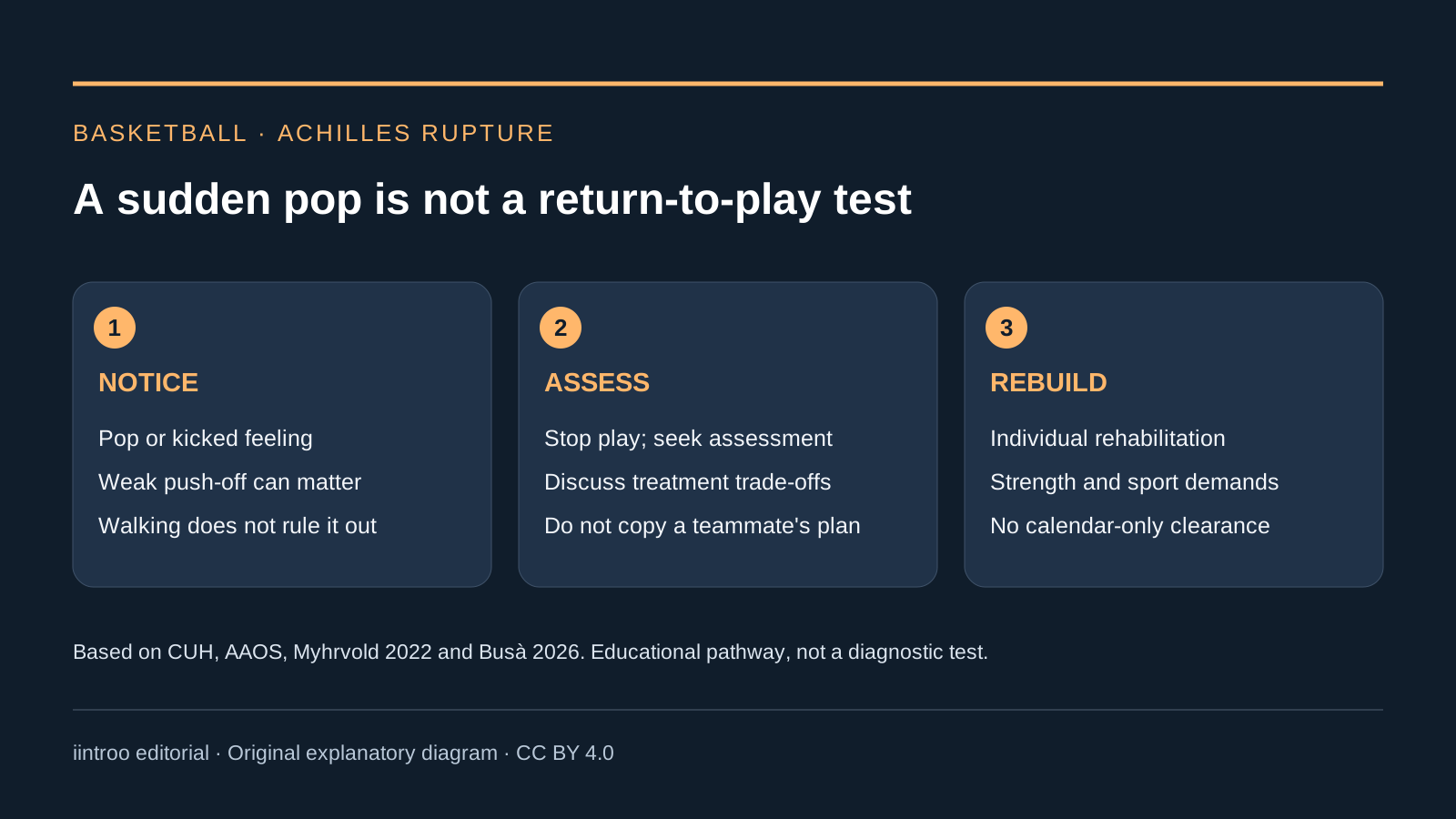
A pop, snap or feeling of being kicked behind the ankle can be followed by difficulty pushing off. Pain may settle, and some people can still walk flat-footed. Neither improvement nor walking excludes rupture. Stop play and arrange prompt medical assessment; do not test readiness by repeatedly jumping or trying to finish the session.
Assessment comes before a treatment decision
A clinician combines the injury story with examination, including tendon function and appropriate clinical tests. Ultrasound or other imaging may help when needed, but every suspected rupture does not require the same scan. A teammate's interpretation of a calf-squeeze test should not replace assessment.
Discuss the injury pattern, usual activity, health conditions, work demands and preferences with the treating team. Complete tears do not automatically mean surgery, and nonoperative care does not mean ignoring the injury. Both pathways require a structured protection and rehabilitation plan. Do not borrow another player's boot settings, weight-bearing instructions or medication.
Sources: 2
What the randomized treatment trial actually found
A 2022 multicentre trial randomized 554 patients to nonoperative care, open surgery or minimally invasive surgery; 526 entered the final analysis. At 12 months, the primary patient-reported outcome did not differ significantly between groups. That finding is not evidence that every consequence of treatment was identical.
Rerupture occurred in 6.2% of the nonoperative group and 0.6% in each surgical group. Nerve injury occurred in 5.2% after minimally invasive surgery, 2.8% after open surgery and 0.6% with nonoperative treatment. These trial averages illustrate trade-offs to discuss, not a personal recommendation. They do not establish which pathway is best for a particular basketball player.
Sources: 3
An elite comeback is not a personal recovery clock
A 2024 retrospective study compared 34 injured professional players—21 NBA and 13 WNBA—with matched controls. Outcomes differed between the leagues, but public-record identification, a small selected sample and differences in competition and career context limit interpretation. League comparisons cannot isolate biological explanations.
Returning to an official game is also different from recovering a previous role, workload or level of performance. A professional player's comeback headline cannot predict a recreational player's recovery, and an average return time should not become a deadline that overrides symptoms or clinical findings.
Sources: 4
Build basketball readiness with the rehabilitation team
A scoping review published in February 2026 included 34 surgical studies from a search covering 1995–2022. None defined an outcome measurement as a return-to-sport criterion. This is a gap in published study reporting, not proof that clinicians never assess readiness. Most evidence was observational, and nonoperative athletes were outside its scope.
Rehabilitation commentary supports progressive assessment of calf strength, endurance and sport demands. For basketball, discuss how jumping, landing, repeated accelerations and changes of direction will be reintroduced. A single heel raise or pain-free walk cannot represent all those demands. Agree how the team will judge progress, respond to setbacks and distinguish modified practice from unrestricted competition.
Know which new symptoms need urgent attention
Reduced mobility after this injury can increase blood-clot risk. Ask the treating team about individualized risk assessment rather than starting preventive medication yourself. New calf swelling or concerning pain needs urgent advice; sudden breathlessness or chest pain requires emergency care. Follow local emergency arrangements, including 112 in Türkiye.