
Basketball patellar tendon pain: manage jump load and rebuild capacity
Jumper's knee is load-related, not a cue to stop forever. Confirm the diagnosis, track jump and strength exposure, then rebuild basketball tasks by response.
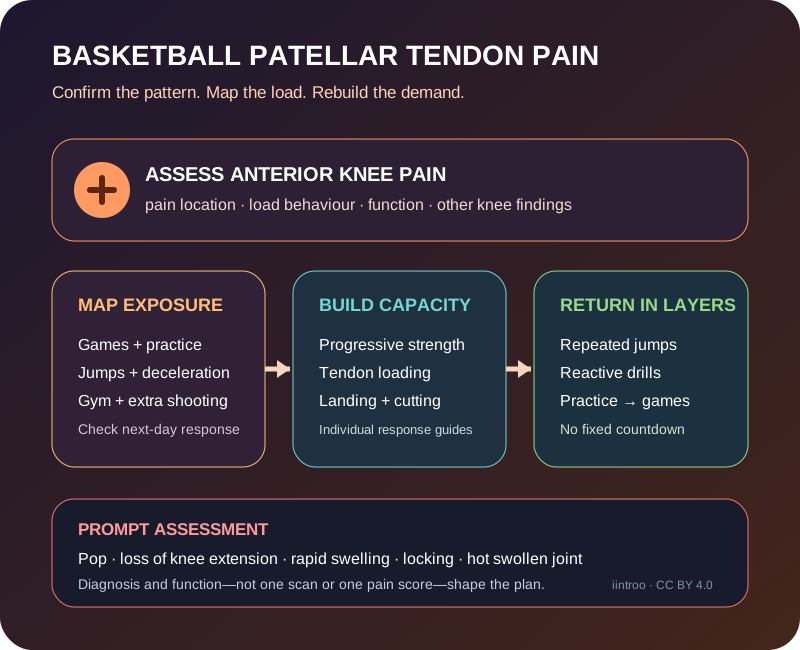
Key points
- Pain below the kneecap during jumping can reflect patellar tendinopathy, but location or an abnormal scan alone does not rule out other knee conditions.
- Exercise and load monitoring are central to conservative care, yet recent reviews find low-certainty evidence for choosing one loading method over every other method.
- Return should rebuild strength, repeated jumping, deceleration and next-day tolerance before full basketball exposure; there is no universal calendar deadline.
Start with the pattern, not the nickname
This guide is for basketball players, coaches, families and clinicians. Patellar tendinopathy usually presents as load-related pain around the lower pole of the kneecap and reduced function with jumping. Basketball repeatedly combines take-off, landing, stopping and changing direction, so the total exposure matters more than one memorable jump.
Anterior knee pain has other causes. A clinician should consider the pain location and behaviour, strength and function, recent training change and other knee findings. Tenderness or tendon changes on imaging can occur without symptoms, while a normal-looking scan cannot decide readiness by itself.
Count all the high-tendon-load work
Review games, practices, individual shooting, rebounding drills, plyometrics, running, strength work and recent court or footwear changes. A tournament or return from a break can concentrate many jump and deceleration contacts even when weekly training hours appear familiar. Record symptoms during the session and the response later that day and the next morning.
Load reduction is not the same as complete rest. A qualified plan may temporarily reduce the most provocative jumps while maintaining tolerable conditioning and strength. The right change depends on symptom severity, competition demands, age and diagnosis; a generic jump limit cannot be inferred from the research.
Progressive exercise is central, but no recipe wins for everyone
Systematic reviews support structured exercise and load monitoring as the main conservative approach. Programmes may use isometric, isotonic, heavy-slow resistance or eccentric work and later add energy-storage tasks such as jumping. The 2026 meta-analysis found only a small comparative signal across clinically different active-loading trials, with low certainty and some risk-of-bias concerns.
The 2025 Cochrane review was more cautious: compared with no treatment, injection or surgery, certainty around pain, function and return outcomes was low or very low. That uncertainty is a reason to monitor an individual response, not a reason to replace exercise with an unproven injection, passive treatment or internet protocol.
Rebuild the demands of basketball in layers
A clinician-led progression can move from tolerable strength work to controlled bilateral and single-leg landings, repeated jumps, deceleration, cutting, reactive drills, practice and competition. Strength, movement quality, confidence, performance across repeated efforts and next-day symptom behaviour all add information. Pain alone is not the only measure, but worsening pain and function should not be ignored.
Return decisions should match the athlete's role and schedule. A centre with repeated rebounding contacts and a guard with frequent changes of direction have different peak demands. Training minutes, game minutes and consecutive competition days may need separate progression rather than one all-or-nothing clearance.
Protect the red flags and the differential
A sudden pop, inability to straighten the knee, a new gap in the tendon, rapid swelling, locking, major instability, fever or a hot swollen joint needs prompt assessment. Partial tendon tears are a different clinical problem from uncomplicated tendinopathy, and the review evidence does not establish one best treatment for every tear.
Persistent pain, declining performance or repeated failed attempts to progress also warrants reassessment. This article does not diagnose the knee, prescribe exercises or set a return date. The goal is coordinated load information and a progressive, criteria-based plan rather than playing through worsening function.