
BCAA supplements: soreness signals are not the same as better performance
BCAA trials sometimes report less soreness or altered biomarkers, but performance findings are inconsistent and total protein intake is often poorly controlled.
Key points
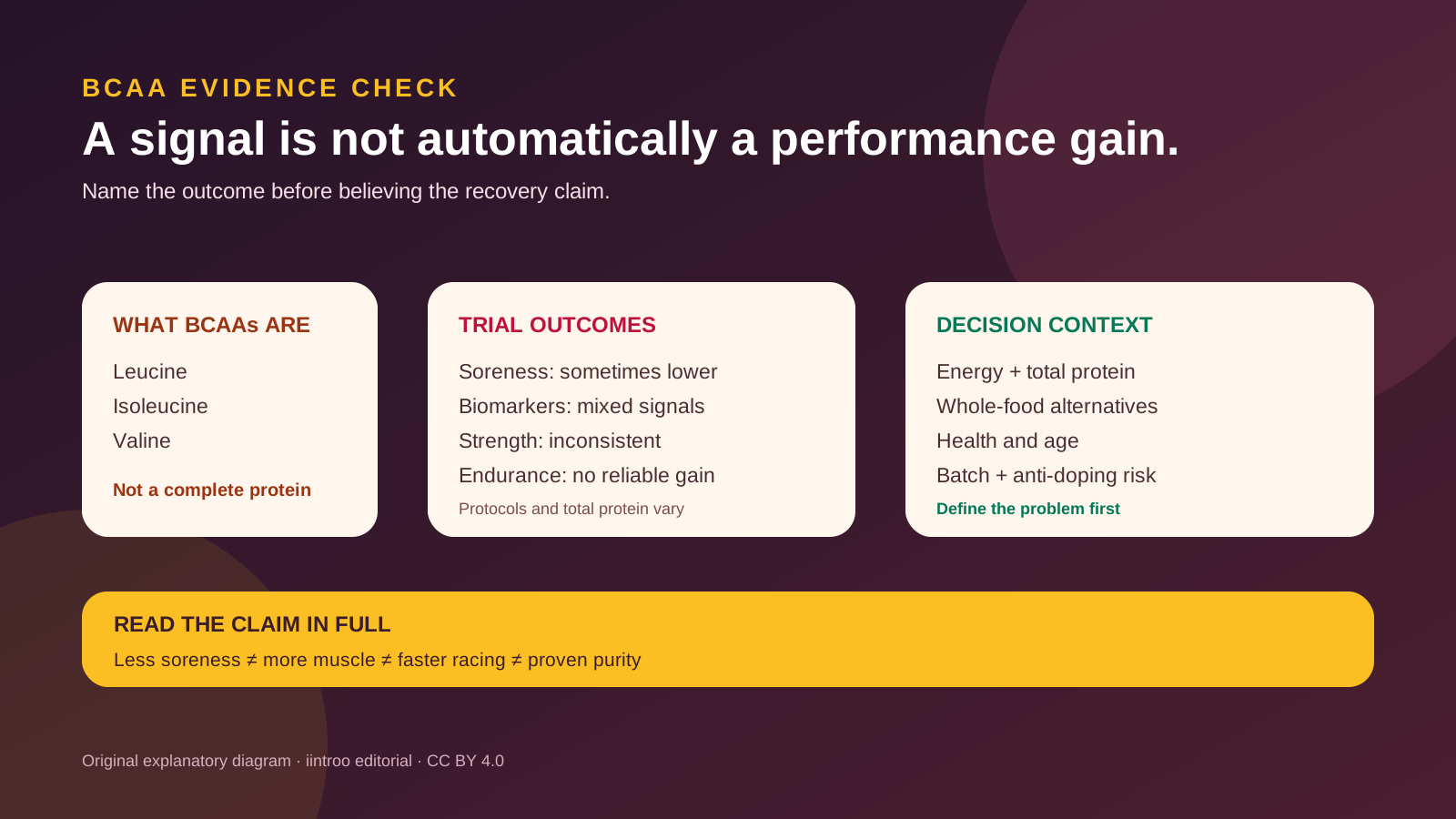
- Leucine, isoleucine and valine are essential amino acids found in ordinary protein foods; a BCAA powder is not a complete protein or a complete recovery meal.
- Reviews report mixed outcomes and heterogeneous protocols, with more consistent signals for short-term soreness or biomarkers than for strength, endurance or body-composition improvement.
- Athletes should define the nutrition problem first and account for total food, energy and protein intake before accepting a supplement claim.
Ask what problem the product is meant to solve
This guide is for athletes, coaches and sports nutrition professionals considering branched-chain amino acid supplements. BCAAs are leucine, isoleucine and valine, three essential amino acids that must come from the diet. They are present in complete protein foods and many mixed meals. A powder may deliver those three amino acids, but it does not supply every essential amino acid needed to build new body proteins and it does not replace adequate energy, carbohydrate, fluid, sleep or a balanced recovery meal.
Before purchasing, define the claimed outcome: less next-day soreness, lower creatine kinase, faster strength recovery, more muscle, improved endurance or reduced fatigue. Those outcomes are not interchangeable. A change in a blood biomarker does not prove that an athlete performs better, adapts more effectively or avoids injury. The NIH Office of Dietary Supplements notes that BCAA studies have not consistently shown improvements in performance, muscle mass or recovery. Marketing commonly compresses this uncertainty into one broad recovery promise.
Read mixed evidence at the outcome level
A 2022 systematic review of athletes found that BCAAs sometimes attenuated soreness after resistance exercise, while endurance findings were inconsistent. Protocols differed greatly and most studies did not report total daily protein intake, making it difficult to know whether a supplement added anything beyond the background diet. A 2024 meta-analysis reported reductions in some muscle-damage biomarkers, but biomarkers such as creatine kinase vary widely and do not on their own establish faster functional recovery or better competition performance.
A newer review reported no meaningful improvement in endurance performance or muscle recovery from BCAA or leucine supplementation. Differences in participants, doses, timing, exercise damage, comparator drinks and funding can help explain apparently conflicting headlines. Small short-term trials also cannot establish long-term body-composition or injury effects. The responsible interpretation is not that every product is useless or effective; it is that evidence for a reliable performance advantage is weak, and any soreness signal must be separated from strength, speed and adaptation.
Put total diet and athlete context before timing
Review overall energy availability, total protein, protein quality and distribution, carbohydrate around demanding sessions, dietary variety and the practical reason food is difficult. An athlete who already meets needs from dairy, eggs, meat, fish, soy, legumes, grains and other foods may be adding isolated amino acids without solving a gap. A vegan athlete can meet needs with planned combinations and protein-rich plant foods; a BCAA label alone does not demonstrate nutritional completeness. A sports dietitian can help when appetite, travel, allergy, gastrointestinal symptoms, disability access or a restrictive diet complicates intake.
Young athletes, pregnant athletes and people with kidney, liver or metabolic disease need individual advice rather than a dose copied from an adult trial. Do not use a supplement to mask persistent fatigue, weight change, recurrent injury, poor recovery or a strained relationship with food. Those patterns may require medical and nutrition assessment. This page intentionally supplies no dose: trial amounts and durations vary, safety evidence is not equivalent to benefit evidence, and a product may contain other active ingredients that change the risk.
Treat product quality as a separate decision
In the United States, dietary supplements are not approved for safety and effectiveness before sale in the same way as medicines. Rules differ by country, and a compliant label still cannot prove a performance benefit. Multi-ingredient powders can add stimulants, botanicals or undeclared substances to the BCAA headline. Tested athletes remain responsible for prohibited substances found in their bodies. USADA advises that no supplement can be guaranteed risk-free and recommends recognised third-party certification when an athlete chooses to use one despite the risk.
Record the exact purpose, full ingredient list, batch, certification, start date, cost and any adverse response. Avoid products promising treatment, extreme muscle gain or proprietary blends that obscure amounts. Stop and seek professional advice for concerning symptoms. A food-first review is not a moral rule and does not deny that convenience matters; it simply asks whether the product solves a defined problem better than safer and more complete options. This article does not prescribe BCAAs, guarantee purity or replace an individual nutrition assessment.