
Post-exercise protein timing: useful routine, not a 30-minute cliff
Protein near training can be convenient, but total energy, daily intake and meal distribution matter more than a stopwatch. Food can meet many athletes' needs.
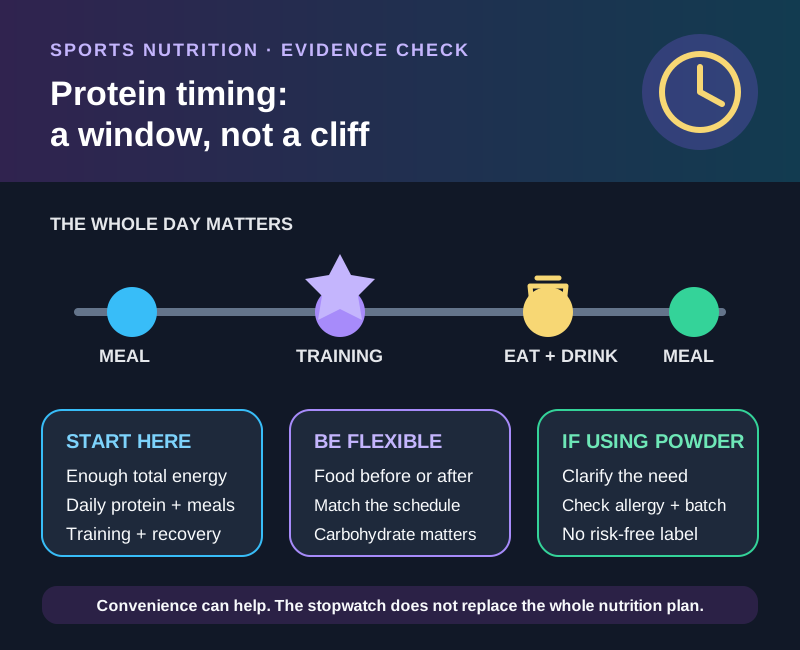
Key points
- Exercise increases muscle-protein synthesis for many hours; current direct-comparison evidence does not support a universal 30-minute post-workout deadline.
- Total energy, adequate daily protein, resistance training and a workable distribution across meals usually matter more than choosing protein immediately before versus after exercise.
- A shake can be practical but is not automatically better than food, and supplement labels do not remove contamination, allergy or anti-doping risk.
Replace the countdown with the real question
This guide is for athletes, parents, coaches and support teams deciding how to eat around training. Resistance exercise and protein both stimulate muscle remodelling, so eating a protein-containing meal around a session can be useful. The misleading step is turning that principle into a claim that adaptation is lost when a shake is not consumed within exactly 30 minutes.
A 2025 meta-analysis found only five eligible studies that directly compared protein before with protein after training for at least four weeks. Lean-mass change did not differ meaningfully; strength findings were inconsistent by exercise and too limited for a universal rule. The small evidence base does not show that timing never matters, but it does not establish a narrow cliff either.
Build the whole day before optimising one minute
First ask whether the athlete is eating enough overall and obtaining adequate protein across the day from meals and snacks that fit the training schedule. The World Athletics consensus gives population-level ranges and recommends spreading protein-rich foods across several eating occasions. Those ranges are not a personal prescription for a child, an injured athlete or someone with a medical condition.
A large resistance-training meta-analysis concluded that supplementation produced modest additional gains once training and daily intake were considered, and that timing variables explained little of the change. A 2025 athlete meta-analysis found apparent supplement benefits were concentrated in trials that did not match energy intake between groups, making it difficult to separate protein from simply consuming more energy.
Use a flexible eating opportunity
If a normal protein-containing meal was eaten before training and another is available soon afterwards, there is little reason to panic about the locker-room clock. When the next meal will be delayed, a portable food or drink can bridge the gap. The choice should also restore carbohydrate when the sport, session and next training demand make glycogen recovery important.
Practical options vary with culture, budget, allergies, gastrointestinal tolerance and dietary pattern. Dairy, eggs, fish, meat, soy, legumes, grains and mixed meals can all contribute in different combinations. Plant-based athletes may need deliberate variety and portion planning, but the label 'plant protein' does not by itself prove inadequate recovery.
Treat powders as products, not necessities
A protein powder may help during travel, after a late session or when food is temporarily impractical. It is not required for everyone and does not repair an unsuitable training load, low total energy intake or poor sleep. Choose a product only after clarifying the problem; a larger serving or more ingredients do not guarantee a better outcome.
The IOC and the 2026 NATA statement both emphasise a food-first assessment and supplement risk management. Products can contain undeclared ingredients or differ from the label, and strict-liability athletes remain responsible for what they ingest. Independent batch testing can reduce but not eliminate risk. Medical nutrition products and prescribed supplements need professional oversight.
Know when individual advice matters
A sports dietitian or clinician should individualise advice for a growing athlete, pregnancy, kidney or liver disease, food allergy, eating-disorder history, injury, weight-making sport, restricted diet or repeated gastrointestinal symptoms. Persistent fatigue, unexplained weight change, recurrent illness, menstrual disruption or bone pain deserves assessment rather than a self-directed increase in protein powder.
Track whether the plan is affordable, tolerated and compatible with training, recovery and ordinary meals. Performance cannot be attributed to one nutrient when training, energy, carbohydrate, sleep and health are changing together. This page does not calculate a dose, diagnose deficiency or recommend a supplement brand.