
Beach volleyball heat: make the court plan before the first serve
Heat risk depends on conditions, exposure and the athlete. Monitor the court, protect recovery and rehearse rapid recognition and cooling before play.
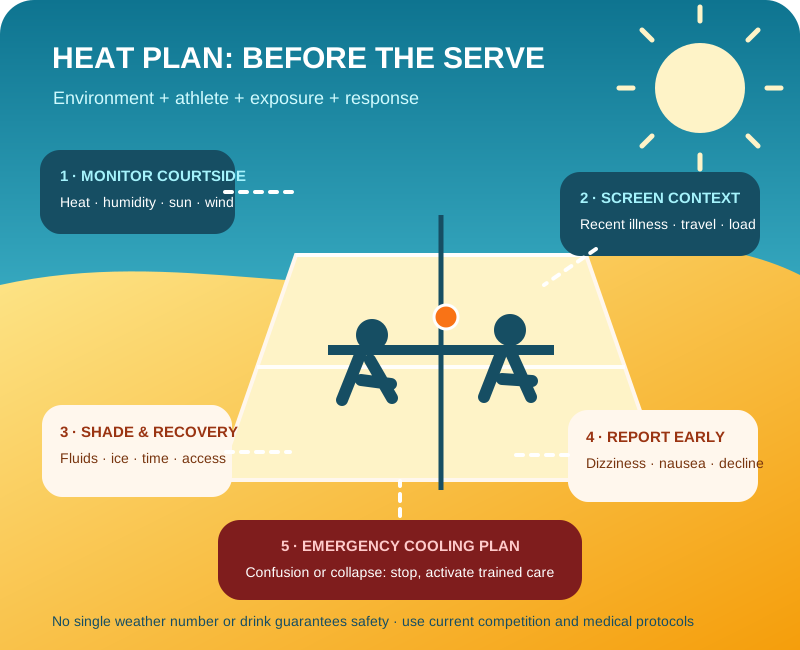
Key points
- Courtside heat exposure reflects temperature, humidity, solar load and wind, so a distant weather reading or a single universal cutoff is not a complete risk assessment.
- Eleven years of elite FIVB monitoring found heat-related medical time-outs were uncommon but more likely in hotter conditions; recent gastrointestinal illness featured in the two forfeits with such illness history.
- Confusion, collapse or altered behaviour in the heat is an emergency: stop play, activate the medical plan and begin rapid cooling under trained care.
Measure the court the athletes actually use
This guide is for beach volleyball athletes, coaches, officials, organisers and medical teams. Sun, hot sand, wind, humidity, air temperature, match timing and repeated exposure across a tournament all shape heat strain. The FIVB protocol measures environmental conditions courtside because an airport or phone weather reading may not represent the venue surface and surrounding radiant heat.
A wet-bulb globe temperature reading combines several environmental inputs, but it is not an individual diagnosis or permission to ignore symptoms. The IOC recommends a sport- and venue-specific risk analysis, repeated monitoring and communication, plus shade, ice, cooling and medical logistics. Organisers should define who reads the instruments, how often, and which current competition rules trigger modifications.
Interpret elite surveillance with care
Across 8,530 FIVB World Tour matches monitored over 11 years, researchers recorded 20 heat-related medical time-outs and three match forfeits. Higher air and black-globe temperatures were associated with events, while the absolute number remained low in these acclimatised elite athletes. Two players who had recent diarrhoea or gastroenteritis were among the forfeits.
This does not show that extreme heat is safe for community, youth or unacclimatised players. The surveillance involved elite competition, used medical time-outs as the outcome and may miss less visible strain or events outside the monitored tour. It supports adding recent illness and the athlete's condition to environmental data, not copying an elite tournament threshold into every beach session.
Prepare the athlete and the breaks
Progressive heat acclimatisation before a hot event can reduce strain, but the duration and content should be individualised around health, training and travel. Review match volume, recovery time, sleep, recent illness, medication and access to shade and cooling. A player returning from vomiting or diarrhoea needs clinical judgement, not encouragement to replace everything quickly and compete.
Hydration should replace likely losses without forcing fluid beyond thirst and the plan. Provide familiar drinks, cool storage and reliable access during permitted breaks; avoid experimenting with concentrated supplements or excessive water on competition day. Clothing, sunscreen and cooling strategies must also fit the sport's rules and the athlete. No single drink, ice vest or acclimatisation session cancels hazardous conditions.
Recognise heat illness before it becomes collapse
Headache, unusual fatigue, dizziness, nausea, cramps or declining coordination should prompt the athlete to stop and report. Confusion, collapse, seizure, agitation or other altered behaviour in the heat may indicate exertional heat stroke and requires emergency action. Do not attribute neurological change to poor effort, dehydration alone or a lost rally.
The event medical plan should identify the heat-treatment area, cooling equipment, trained personnel, ambulance route and handover process. The IOC consensus prioritises rapid whole-body cooling for suspected exertional heat stroke under trained medical care. Community organisers should call local emergency services and follow professional instructions rather than improvising a delay for transport or relying on cold drinks alone.
Review exposure across the tournament
Risk planning continues after one match. Record conditions, symptoms, medical time-outs, match duration, recovery access and any recent illness so the medical and competition teams can reassess later rounds. Consider schedule changes, additional recovery, roster decisions or withdrawal under the current rules when strain is accumulating. The athlete's condition can matter even when the environmental number changes little.
The strongest beach-specific evidence is observational surveillance, not a trial of cancellation thresholds or cooling strategies. This article does not prescribe a universal WBGT cutoff, drinking volume, acclimatisation schedule or return decision. Apply the current FIVB or local federation protocol and obtain individual medical advice for illness, medication, pregnancy or health conditions that alter heat tolerance.