
Blood-flow restriction training: a cuff is not a do-it-yourself rehab plan
BFR can pair low-load exercise with an individualised cuff pressure, but evidence and safety reporting are uneven. Screening, measured pressure and qualified supervision matter.
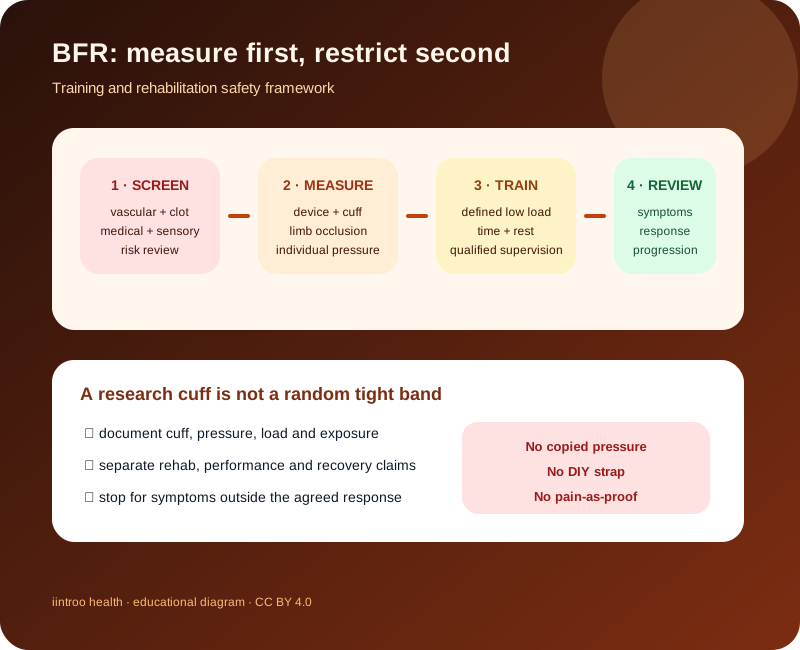
Key points
- BFR research uses controlled cuffs and defined pressure methods; a random strap, elastic band or copied pressure is not an equivalent intervention.
- Athlete reviews report selected strength or fitness effects, but protocols, populations and outcomes vary and adverse-event reporting is often incomplete.
- Vascular disease, previous vascular surgery, clot risk, hypertension, altered sensation, pregnancy, recent surgery and some Para-athlete considerations require exclusion or medical review under current AIS guidance.
Define BFR before discussing benefit
This guide is for athletes, coaches and support teams considering blood-flow restriction training for strength, conditioning, rehabilitation or recovery. BFR applies external cuff pressure to a limb while a planned activity is performed. Research protocols control cuff location, width, device, limb-occlusion assessment, exercise load, repetitions, rest and exposure time.
A knee wrap, resistance band, narrow strap or pressure copied from another athlete is not automatically the same intervention. The Australian Institute of Sport recommends individualised arterial occlusion pressure and qualified supervision. More pressure is not a shortcut to more adaptation and a familiar exercise becomes a different physiological task when restriction is added.
Screen before the cuff is inflated
AIS guidance lists peripheral vascular disease, previous vascular surgery to the limb and an arteriovenous fistula as reasons not to undertake BFR. It calls for medical review with concerns such as hypertension, previous venous thromboembolism, sickle cell disease, bleeding or clotting disorders, stroke and peripheral neuropathy. Recent surgery, pregnancy, medicines and other clot risks also belong in the decision.
Para athletes may have altered sensation, autonomic responses, pressure-injury or clot risk that changes screening and monitoring. A person who cannot reliably feel or communicate excessive pressure needs a different safety plan. Completing a generic online checklist does not replace a clinician's judgement when a condition or symptom is present.
Performance findings do not create one protocol
Athlete meta-analyses report selected improvements in strength, aerobic or sport-performance outcomes, but they combine different sports, cuffs, pressures, exercise modes and comparison groups. A 2026 review of BFR interval training in trained male athletes judged the evidence low certainty, safety reporting insufficient and immediate widespread use as a primary performance strategy unsupported.
Most samples are small, short and male-dominant. An average group effect cannot identify the right cuff pressure for one athlete or show that BFR is better than conventional training that the athlete can tolerate. It should answer a defined programming or rehabilitation question, not be added because severe discomfort is mistaken for effectiveness.
Rehabilitation and recovery are separate claims
After ACL reconstruction, BFR is sometimes proposed as a way to train with lower external loads. The 2026 review found potential signals but heterogeneous protocols and limitations; it does not replace graft protection, range-of-motion work, progressive strength, running and sport-specific criteria. Surgery date alone cannot determine suitability.
Passive or active BFR after exercise has also been marketed for recovery. A dedicated review found few studies, inconsistent protocols and mixed results, especially limited evidence in women and real sport settings. Rehabilitation, performance training and post-exercise recovery are different uses and evidence from one should not be transferred to another.
Monitor symptoms and stop early
Explain expected sensations and stop for chest pain, unusual breathlessness, faintness, severe or escalating pain, persistent numbness, weakness, marked colour change, swelling or any symptom outside the agreed response. AIS guidance notes rare but serious reported complications, including venous thromboembolism and rhabdomyolysis, while emphasising that high-quality complication-rate data remain limited.
This article provides general education. It does not prescribe cuff pressure, load, repetitions, duration or clearance. BFR should be selected, measured and supervised by appropriately qualified professionals who can screen risk, document the device and protocol, and change course when the athlete's response is not acceptable.