
Blood in urine after running: do not assume it is harmless
Pink, red or brown urine after running deserves assessment. Explore exercise-related haematuria evidence, urgent warning signs and useful details to record.
Key points
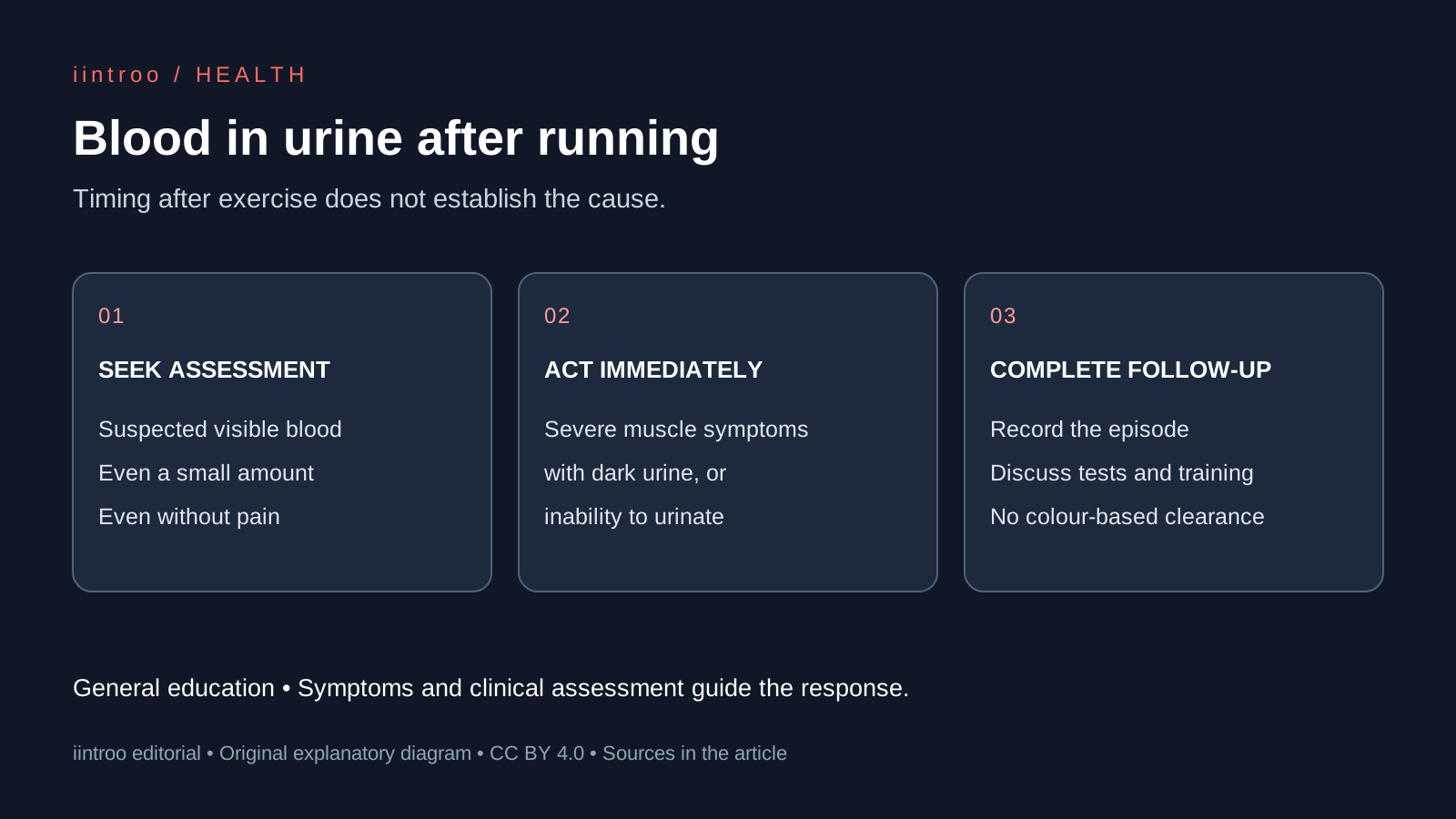
- Visible blood or suspected blood in urine needs prompt assessment, even without pain.
- Exercise can be associated with haematuria, but timing alone does not establish the cause.
- Severe muscle symptoms with dark urine, or inability to urinate, needs immediate care.
A colour change is a reason to ask, not a diagnosis
Pink, red or brown urine after a road run can be alarming. Haematuria means blood in urine; visible haematuria differs from microscopic blood found on testing. Even a small amount of blood can change the colour, and bleeding may occur without pain. This guide is for runners, coaches and event teams who need a sensible response without diagnosing the cause at the finish line.
The NHS advises urgent medical assessment for suspected blood in urine, including a small amount or uncertainty about whether it is blood. Beetroot and some medicines can also alter colour. Those possibilities should be reported, not used to dismiss an unexplained episode. A runner who otherwise feels well still needs advice.
Running can be involved, but the evidence has limits
A 2019 clinical review describes several possible exercise-related mechanisms, including irritation or injury within the urinary tract and changes affecting the kidneys. Estimates vary with the athletes studied, exercise demands and testing methods. Underlying urinary disease cannot be excluded simply because the change appeared after a demanding session.
In a small Japanese outpatient series, nine of twelve people presenting with visible blood after running had bladder-wall contusions seen during cystoscopy. All nine with contusions were men. This selected clinical series suggests one possible mechanism; it cannot estimate the risk among all runners, establish the cause in women, or prove that a training or drinking strategy prevents recurrence. It was not a treatment trial.
Know when the response must be immediate
Dark urine together with unexpectedly severe muscle pain or marked weakness raises concern for rhabdomyolysis, among other explanations. CDC advises immediate medical attention for possible rhabdomyolysis symptoms. Do not wait for every symptom to appear or attempt another workout to test whether the problem has settled. Colour alone cannot distinguish urinary bleeding from muscle-related pigment.
Inability to urinate or severe abdominal pain also needs immediate medical care: acute urinary retention can be dangerous. Tell medical staff about clots, pain, fever, recent injury and changes in urine output. These are clinical warning signs, not a checklist that has to be completed before seeking help.
Bring the context to the consultation
Record when the colour change started, whether it followed exercise, the activity and its duration, associated symptoms and whether it has happened before. Bring a medication and supplement list, including painkillers and blood-thinning medicines. Mention recent illness, urinary procedures, menstrual bleeding or other potential contamination of a sample; do not stop prescribed medicines on your own.
Assessment may include a urine sample, examination and further tests according to the history and findings. Not every runner needs the same investigation. A clinician may arrange repeat testing, imaging or specialist assessment. Ask what follow-up is needed even if the urine looks normal again.
Follow the cause, not a fixed return countdown
Descriptions of exercise-related haematuria resolving with rest are not permission to ignore visible blood for several days. The research review specifically highlights persistent or recurrent findings as reasons to investigate underlying disease. Initial assessment and any planned repeat samples should guide what happens next.
Discuss training and the next race with the assessing clinician, particularly after recurrence or any systemic symptoms. A clear-looking sample is not, by itself, a return-to-sport test. Treatment depends on the cause; an online guide cannot prescribe antibiotics, select a scan or clear an athlete. The practical priority is timely assessment and completing the agreed follow-up.