
BMX racing safety: build braking skills, check equipment and plan for crashes
BMX racing safety starts before the gate: coached bike control, appropriate protective equipment and a clear crash response, with honest limits to the evidence.
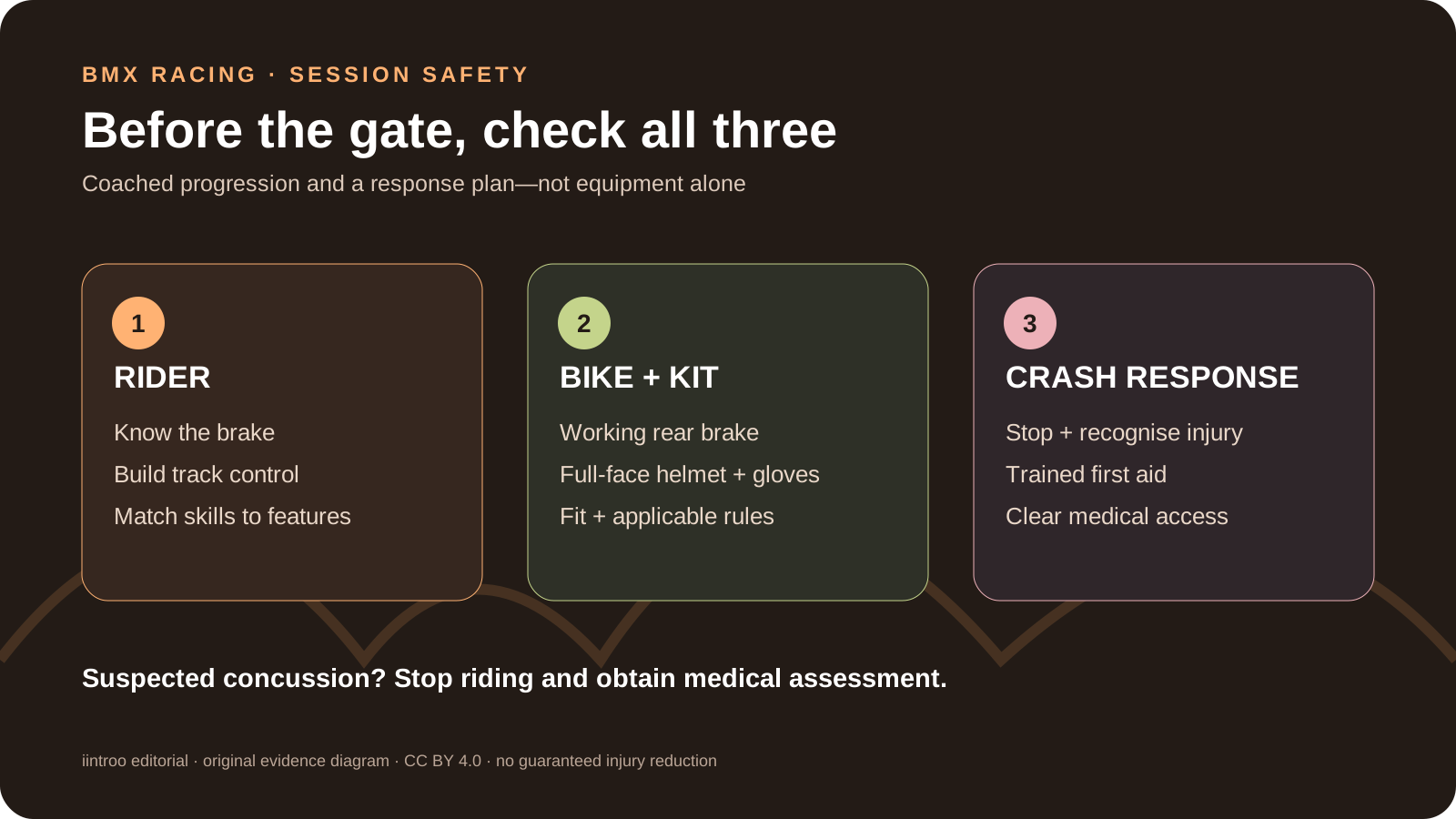
Key points
- BMX racing combines a start hill, rollers, jumps, banked turns and nearby riders; road-cycling experience alone does not establish track readiness.
- A 37-study review found heterogeneous injury data and few evaluated prevention strategies, so equipment or coaching should not be sold with an invented risk-reduction percentage.
- Suspected concussion means stopping riding and obtaining medical assessment, even if the rider wants to make the next heat.
Treat BMX racing as its own skill environment
This guide is for new racers, parents, club volunteers and coaches. BMX racing is not simply a short road ride on a smaller bicycle. Riders accelerate from a gate and negotiate rollers, jumps and banked turns while others compete for space. Racing and freestyle also differ; experience in one does not automatically prepare a rider for the other.
A club taster or coached foundation session gives the rider a setting in which to learn control before racing pressure is added. British Cycling's foundation coaching covers balance, bike control, pumping, starts and introductory jumping skills. The useful first question is not how fast the rider can go, but whether they can control the bike within the task selected by the coach.
Understand what injury statistics can—and cannot—tell you
A scoping review published online in October 2024 and in a 2025 journal issue screened 1,856 records and included 37 studies. Bruises, cuts and fractures appeared commonly, but most evidence came from elite events or emergency departments. Emergency data can miss injuries that never reach hospital and often lack a reliable measure of riding exposure.
Only one study separated injury rates by racing versus freestyle. Reported event rates used different methods and populations, and few prevention strategies had been evaluated. These findings support better surveillance, not a numerical forecast for a child attending a local club. Nor do they establish that a specific pad, warm-up or class format reduces injury by a particular percentage.
Sources: 2
Match the protective kit and bike to the session
British Cycling's entry guidance specifies a full-face helmet and full-finger gloves, with covered arms and legs; knee and elbow protection is recommended. Its coaching guidance also requires a suitable bicycle in good working order with at least a functioning rear brake. Ask the club to check fit and suitability, particularly for a growing young rider or borrowed equipment.
Equipment rules depend on the event and discipline. The UCI regulations page distinguishes rules currently in force from amendments with later effective dates; a published 2027 amendment is not automatically a 2026 requirement. Check the applicable rulebook and local organiser instructions. Protective clothing is a safety layer, not a reason to attempt skills beyond current control or continue riding after injury.
Practise stopping before adding start-hill pressure
British Cycling's technique guidance highlights a practical trap: a BMX bike may have only a rear brake, and its lever position can differ from a rider's usual bicycle. Riders need to know where it is and how it behaves before entering a coaching activity. Controlled braking is learned in an appropriate low-risk setting, not discovered while accelerating toward a jump.
The same guidance recognises that a beginner may find the start hill intimidating or lack the skills to control the resulting speed. A coach can select an easier starting position and suitable progression. Ask how the session separates ability levels, introduces features and manages riders waiting or moving on track. This is coached progression, not a self-directed jumping tutorial.
Make the crash response as clear as the start procedure
Before riding, establish who provides first aid, how the session is stopped and how medical help reaches the track. The UCI cycling concussion protocol includes education for non-medical observers because the first person noticing a problem may be a coach, official or another rider. Confusion, abnormal balance, memory problems or other concerning changes after a crash require removal and assessment rather than a test lap.
The next heat is not a reason to hide symptoms. If serious injury is suspected, activate the local emergency response and follow trained medical direction. Return after concussion or another significant injury requires an individual clinical plan; this guide supplies neither a diagnosis nor a fixed return date. Clubs should document incidents and review their response, not assume that an uneventful previous session proves the setup is safe.