
Mountain bike concussion: plan course access before the crash
A suspected concussion on a remote trail is both a medical and extraction problem. Train recognition, stop the ride, arrange safe access and rebuild technical riding step by step.
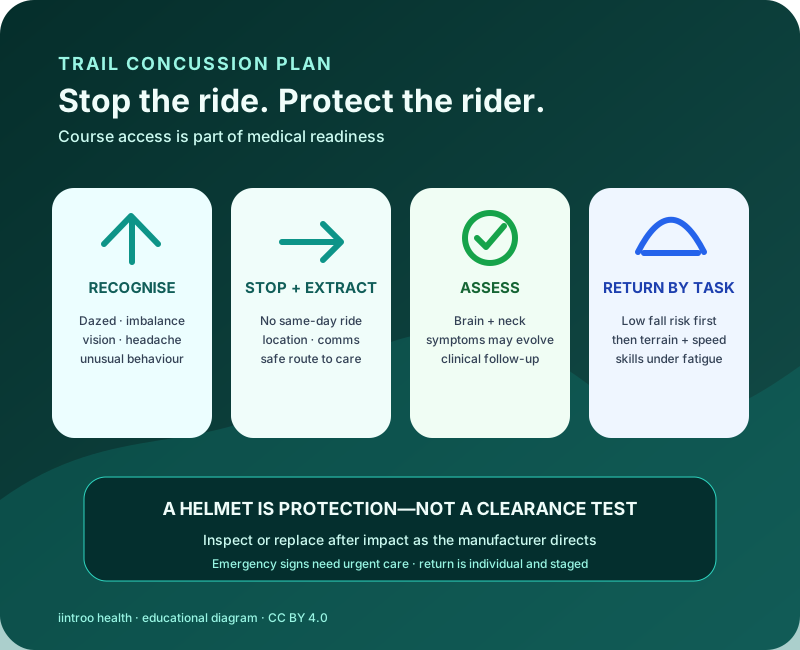
Key points
- Concussion may occur without loss of consciousness. Confusion, imbalance, vision change, headache or unusual behaviour after a crash should end the ride and trigger assessment.
- Cross-country and marathon courses can delay medical access, so organisers and groups need exact location, communication and extraction plans before riding.
- A helmet helps manage impact risk but cannot diagnose or rule out concussion; replace or inspect it according to the manufacturer after a crash.
Make recognition possible beyond the finish area
This guide is for mountain bikers, families, coaches, guides, teams and event organisers. Cross-country, marathon and downhill riding can place a crash out of sight and far from medical staff. The UCI protocol therefore asks non-medical people around cycling to recognise possible concussion and escalate rather than wait for a doctor to witness the impact.
A rider who looks dazed, is unusually slow to answer, has poor balance, headache, visual change, slurred speech, confusion or simply behaves differently after a crash should stop. Loss of consciousness is not required. Do not ask the rider to prove fitness by remounting, riding a technical section or completing a memory app beside the trail.
Treat the location as part of the emergency
Before the start, record course access points, coordinates, radio or phone coverage, marshal locations and the route for medical extraction. A riding group should know who stops other riders, who contacts help and who stays with the injured person. Remote access can also expose the rider to cold, heat or further collision while help arrives.
Call emergency services for deteriorating consciousness, seizure, repeated vomiting, severe or worsening headache, weakness, neck pain, unusual agitation, unequal pupils or another serious concern. Suspected spinal or major trauma needs the venue emergency plan and trained handling. This article is not a first-aid or evacuation course.
Remove and assess—do not use the helmet as clearance
A suspected concussion ends riding that day. The UCI and current event protocols require assessment and removal when concussion is diagnosed or strongly suspected. A normal-looking helmet, no visible wound or an apparently mild crash does not show that the brain is uninjured. The clinician also considers cervical, facial, eye and other injuries.
Follow the helmet manufacturer's instructions after impact; replacement or authorised inspection may be required even without obvious external damage. A helmet is one safety layer, not permission to continue after symptoms. The 2025 cycling review found injury patterns and data quality varied across disciplines, so percentages from road, BMX or one mountain-bike series should not be turned into a personal forecast.
Use contemporary recovery principles inside the applicable rule
After a short period of relative rest, contemporary concussion care supports gradual activity that does not more than mildly and briefly worsen symptoms, guided by a qualified clinician. Prolonged isolation is not the goal, but neither is an immediate return to risk. School, work, sleep, mental health, neck or vestibular symptoms and previous concussion can change the plan.
The UCI protocol, national federation rules and event policy may set mandatory minimums or documentation requirements. Apply the rule that governs the rider while also using individual clinical assessment; an administrative minimum is not proof of biological recovery. The downhill scoping review found only six eligible papers and no established trackside or return protocol in those studies, which makes uncertainty explicit rather than optional.
Rebuild riding skill before racing exposure
A staged return can begin away from fall risk, such as walking and controlled stationary exercise, then progress through simple cycling, supervised predictable terrain, technical features, higher speed and full training before competition. The sequence must reflect diagnosis, symptoms, age, discipline, course difficulty and clinical advice. Downhill, enduro, cross-country, BMX and adaptive mountain biking are not interchangeable tasks.
Look for symptom response, balance, vision, braking, line choice, reaction, confidence and decision-making under fatigue. One clean lap or normal power value does not establish readiness. This article provides general education and does not diagnose concussion, prescribe stages or clear a rider to return.