
Bobsleigh and skeleton head symptoms: a fast run is not medical clearance
Sliding athletes can experience crashes and repeated head acceleration. Report symptoms, follow the race-medical pathway and separate sensors from diagnosis.
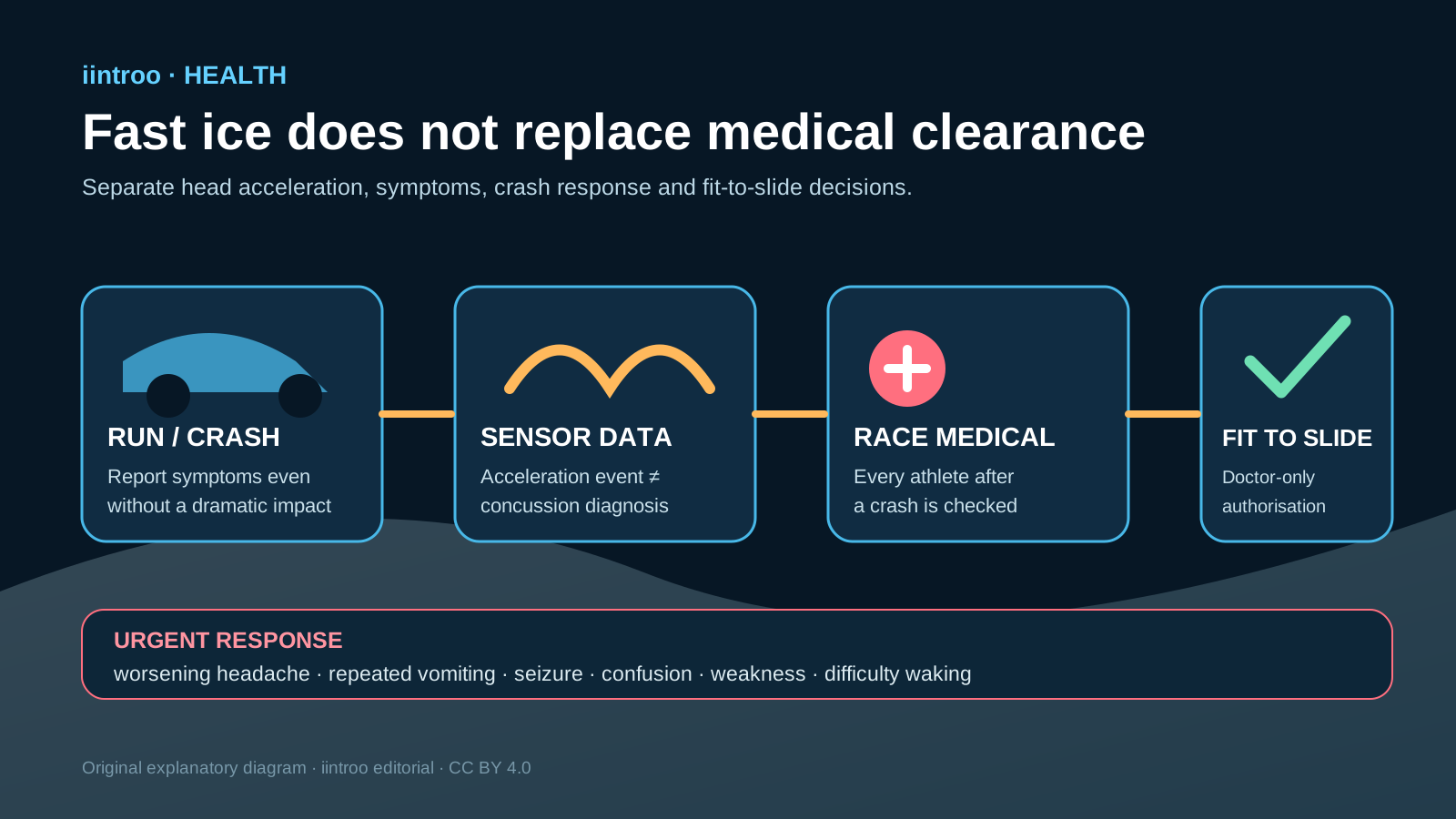
Key points
- Current IBSF bobsleigh and skeleton rules require every athlete involved in a crash to be checked by race medical staff.
- Instrumented mouthguards measure head acceleration events; an event count is not a concussion diagnosis and a quiet sensor does not clear symptoms.
- Only a medical doctor can provide fit-to-slide approval after the IBSF race-medical process.
Treat the track rule as the minimum response
This guide is for bobsleigh pilots and push athletes, skeleton athletes, coaches, officials and track medical teams. The 2025 IBSF rules for both disciplines state that after every crash an athlete must report to race medical staff for examination before further participation. If concussion or another serious injury is suspected, the athlete can be removed and temporarily unlicensed. Only a medical doctor can provide fit-to-slide approval. Those are federation procedures, not a promise that every injury will be obvious at the finish.
Report headache, dizziness, nausea, visual change, balance difficulty, slowed thinking, unusual fatigue, neck pain or a feeling described as ‘sled head’ even without a dramatic crash. Symptoms can follow repeated movement inside the sled as well as a collision, but the term does not define a medical diagnosis. Do not hide a symptom to protect a start position, and do not let a clean run, normal conversation or intact helmet replace assessment.
Understand what the head-acceleration study measured
A World Cup pilot study followed 12 elite bobsleigh athletes—three pilots and nine push athletes—during the 2021–22 tour. Instrumented mouthguards recorded 1,900 head-acceleration events across 48 training and 53 competition days. The study found no statistically clear differences in the measured event count or kinematic variables by sex, setting or position. It was a foundational exposure study, not a test of long-term brain health or a threshold that separates safe from unsafe runs.
The sample was small, video confirmation was unavailable and manufacturer algorithms identified events. The authors could not determine false-positive or false-negative event rates, nor establish the clinical consequences of repeated exposure. A 2018 systematic review found only nine eligible studies across competitive bobsleigh, skeleton and luge and called for much better research on symptoms and prevention. Its historical estimates should not be presented as the current risk for a particular track, discipline or athlete.
Separate sensors, helmets and medical decisions
A helmet is essential equipment but does not prevent every concussion or diagnose one after a run. An instrumented mouthguard can support research and, within a governed programme, add information for trained staff. A recorded acceleration is not itself concussion; absence of an alert cannot clear a symptomatic athlete. Coaches should preserve the run and symptom context, not assign a diagnosis from a number or compare one athlete's trace with a teammate's.
Worsening headache, repeated vomiting, seizure, increasing confusion, unusual drowsiness, weakness, slurred speech, unequal pupils or loss of consciousness requires urgent medical care. Significant neck pain, numbness, weakness or another suspected spinal injury also needs emergency response. Follow track rescue procedures and trained responders' instructions; do not remove equipment or move the athlete unless the environment is unsafe or the response plan requires it.
Rebuild the demands of sliding after clinical recovery
After a diagnosed concussion, modern guidance uses a staged, clinician-led return rather than prolonged strict rest or an automatic date. Sliding adds high speed, vibration, steering or head-first positioning, start power, cold exposure and the consequence of another crash. Fitness in the gym does not prove readiness for those demands. Later stages that reintroduce head-impact risk require the applicable medical authorisation and federation process.
Teams can protect reporting by deciding before the tour who receives symptoms, who communicates with race medical staff, how an athlete is transported, and how a removed athlete remains supported. A doctor determines diagnosis and fit-to-slide status; the coach and federation manage participation around that decision. This page does not interpret a sensor trace, reproduce a sideline test or clear any athlete to slide.