
Boccia upper-limb health: match throwing load, seating and recovery to the athlete
Boccia performance is highly individual. Track throws, transfers, chair use and symptoms together, while treating small fatigue studies as signals—not universal prescriptions.
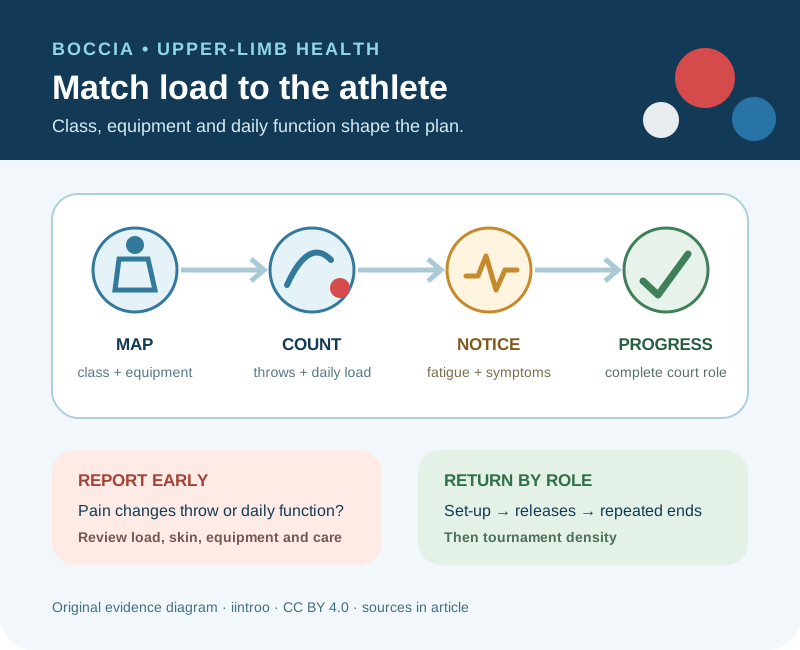
Key points
- World Boccia rules and classification recognise distinct eligible impairments and competition methods; one throwing model does not represent every athlete.
- A simulated-game study involved only nine elite underarm throwers and found upper-trapezius fatigue with reduced speed and accuracy, so it is a useful signal rather than a universal fatigue threshold.
- Shoulder and upper-limb symptoms should be reviewed alongside throwing, transfers, propulsion, personal care, equipment changes and the athlete's usual function.
Start with the athlete's class, method and daily demands
This guide is for boccia athletes, ramp operators, coaches, families and clinical teams. World Boccia's current rules cover manual throws, kicks, assistive devices and ramp play across classes, while its 2026 classification documents define sport eligibility and assessment. These sporting rules organise fair competition; they do not diagnose pain or prescribe one technique for every impairment.
Map how the athlete propels or releases the ball, stabilises the trunk, communicates with an assistant and uses a chair or other equipment. Add transfers, propulsion, work or school, personal care, therapy and other sport. For some athletes, daily upper-limb demand may exceed court throwing; for others, a tournament creates the largest change. The useful unit is the person's combined load and function, not boccia throws alone.
Treat the small fatigue study as a signal
A laboratory study followed nine elite athletes using an underarm technique during a simulated game. Upper-trapezius electromyographic fatigue was detected, perceived exertion rose, and ball speed and target-hitting performance declined from the beginning to the end. The sample was tiny, technique-specific and acute; it cannot define a safe number of throws or prove the same response in ramp users, kickers or every manual thrower.
Use fatigue-related changes—loss of accuracy, slower set-up, altered release, increased effort or reduced postural control—as prompts to review practice design. Divide high-quality technical work from repetitive volume, schedule breaks that reflect the athlete's needs and practise tournament routines before the event. No ratio of work to rest has been validated for all boccia classes.
Review seating and equipment without chasing a universal posture
Chair, cushion, straps, foot support, ramp, pointer, glove or ball changes can alter access, stability and movement. Check equipment under the current rules and with the relevant classification or technical process where required. Trial permitted changes in training and record comfort, skin response, breathing, control and symptoms instead of assuming that a more upright or more rigid position is medically better.
Equipment fit should preserve the athlete's usual safety and access needs. New pressure areas, skin change, breathing difficulty, increasing spasticity, autonomic symptoms or loss of function needs prompt review by the appropriate clinical or equipment professional. Competition legality and medical suitability are separate questions, and neither should be inferred from another athlete's set-up.
Respond early to shoulder and upper-limb symptoms
A systematic review found shoulder complaints common across wheelchair sports, but prevalence estimates varied widely and study quality was low. Rio 2016 surveillance identified the shoulder as the most commonly injured anatomical area across the Games, while boccia had a lower injury rate than several sports. These broad findings do not establish that boccia throwing caused an individual athlete's pain.
Report pain that changes throwing, transfers, propulsion, sleep or self-care, as well as new weakness, numbness, swelling or loss of control. Sudden severe pain, visible deformity, a cold or pale hand, chest pain, breathing difficulty or new neurological symptoms requires prompt local medical assessment. Do not test a painful arm through more ends to protect a score or classification status.
Return through the athlete's complete court role
Return may rebuild daily tasks, transfers or propulsion, range and strength relevant to the athlete, stable set-up, low-volume releases, accuracy tasks, repeated ends and tournament density. A ramp athlete may need to rehearse communication and pointer use; a manual thrower may need distance and repeated release; an assistant's safe working plan matters too. Progression depends on the diagnosis and the athlete's baseline function.
Monitor symptoms during and after practice rather than using one pain-free throw as clearance. Persistent pain, fatigue that changes safety, new skin or autonomic concerns, or reduced independence warrants reassessment. This article does not provide classification advice, prescribe equipment or rehabilitation, or set a universal return timetable.