
Boxing eye injuries: stop for vision changes and get assessed
A swollen eyelid can hide deeper injury. Stop the bout for vision change, severe pain or abnormal pupils, then use ophthalmology-led assessment before return.
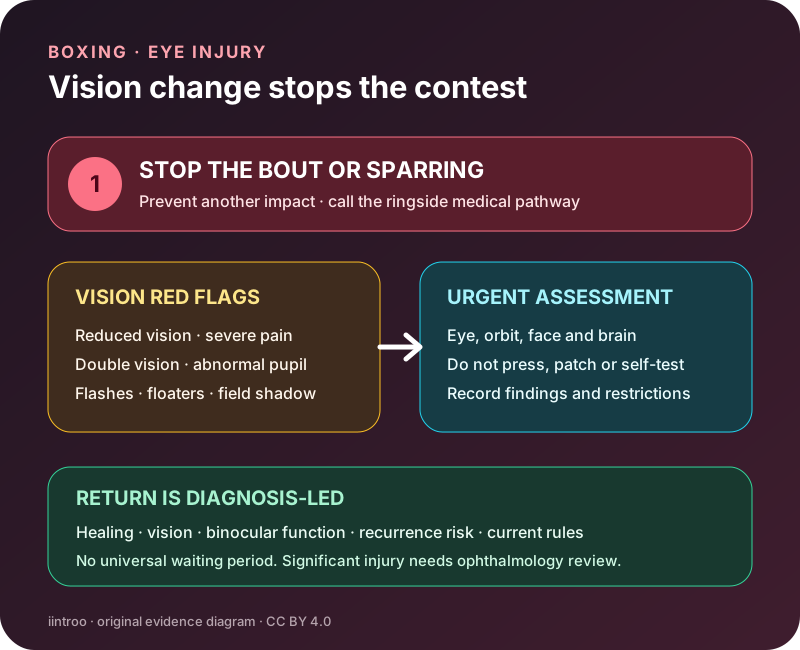
Key points
- Blunt eye trauma can injure the surface, anterior chamber, orbit or retina; visible swelling alone does not show the full severity.
- Reduced vision, severe pain, double vision, abnormal pupils, flashes, new floaters or a field shadow should stop participation and trigger prompt assessment.
- Return depends on the diagnosis, healing, vision, protective options and current competition rules; there is no safe universal waiting period.
Treat a change in vision as a medical event
This guide is for boxers, coaches, referees, parents, ringside clinicians and event organisers. A glove, thumb, head or orbital impact can cause a corneal abrasion, bleeding inside the eye, orbital fracture, retinal injury or damage to other structures. Swelling and bruising are visible; deeper injury may not be, and the athlete's ability to stand or answer questions does not establish that the eye is safe.
Stop the bout or contact session when there is reduced or distorted vision, severe eye pain, new double vision, an abnormal or irregular pupil, marked light sensitivity, flashes, many new floaters, a curtain-like shadow or blood visible in the eye. The 2025 World Boxing handbook includes face, orbit and pupil checks in pre-bout examination and places fitness decisions with qualified medical officials.
Escalate urgent and combined warning signs
Activate the event medical pathway for penetrating injury, suspected open globe, rapidly worsening swelling, loss of vision, severe pain, a fixed pupil, persistent vomiting or inability to move the eye normally. Eye trauma may occur with concussion or facial fracture, so confusion, seizure, worsening headache, neck pain, weakness or declining consciousness also requires emergency assessment.
Do not press on the eye, test pressure, remove an embedded object or force the lids open. Do not send the boxer back to sparring to see whether vision clears. First-aid steps depend on the suspected injury and responder training; protect the athlete from further impact and follow the ringside clinician and emergency-service plan.
Read the injury evidence without minimising rare harm
Recent reviews confirm that injury patterns differ by rule set, competition level and surveillance method. A 2024 martial-arts eye-injury series found corneal abrasion common and also recorded less frequent retinal and open-globe injuries. A 2023 comparison of boxing and mixed martial arts likewise identified eye trauma as a meaningful injury category while serious diagnoses were less common.
Hospital and database studies preferentially capture injuries that reach care, while bout records may miss delayed symptoms. They cannot calculate one individual's risk from number of fights or appearance of bruising. Rare severe outcomes still justify a low threshold for examination because delayed retinal or pressure-related complications can threaten vision.
Build eye care into boxing governance
Pre-bout screening, accurate injury recording and post-bout instructions connect the gym to the event medical system. Athletes should report previous eye surgery, one-eyed status, current symptoms and changes from earlier examinations to the responsible clinician. A normal old examination does not clear a new injury.
Coaches and officials should know who can stop the bout, where urgent eye assessment is available and how a restriction reaches every training venue. Protective equipment and rules can reduce some exposures but cannot guarantee that the globe, orbit or retina is protected. No headguard claim should be used to override symptoms or medical judgement.
Return follows diagnosis, function and the rulebook
A boxer with significant eye injury or visual change needs ophthalmology assessment before return. The decision can consider visual acuity and field, binocular function, healing, recurrence risk, treatment, protective options and the demands of sparring and competition. The minimum administrative restriction is not proof that an eye has recovered.
There is no universal number of days for an abrasion, hyphema, orbital fracture, retinal tear or surgery. Resume non-contact work and then contact only under the treating clinician's plan and the current federation or commission rules. Persistent pain, blur, flashes, floaters or double vision during recovery requires reassessment rather than testing the eye in the ring.