
Boxing weight cuts: rapid dehydration is not routine preparation
Why rapid weight loss by dehydration can harm health, why recovery after the weigh-in may be incomplete, and what a safer support system looks like.
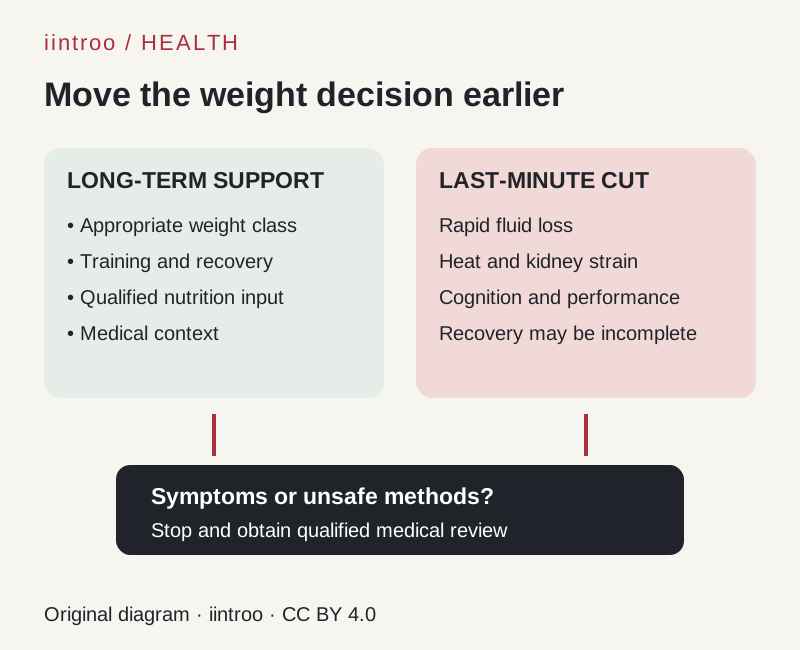
Key points
- Rapid weight loss is common in combat sports but prevalence does not make it safe.
- A weigh-in does not show that hydration or health has recovered.
- Weight management should be long-term and led by qualified health and nutrition professionals.
Who this matters to
This guide is for boxers, parents, coaches and competition staff. Making a contracted or tournament weight can become normalised inside a gym, yet the Association of Ringside Physicians identifies excessive, rapid and repeated weight loss as a health and safety problem. A successful weigh-in is not evidence that the method was safe.
Risk is not limited to professionals. Young athletes may encounter weight-cutting culture before they have access to qualified nutrition and medical support. Coaches should not prescribe dehydration, and teammates' routines should never become a template for another athlete.
What athletes report doing
A 2024 systematic review included 26 survey studies and 3,994 athletes across 14 combat sports. Weight loss before competition was highly prevalent, and many athletes reported beginning in adolescence. Increasing exercise and gradual dieting were common, while extreme practices also appeared in some groups. Qualified practitioners had little reported influence.
These are self-reported practices, not proof that a method is effective or safe. The sports, questionnaires and competitive levels differed, and the review could not determine long-term effects. Prevalence should be treated as a reason to improve systems, not as permission to copy the majority.
Sources: 4
Dehydration reaches beyond the scale
Rapid fluid loss can affect cardiovascular function, temperature regulation, kidney function, cognition and physical performance. The Western Australian safety strategy notes that regaining scale weight between weigh-in and contest does not necessarily mean adequate rehydration has occurred. That matters in a sport where judgement, defensive reactions and tolerance of exertion are safety-critical.
This article intentionally does not provide sauna, fluid-restriction, vomiting, laxative or diuretic instructions. These practices can cause serious harm. Dizziness, confusion, fainting, very reduced urination, chest symptoms or an athlete who seems acutely unwell requires prompt medical assessment; severe or rapidly worsening symptoms warrant emergency care.
Move the decision earlier
The ACSM consensus supports a pragmatic, long-term approach with a qualified sports nutrition professional and calls for sport systems that discourage unhealthy methods. The relevant weight class should be considered well before fight week, alongside growth, body composition, training, recovery, medical history and the actual time between weigh-in and competition.
For a young boxer, involve a parent or guardian and appropriately qualified clinician. A sports dietitian can assess fuelling without turning an online percentage or target into a prescription. Repeated inability to reach a class without acute methods is a reason to reconsider the class, not a reason to intensify the cut.
Sources: 3
A gym and event safety checklist
Establish who can stop a cut, where confidential help is available and which current federation or commission rules apply. Record concerning symptoms and recent weight changes for the clinician rather than trying to clear the athlete at the scale. Event staff need an escalation route that does not depend on the athlete admitting distress in front of opponents.
Policies vary between amateur and professional boxing and across jurisdictions. Medical licensing, weigh-in rules and a nutrition plan answer different questions; none guarantees safety. Individual advice must come from professionals who know the athlete and the competition requirements.