
Canoe and kayak capsize in cold water: plan for the first minutes
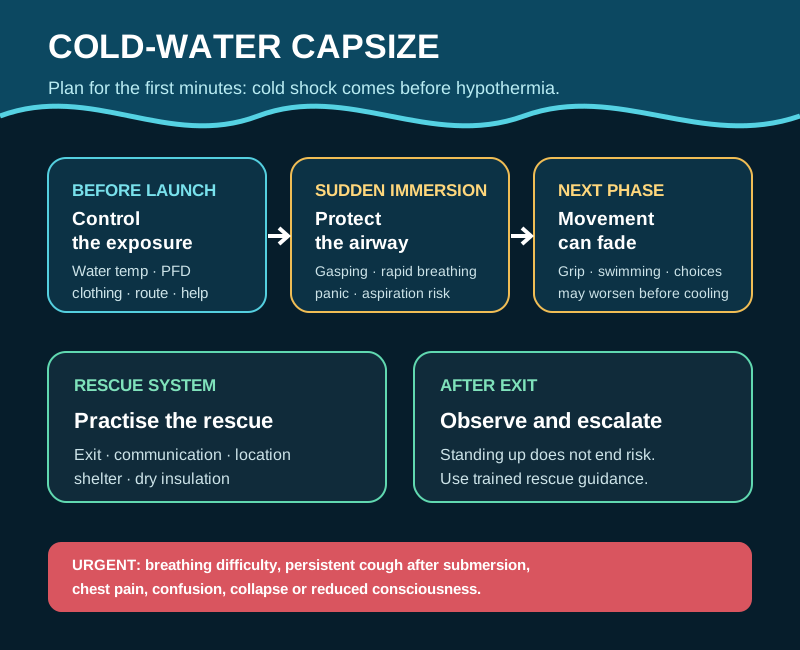
Cold shock and loss of useful movement can develop before hypothermia. Paddlers need flotation, clothing for water temperature, a practised rescue plan and a clear route to emergency help.
Key points
- Sudden immersion can trigger involuntary gasping and rapid breathing before core body temperature falls.
- A buoyancy aid, clothing selected for water temperature and a rehearsed rescue plan address different parts of the risk; no single item makes cold water safe.
- After rescue, breathing difficulty, confusion, collapse or reduced consciousness requires urgent medical help.
Plan for immersion, not just the forecast
This guide is for canoeists, kayakers, coaches, parents and event teams. Warm air does not guarantee warm water. Before launching, check water temperature, wind, flow, waves, daylight, exit points and the distance to effective help. Dress for the water rather than the car park, and follow the current rules and local requirements for the discipline, venue and age group.
A correctly fitted buoyancy aid or lifejacket, suitable thermal protection, communication equipment and a float plan solve different problems. Competition equipment approval is not a complete recreational safety plan. Fit, maintenance and the ability to operate equipment with cold hands need to be checked in the setting where it will be used.
The first threat is not always hypothermia
Cold-water immersion can provoke an immediate gasp, rapid breathing, panic and a sharp cardiovascular response. A 2026 narrative review describes a four-stage model: cold shock, swimming failure, hypothermia and circum-rescue collapse. The authors emphasise that aspiration or incapacitation can occur before substantial core cooling.
The sequence and severity vary with water temperature, clothing, flotation, waves, health and the circumstances of the capsize. A paddler should not use a stopwatch, body size or previous cold exposure to predict a safe personal survival time. Habituation does not remove drowning risk.
Practise a rescue system while conditions are controlled
Training should cover capsize prevention, separation from the craft, assisted and self-rescue options appropriate to the boat, keeping the airway clear, communication and getting out of the water. Choose instructors and water conditions that match the athlete's experience. Deliberate cold-water practice can itself be hazardous and should not be improvised as a toughness test.
Agree who calls emergency services, how the group identifies its location and what happens if the planned exit is unavailable. Remote paddling needs redundancy because a phone without signal or a whistle stored out of reach cannot perform its intended role. Event organisers should connect the plan to rescue cover and local emergency services.
After a capsize, protect the airway and activate the plan
A flotation device can help a paddler keep the airway above water while the initial breathing response settles. Use the safest available route out of the water and follow trained rescuers' directions. Long or forceful swimming can accelerate heat loss and fatigue; the correct choice between reaching a nearby exit, staying with the craft or awaiting rescue depends on the actual conditions and plan.
Once out, move gently to shelter, replace wet clothing with dry insulation when possible and continue observation. Do not assume that standing up or speaking normally ends the risk. The 2026 review discusses deterioration around rescue, while the ILS statement is written for trained lifesavers rather than as a public resuscitation manual.
Know when medical help is urgent
Call the local emergency service for breathing difficulty, persistent coughing after submersion, chest pain, confusion, collapse, reduced consciousness, severe shivering with worsening coordination or any concern that water was inhaled. Begin first aid or resuscitation only within current training and dispatcher guidance.
Return to paddling after a serious immersion event depends on medical assessment, the cause of the capsize and whether equipment, supervision and environmental controls have changed. An article cannot provide individual clearance or a universal waiting period.