
Open-water swimming: check water quality before the start
Water that looks inviting can still carry germs. Use official monitoring, recent conditions and symptoms to make safer training and race decisions.
Key points
- Appearance alone cannot establish that natural water is safe.
- Check current official advisories and the event's water-quality process.
- Illness after exposure should be reported with the time and location of the swim.
Who should use this guide
This guide is for open-water swimmers, coaches, parents and organisers choosing a training area or preparing for a race. Natural water changes with weather, drainage, sewage incidents, wildlife and local conditions. Clear water, no odour and a familiar beach do not prove that microbiological quality is acceptable.
For organised competition, follow the current federation rules, local health authority and event medical team. World Aquatics' manual requires an appropriate local authority water-standard certificate and describes sampling around the event. A club check or consumer sensor is not a substitute for that official process.
Know before you go
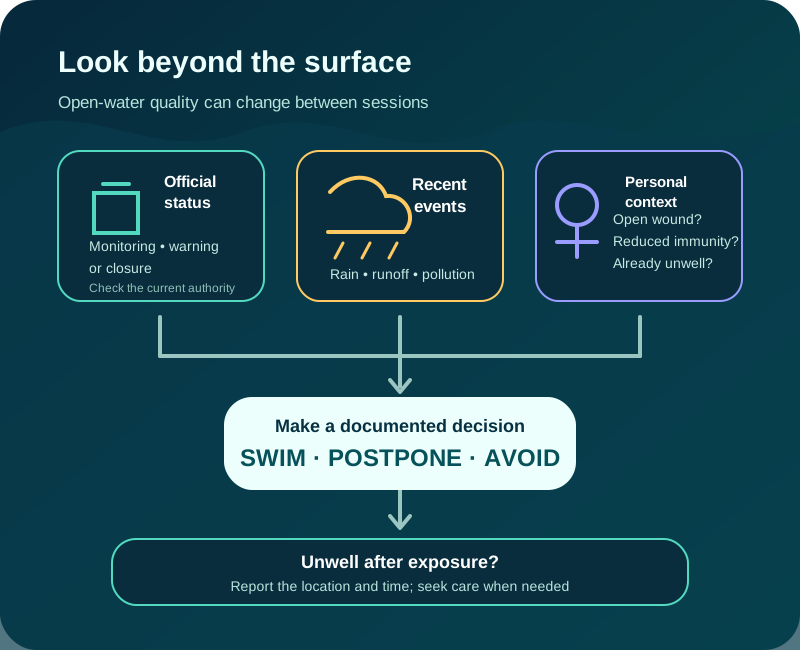
Check the responsible public-health or environmental authority for current monitoring results, warnings and closures. The CDC highlights extra caution after heavy rain because runoff can carry contamination into swim areas. Unusually cloudy, discoloured or bad-smelling water, visible drainage pipes or a posted closure are reasons to stay out and seek official information.
Not every site is routinely monitored, and a result represents a particular sample, place and time. WHO guidance uses a risk-management approach rather than treating one laboratory value as a permanent guarantee. Event organisers should have a documented decision route for changing conditions, not improvise at the start line.
What the evidence says about illness
A systematic review and meta-analysis screened 8,618 records and included 92 studies. Compared with no contact, swimming in ambient surface water was associated with higher pooled risks of gastrointestinal and respiratory illness. Sports-related contact also showed increased gastrointestinal risk, but studies differed in settings, exposure definitions and water-quality measures.
These pooled associations do not predict whether one swimmer will become ill at one venue. They support prevention and surveillance, not panic or a claim that all natural water is unsafe. The evidence also cannot replace current local sampling and source investigation.
Sources: 4
Reduce exposure without inventing certainty
Do not swallow the water. Stay out when you have diarrhoea so you do not expose others, and avoid entering with an open cut or wound unless a healthcare professional has advised how it can be fully protected. People whose immune defences are reduced by a health condition or medicine should discuss natural-water swimming with their clinician.
Goggles, a wetsuit or rinsing afterwards do not certify the water as safe. The most useful control is avoiding a questionable exposure and following official instructions. Coaches should make withdrawal possible without pressuring an athlete to race through a water-quality concern.
Sources: 3
Respond and report after a swim
Diarrhoea, vomiting, a rash, ear symptoms, breathing problems or an infected wound after open-water exposure can have many causes. Contact a healthcare professional if you become unwell, and provide the swim location, date, exposure duration and any official advisory. Severe dehydration, breathing difficulty, confusion or rapidly worsening illness needs urgent medical care.
Tell the organiser or local public-health authority when requested, particularly if multiple swimmers are affected. Timely reports can support investigation, but this article cannot diagnose an infection or set an individual treatment plan.