
Kayaking and leptospirosis: protect cuts and report illness after freshwater exposure
Leptospirosis is uncommon in many paddling settings but can be serious. Protect cuts, check local conditions and report fever after freshwater exposure early.
Key points
- Leptospirosis can follow contact with freshwater or wet soil contaminated by infected animal urine.
- Clear-looking water does not rule out contamination; local advice and practical hygiene still matter.
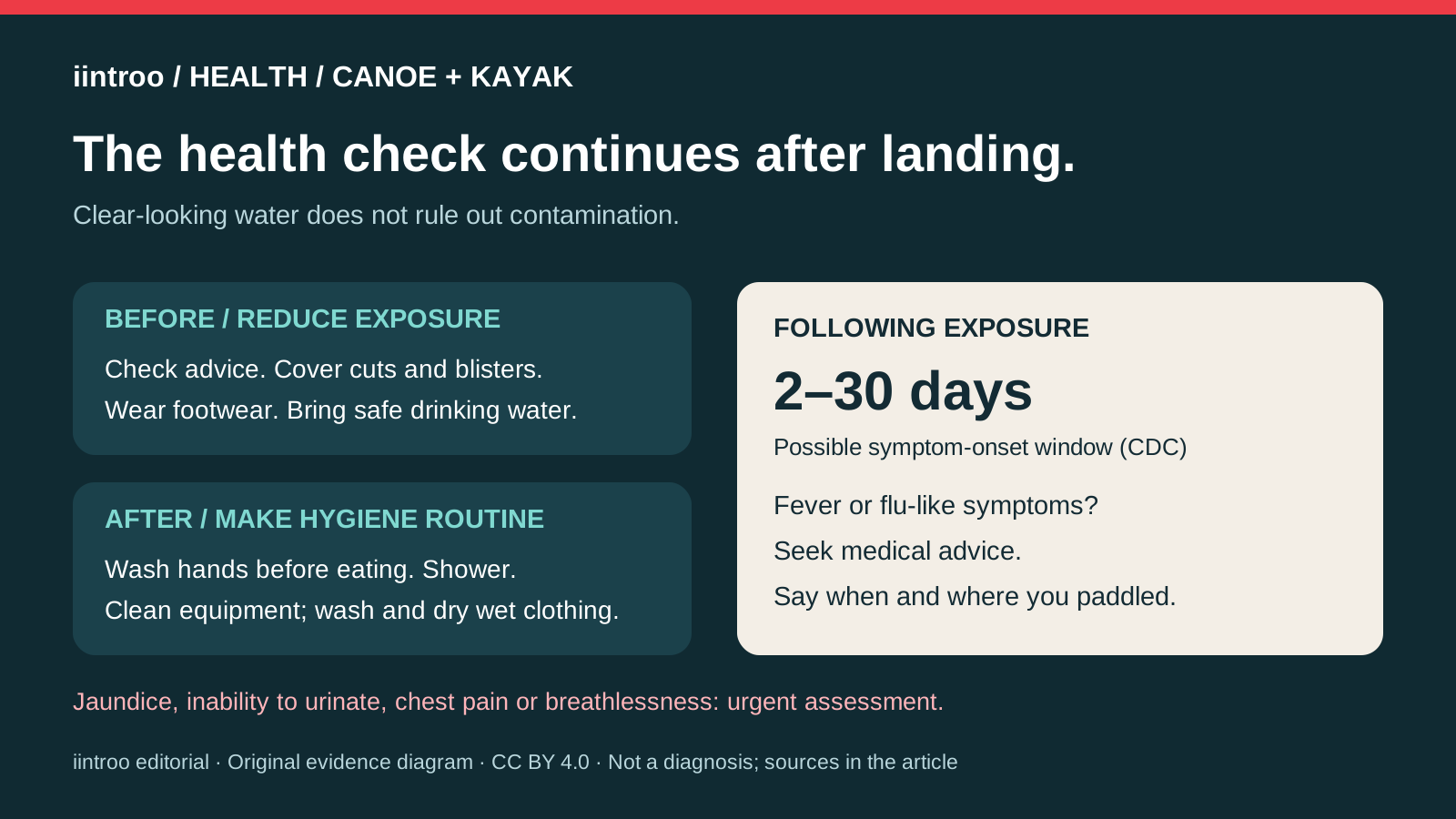
- Symptoms may begin 2–30 days after exposure. Tell the clinician when and where you paddled.
A paddling health issue without the scare story
This guide is for canoeists, kayakers, coaches and trip organisers using rivers, lakes or canals, including people travelling for training. Leptospirosis is a bacterial infection associated with urine from infected animals. Rodents are one reservoir, but livestock and other mammals can also carry it. It is not simply a disease of visibly dirty urban water.
The NHS describes infection as rare in the UK. Risk is not identical across countries, seasons or waterways, and it is higher in some tropical settings. Severe leptospirosis is often called Weil's disease; that term should not imply that every infection is severe. The sensible response is preparation and recognition, not a claim that all freshwater sport is unsafe.
Understand the exposure, not just the capsize
Contaminated water or wet soil can contact cuts, abrasions, eyes or the mouth. Prolonged exposure, head immersion and swallowing water can increase risk. Heavy rain and flooding are important reasons to reconsider exposure, particularly in endemic areas. A universal number of hours to wait after rain is not established by this guidance; follow current local public-health and venue advice.
For a paddler, planning therefore extends beyond the on-water rescue drill to launching, wet kit and broken skin. A clear-looking river is not a laboratory result: Paddle UK notes that observation cannot establish whether leptospirosis is present. Avoid contact when contamination is suspected, rather than trying to make an unsafe outing acceptable with one piece of equipment.
Build simple controls into the outing
Cover cuts and blisters with suitable waterproof dressings and use protective footwear, particularly when launching or landing. Bring safe drinking water instead of drinking river or lake water. Keep handwashing possible before eating, and avoid deliberately splashing freshwater onto the face to cool down.
After paddling, wash hands, shower and clean exposed equipment with clean water. Wash and dry contaminated clothing before re-use, and clean any new wound promptly. These measures reduce avoidable exposure; they are not a guarantee against infection. Make them part of the club's normal kit and facilities rather than leaving every participant to improvise.
An organiser can check that the venue briefing explains local warnings, washing facilities and how to report illness afterwards. The same practical questions apply to a training camp in Türkiye or a recreational trip abroad, but one country's risk description must not be treated as a current assessment of a different river.
What an outbreak can—and cannot—tell us
A published investigation described 14 cases among kayakers during a 2016 outbreak in Brittany, France: eight laboratory-confirmed and six probable cases. Nine people reported skin wounds. This establishes that paddling-associated outbreaks can occur in a temperate region, not only on tropical expeditions.
It does not provide the chance of infection on an ordinary trip, prove that any particular wound caused an infection or quantify how much a dressing protects. The descriptive investigation, probable-case definitions and incomplete detection of mild illness limit those conclusions. Historical outbreak findings should inform awareness without being presented as a warning about that location today.
Sources: 6
Report the water exposure when illness develops
CDC gives an incubation range of 2–30 days, most often 5–14. If fever, headache, muscle aches, vomiting, diarrhoea or red eyes develop after freshwater exposure, seek medical advice and mention where and when you paddled. These symptoms overlap with other illnesses; neither an online checklist nor exposure alone makes the diagnosis.
Jaundice, inability to urinate, chest pain or shortness of breath needs urgent medical assessment. Severe breathing difficulty or collapse requires emergency help. Do not dismiss worsening illness as hard-training fatigue or delay care while waiting for a clubmate to become ill.
CDC does not recommend testing people without symptoms. Preventive antibiotics are not a routine do-it-yourself paddling measure; evidence and individual circumstances require clinical judgement. This article does not prescribe medication or a return-to-training interval. A person recovering from significant illness should discuss safe progression with their treating clinician.