
Central diabetes insipidus in sport: protect water access without improvising desmopressin
Arginine vasopressin deficiency can destabilize water and sodium balance. Athletes need reliable water access, prescribed desmopressin and clear emergency steps.
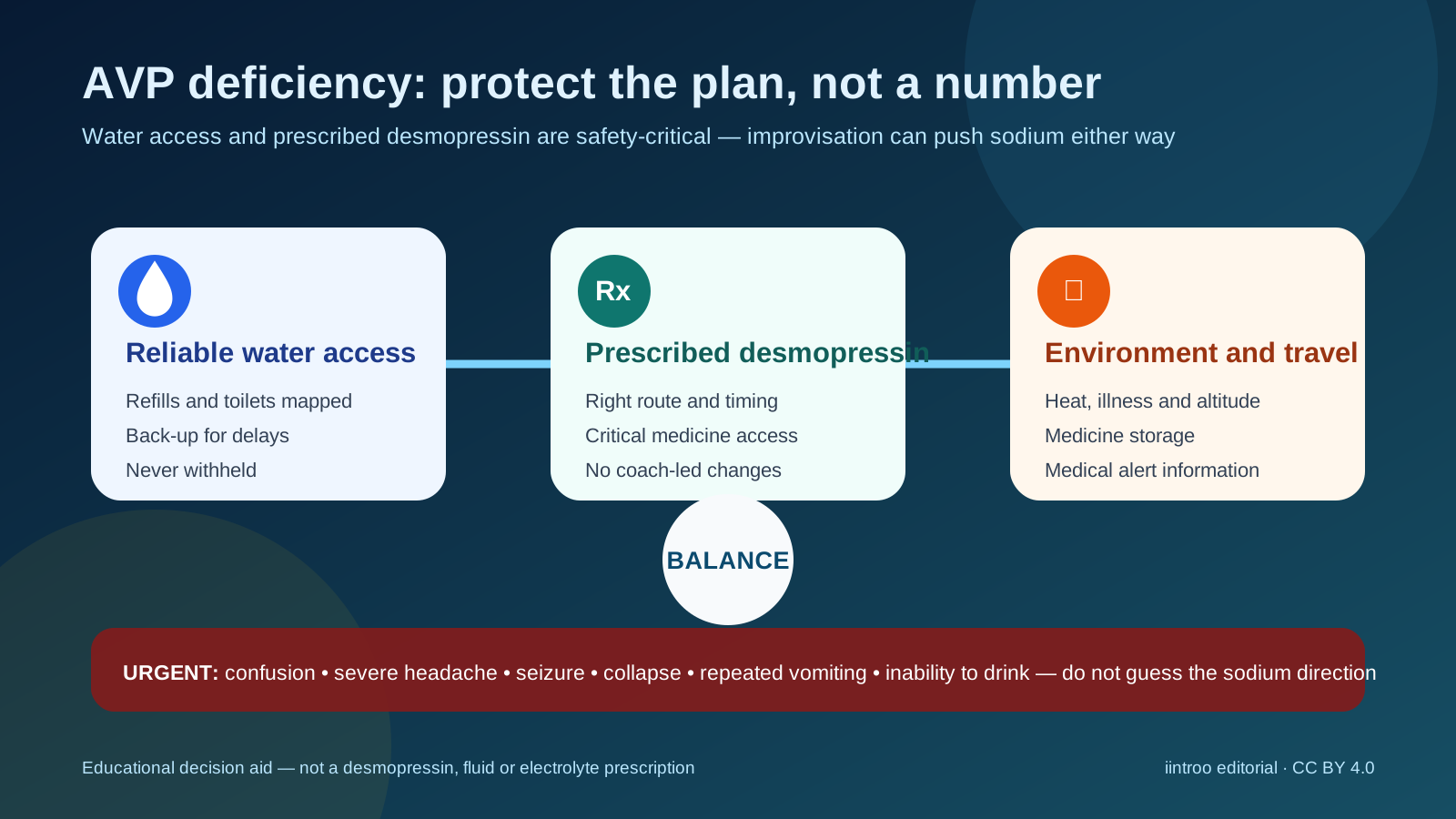
Key points
- Central diabetes insipidus is now called arginine vasopressin deficiency; it is different from diabetes mellitus and from AVP resistance.
- Reliable access to water and the prescribed desmopressin plan are safety-critical, while both dehydration and dilutional hyponatremia are possible.
- Confusion, seizure, collapse, repeated vomiting, severe headache or inability to drink needs urgent medical assessment rather than fluid or dose improvisation.
Use the right diagnosis and protect the established plan
This guide is for athletes with diagnosed arginine vasopressin deficiency, families, coaches and event teams. AVP deficiency is the current name for central or cranial diabetes insipidus. It causes hypotonic polyuria and thirst because the body does not release enough vasopressin; it is not diabetes mellitus and is different from AVP resistance. Causes and associated pituitary conditions vary. Some people have an intact thirst response, while adipsia, disability, illness or impaired consciousness can remove that protection and make water balance especially fragile.
Desmopressin replaces the missing antidiuretic signal and is prescribed individually by route, dose and timing. The main safety tension is real: missed or ineffective treatment with limited water access can lead to dehydration and hypernatremia, while retained water under desmopressin can cause dilutional hyponatremia. Coaches must never delay, double, skip or retime a dose, tell an athlete to drink beyond their plan, or copy another person's strategy. Confirm the clinician-authored plan, storage, self-administration arrangements and emergency contacts before travel or remote competition.
Recognize that sport-specific evidence is absent
Current guidance addresses diagnosis, daily treatment, hospitalization and patient safety rather than controlled exercise trials. A large international survey documented confusion with diabetes mellitus, missed desmopressin during hospital care and reduced quality of life, but it did not test endurance strategies. Reviews emphasize individualized desmopressin and education to prevent both dehydration and hyponatremia. Therefore, there is no evidence-based universal pre-exercise dose, fluid volume, sodium target, weigh-in rule or heat-acclimation protocol for athletes with AVP deficiency.
The absence of a sport trial does not mean sport is forbidden. It means general hydration slogans such as 'drink as much as possible' or 'replace every gram lost' can be unsafe when water excretion is pharmacologically controlled. The athlete's endocrinology team should translate their usual plan to training duration, climate, access to toilets and water, fasting, travel and associated pituitary replacements. A coach can test logistics in lower-risk sessions, but a successful rehearsal does not prove that a changed dose or improvised fluid challenge is safe.
Engineer access for heat, travel and venues
Guarantee unrestricted access to the person's planned water supply and toilets. Map refill points, shade, medical posts and communication gaps, and carry backup supplies for delays. Heat, altitude, fever, vomiting, diarrhoea and long travel can alter losses or the ability to drink. Nasal congestion may matter for a person using intranasal medicine, but route changes belong to the prescriber. Event staff should know that AVP deficiency is not a reason to withhold water or desmopressin and that the athlete may carry a medical alert card.
Use the individual's written monitoring plan rather than a team hydration contest. Record unusual thirst, urine change, body-weight change if specifically advised, headache, nausea, cramps, fatigue, dizziness, confusion and medication problems. These symptoms overlap with heat illness, dehydration, hyponatremia and other conditions, so field observation cannot diagnose the sodium direction. Sports drink labels, urine colour, sweat patches and wearables cannot replace blood testing. Do not give salt tablets, force water or restrict drinking as an experiment.
Escalate neurological symptoms and restore stability first
Stop exercise and obtain urgent medical help for confusion, severe or rapidly worsening headache, seizure, collapse, marked drowsiness, repeated vomiting, inability to drink, severe weakness or a major change in behaviour. These can occur with dangerous sodium disturbance or another emergency. Tell responders the diagnosis, desmopressin route and last prescribed dose, fluid intake if known, associated pituitary conditions and medicines. Do not assume the person needs more water or more desmopressin; the wrong response can worsen the opposite disturbance.
After illness, a treatment interruption or suspected sodium disturbance, return only after the athlete is clinically stable and their management plan is reviewed when necessary. Rebuild from short, accessible sessions to the environmental and logistical demands of the sport. There is no universal sodium value, body-mass change or symptom-free waiting period for clearance. This article cannot diagnose AVP deficiency, prescribe desmopressin, fluids or electrolytes, manage an emergency sodium disorder, or clear participation. It supports reliable access and rapid escalation around a plan written by the treating team.