
Sport with a cochlear implant: plan for water, impact and communication
A cochlear implant need not end sport, but water, head impact, retention and communication need a device-specific plan with the implant team.
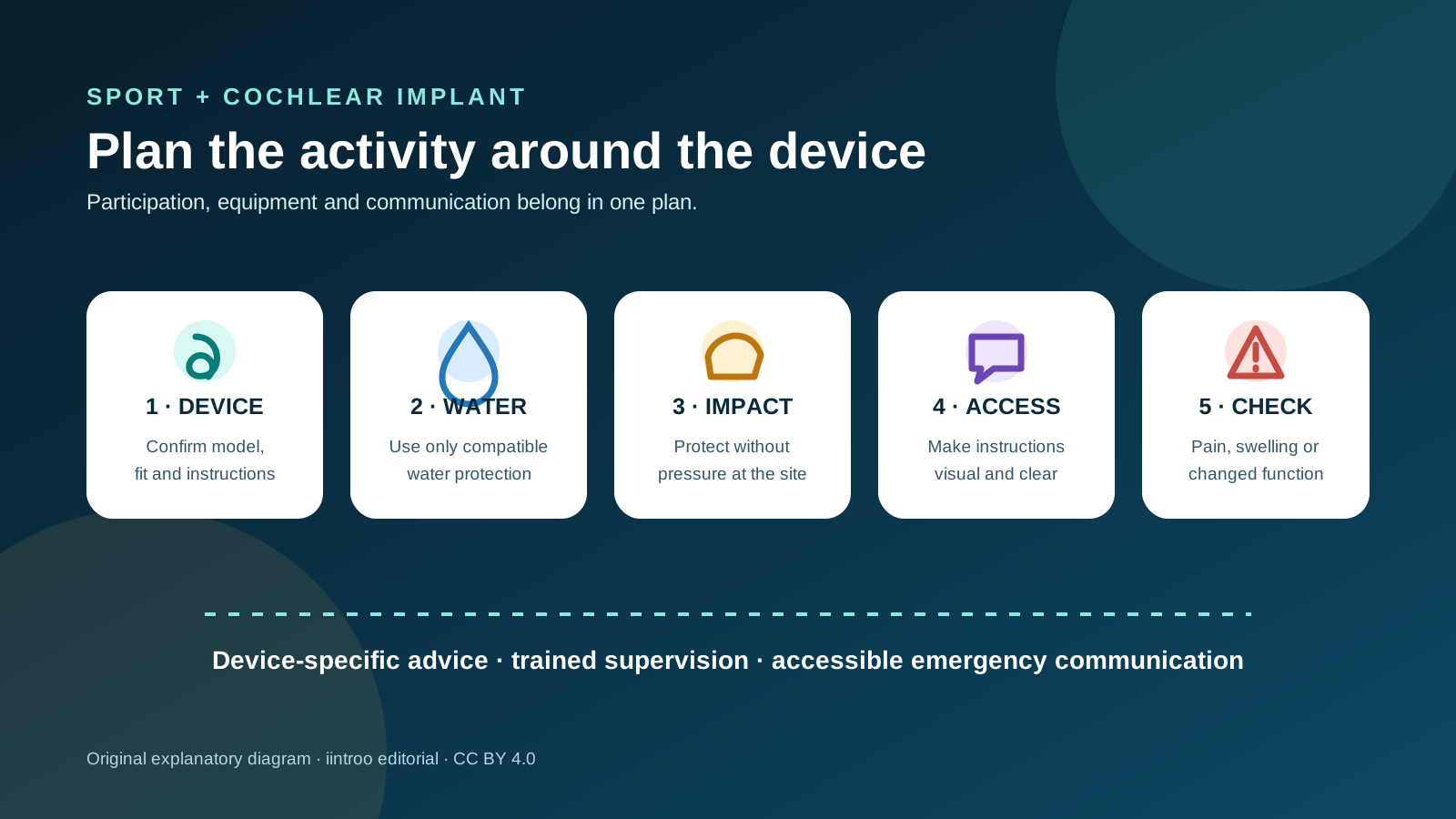
Key points
- The implanted receiver and the removable sound processor are different parts with different water, impact and equipment considerations.
- Depth limits, waterproof accessories and protective-equipment compatibility vary by implant system; the manufacturer and implant team should confirm the individual plan.
- Pain, swelling, skin breakdown, a changed magnet position, sudden loss of sound or abnormal device performance after a blow needs prompt implant-team assessment.
Separate the internal implant from the external processor
This guide is for cochlear-implant users, families, coaches, teachers and event teams. A cochlear implant includes an internal receiver and electrode system plus a removable external sound processor. Removing the processor may protect it from water or loss, but it also changes access to sound. The implanted component remains in place. Sport planning should therefore cover the particular device, the activity, communication when the processor is off and the consequences of a fall or collision rather than treating every hearing device as identical.
The University of Southampton Auditory Implant Service says sport is possible with a cochlear implant while stressing manufacturer-specific advice. That is a useful boundary: one company's waterproof accessory, retention clip, helmet guidance or depth rating should not be applied to another model. Before a new season, take the exact processor and accessory names to the implant audiology team. Ask what may be worn, removed, waterproofed or secured and how sweat, salt water and cleaning affect the equipment.
Design water access around hearing and rescue
For pool or open-water activity, confirm whether the external processor is rated for immersion only with a compatible waterproof system and follow its instructions for seals, depth, time, rinsing and drying. A swim cap, clip or retention line may reduce loss for some products, but it must not create a snagging, choking or pressure hazard. Goggles, a mask or a helmet should not press painfully over the implant site. The swimmer still needs the ordinary water-safety controls for that venue and ability.
If the processor is removed, agree how starts, recalls, alarms, coaching and emergency instructions will be communicated visually or through another accessible system. A hearing buddy can help, but should not replace trained supervision or a venue emergency plan. Scuba diving is a separate medical and engineering question: published evidence is limited to small laboratory work, case reports and device-specific information. Obtain clearance from the implant surgeon or audiology team and a diving-medicine clinician; do not infer a safe depth from another user's successful dives.
Reduce direct impact without promising complete protection
Contact, combat, cycling and wheeled sports add the possibility of a blow near the receiver. A systematic review found that traumatic implant displacement is rare, but the literature largely consists of case reports and small series and cannot estimate risk for each sport or device. Examples of magnet or electrode displacement after apparently minor trauma show why a sudden change deserves attention; they do not justify excluding every implant user from physical activity.
Use the certified protective equipment required for the sport and check that its fit does not load the implant site or dislodge the processor. Do not drill, cut or add unapproved padding to a helmet. The implant team, equipment professional and governing-body rules may all be relevant. Head protection can reduce some injury exposure but cannot make collision harmless or prevent concussion. A suspected concussion still requires removal and the applicable clinical pathway, whether or not the implant appears to work normally.
Have a post-impact and communication plan
After a blow, stop participation if there is pain over the implant, swelling, bleeding, skin damage, a new lump or changed magnet position, sudden loss or distortion of sound, repeated connection failure, dizziness, fluid from the ear or abnormal device performance. Contact the implant service promptly and follow its instructions; do not repeatedly increase magnet strength or keep testing the area through pain. Severe head-injury signs, loss of consciousness, repeated vomiting, seizure, worsening confusion or weakness require emergency care independently of the device.
Build access into everyday coaching: face the athlete, reduce competing noise where practical, confirm understanding and make key instructions available visually. Store the processor safely when removed and identify who can retrieve it after an emergency. A personal card can list the device, implant-service contact and communication preference without disclosing unnecessary medical detail. This article does not clear a particular athlete, prescribe accessories or set a diving depth; those decisions belong with the implant team, device instructions and sport-specific safety process.