
Ice baths after training: use cold water for a reason, not as a ritual
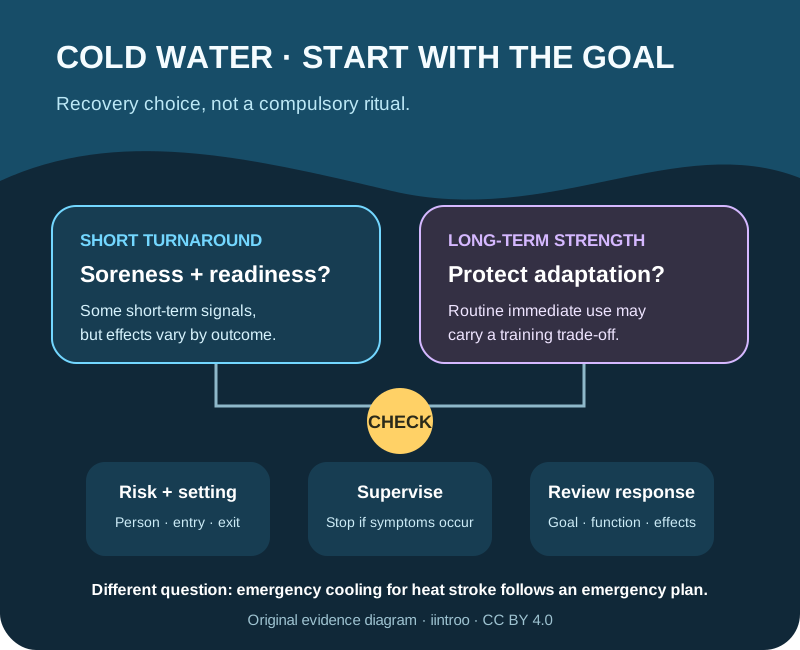
Cold-water immersion may change soreness and some short-term recovery outcomes, but the evidence is low certainty and regular use after strength training may carry an adaptation trade-off.
Key points
- Cold-water immersion can reduce perceived soreness in some contexts, but effects vary by outcome, timing and protocol.
- Repeated immersion immediately after resistance training may attenuate some strength or muscle-growth adaptations.
- An ice bath is optional recovery practice, not treatment for injury or a replacement for sleep, nutrition and load planning.
Begin with the job the recovery method is meant to do
This guide is for athletes, coaches and support staff deciding whether post-exercise cold-water immersion belongs in a plan. First define the problem: reducing soreness before another match is different from maximising long-term strength adaptation, treating heat illness or managing an injury. A habitual ice bath without a stated goal makes benefits and trade-offs difficult to judge.
The AIS recovery framework places any modality alongside sleep, nutrition, training design and the athlete's circumstances. UK Sports Institute guidance treats cold-water immersion as a strategy to use sparingly and with expert input rather than a foundation of recovery. Neither resource makes immersion mandatory for serious athletes.
Short-term results depend on what is measured
A 2026 umbrella review included 15 systematic reviews with meta-analysis and 161 unique studies. It reported outcome- and timing-specific signals, including less muscle soreness and some later changes in power or jump performance. It also found no consistent improvement in muscular strength performance and no universal benefit across every recovery window.
The included reviews were often low or critically low quality, and certainty was low to very low because protocols, exercise tasks and outcomes varied. A separate 2026 network meta-analysis likewise found that effects differed across resistance, endurance and team-sport settings and highlighted a strong male-sample bias. A protocol average is not an individual prescription.
Frequent use may conflict with a strength goal
When immersion is repeated immediately after resistance sessions, pooled evidence suggests a possible reduction in some strength and hypertrophy adaptations compared with passive recovery. The 2024 muscle-growth review described a modest potential attenuation, while the 2026 syntheses stressed uncertainty and protocol dependence. This is a planning trade-off, not proof that one bath erases a workout.
If the priority is long-term strength or muscle growth, discuss whether routine immediate immersion is necessary. During a dense tournament, rapid turnaround and perceived readiness may carry more weight. Periodise the choice around the training goal rather than treating cold as universally good or bad.
Screen the person and setting before the water
Cold exposure can provoke an abrupt breathing and cardiovascular response. The temperature, depth, duration, supervision, entry and exit plan and the athlete's medical history all matter. Athletes with cardiovascular, respiratory, neurological, circulation, temperature-regulation or cold-sensitivity concerns—and pregnant athletes—should seek individual clinical advice before deliberate cold immersion.
Never immerse an unresponsive, confused or medically unstable person as a routine recovery practice. Use trained supervision, a stable entry and exit, and a way to stop immediately. Chest pain, fainting, severe breathlessness, confusion, loss of coordination or persistent numbness requires urgent assessment. Do not use alcohol or a toughness challenge to extend exposure.
Track response without mistaking discomfort for effectiveness
If immersion is chosen, record the goal, exposure, perceived soreness, next-session function and any adverse symptoms. Compare it with simpler recovery options over repeated occasions instead of reacting to one dramatic sensation. Feeling colder, tougher or less sore does not prove tissue recovery or better adaptation.
Cold-water immersion for routine recovery is distinct from emergency cooling for suspected exertional heat stroke, which requires an activated emergency plan and trained treatment. It is also not rehabilitation for an undiagnosed injury. The useful question is whether a supervised, individual strategy improves a relevant outcome without undermining the larger training goal.