
Blood exposure in combat sport: stop, cover and use an urgent clinical pathway
Blood on skin is not proof of infection. Stop active bleeding, use standard precautions and send a true mucosal or broken-skin exposure for urgent review.
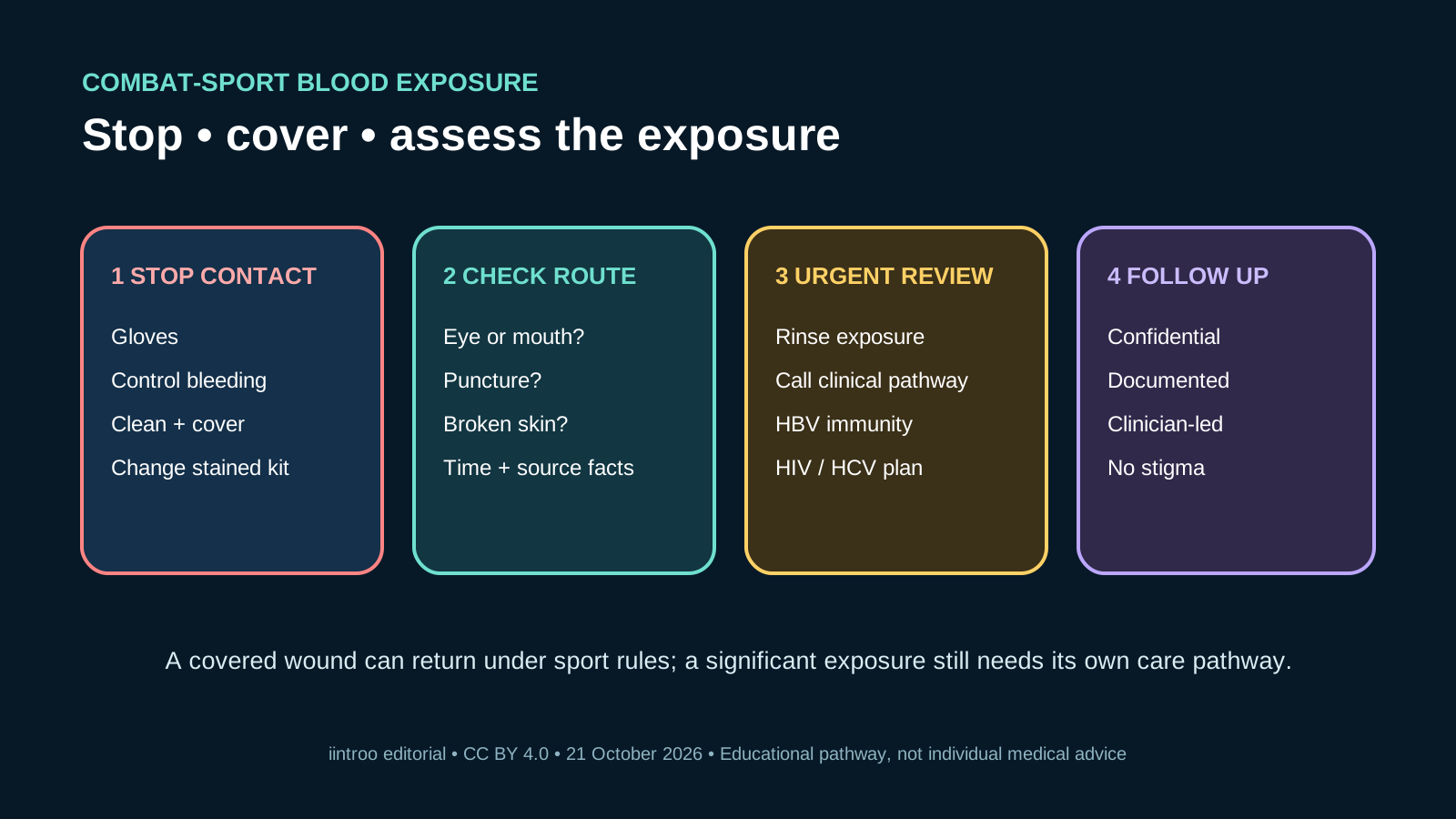
Key points
- Active bleeding or an uncovered open wound means leaving contact until bleeding is controlled and the wound is securely covered.
- Blood contacting intact skin is different from blood reaching an eye, mouth, puncture or non-intact skin; the latter needs urgent clinical assessment.
- Confirmed sport-to-sport transmission is exceptionally rare, but that does not remove the need for vaccination, standard precautions and a written response plan.
Treat blood control and exposure assessment as two linked tasks
This guide is for combat-sport athletes, coaches, officials, cut staff and event medical teams. A bleeding cut first requires play to stop, gloves and clean single-use material, bleeding control, wound cleaning and secure coverage under the sport's rules. Blood-stained clothing or equipment must be changed or cleaned through the event's infection-control process. A rushed wipe at ringside is not a complete exposure assessment.
The person who bled and anyone whose eye, mouth, puncture site or non-intact skin received that blood may need separate care. Blood touching intact skin is generally lower concern: wash it off promptly with soap and water. Do not squeeze a puncture, scrub tissue aggressively or pour caustic disinfectant into an eye or wound. Irrigate exposed mucous membranes with water or saline and activate the event's clinical pathway.
Understand risk without stigmatising an athlete
The 2019 AMSSM statement reports that confirmed blood-borne pathogen transmission during sport is exceedingly rare and found no well-documented sport transmission of HIV or hepatitis C. A 2025 combat-sport position statement nevertheless recommends structured prevention because blood exposure is plausible in boxing, mixed martial arts and other disciplines where lacerations and close contact occur. Rare is not the same as impossible.
An athlete's diagnosis should not be guessed from appearance, nationality or competition level. Universal or standard precautions apply to every person's blood. Do not announce private health information, demand an improvised locker-room test or exclude someone solely because they live with a blood-borne infection. Participation and treatment decisions belong within current law, federation rules and confidential clinical advice.
Make post-exposure action genuinely urgent
A clinically significant exposure should be assessed immediately, not after the medal ceremony or the flight home. A clinician needs the route and time of exposure, the exposed person's hepatitis B vaccination and documented immunity where relevant, and source information that can lawfully and ethically be obtained. The 2025 US Public Health Service HIV guidance is written for healthcare settings, so a sports team should use its local occupational or public-health pathway rather than copy a drug regimen.
HIV post-exposure prophylaxis is time-sensitive and requires medical selection and follow-up. Hepatitis B management depends strongly on vaccination and immune status. CDC does not recommend post-exposure prophylaxis for hepatitis C; testing and clinical follow-up are used instead. These pathways differ, which is why a coach should not offer leftover medicines, promise that a quick test clears the incident or set a universal testing calendar.
Build prevention into the event plan
Before competition, identify the clinician responsible for exposure triage, the nearest service able to provide urgent evaluation, documentation steps and confidential follow-up. Stock correctly sized gloves, eye protection for splash-prone care, sterile dressings, saline, sharps containers where needed and approved surface products. Staff should know the product's contact time and never mix disinfectants. Hepatitis B vaccination should follow national public-health recommendations rather than a one-night event rule.
Return to contact requires bleeding to be controlled and the wound to be covered according to the current sport rules; it does not erase a possible exposure. Heavy or recurrent bleeding, a deep or gaping wound, eye injury, fainting, breathing difficulty or shock signs need emergency care. This article does not estimate an individual's infection probability, order tests, prescribe prophylaxis or provide medical clearance.