
Combat-sport concussion: medical suspension protects training too
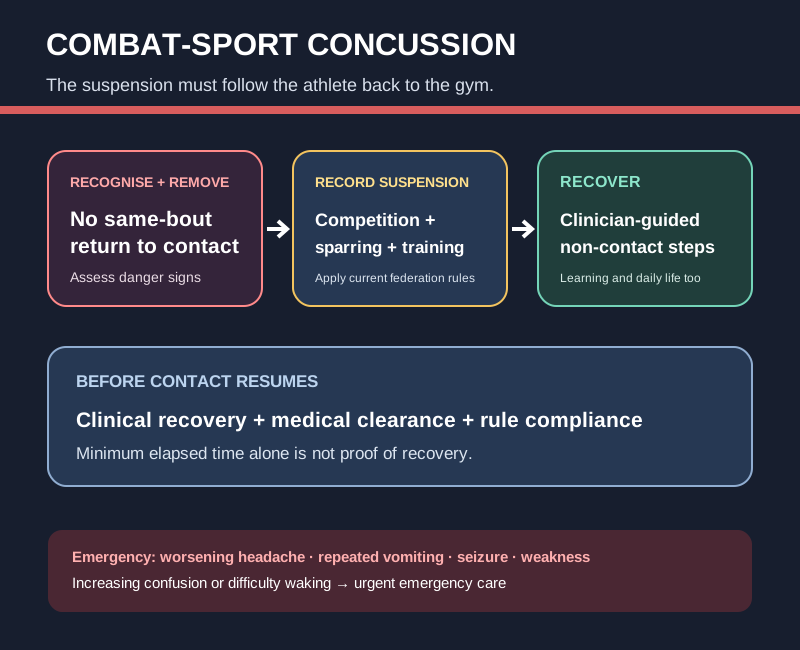
A bout stoppage or knockout is not the end of the medical decision. Recognition, documented suspension, symptom-guided recovery and clearance must also cover sparring and contact training.
Key points
- A boxer with suspected concussion or significant head trauma should not return to the same bout or continue contact practice for reassurance.
- A medical suspension must be communicated across competition, sparring and training settings to reduce hidden repeat exposure.
- The minimum suspension in a rulebook is not proof of recovery; return to contact still requires clinical assessment and the applicable federation's clearance process.
A contest result can also be a medical event
This guide is for amateur boxers and other striking-sport athletes, coaches, parents, promoters and medical teams. Concussion can follow a knockout, a referee stoppage after head blows or an impact without loss of consciousness. Headache, dizziness, balance difficulty, confusion, memory problems, visual symptoms or an unusual emotional change all warrant attention.
The athlete should be removed from contact and assessed by the event's qualified medical professional. A fighter who says they are fine moments later has not completed a diagnostic or clearance process. Video, count duration and loss of consciousness can inform the assessment but do not replace it.
Escalate danger signs, not just knockouts
Repeated vomiting, a worsening severe headache, seizure, increasing drowsiness, deteriorating confusion, weakness, slurred speech, unequal pupils, neck pain or difficulty waking require urgent emergency evaluation. Follow the ringside emergency plan and local emergency services rather than transporting an unstable athlete informally.
Symptoms can evolve after the venue closes. The athlete should not be left without suitable supervision and clear written instructions from the treating team. Alcohol, sedating substances and unsupervised return to driving or contact exposure can complicate observation and safety.
Record the suspension where the next exposure could happen
World Boxing's 2025 handbook sets minimum restrictions after knockout or referee stoppage from head blows and states that the restricted boxer may not train, spar or compete during the suspension. The duration changes with loss of consciousness and repeated events. Other federations and jurisdictions may use different rules, so the current governing document controls.
The ringside decision must reach the athlete, coach, club, sanctioning body and any other training venue that could permit contact. A paper suspension that is absent from the gym does not control sparring. Privacy should be protected, but the people responsible for preventing contact need accurate status information.
Minimum time is not medical clearance
The end of a mandatory period does not prove that symptoms, examination findings or exercise tolerance have recovered. Early management generally uses relative rather than prolonged strict rest, followed by clinician-guided return to ordinary activity and non-contact exercise. Any progression must stop or step back if the treating clinician's symptom limits are exceeded.
Sport-specific drills, bag work, defensive movement and conditioning may still carry fall, collision or accidental-impact risk. The treating clinician and federation rules should define when each can resume. Contact sparring and competition come after medical clearance, not as tests of whether the athlete is recovered.
Repeated exposure changes the conversation
Previous concussion, closely spaced head impacts, persistent symptoms, migraine, mental-health concerns and school or work demands can alter management. A longer restriction or specialist referral may be appropriate even when the rulebook minimum has elapsed. Youth athletes also need return-to-learning support and age-specific regulation.
No online symptom list can diagnose a brain injury, predict long-term risk or declare a fighter fit. This guide does not provide personal clearance or a universal suspension duration; it explains why the documented medical and regulatory processes must meet before contact resumes.