
Swimming shoulder pain: adjust load before a warning becomes lost pool time
Shoulder pain in swimmers is not one diagnosis. Track changes in pool and dry-land load, examine technique and strength-endurance, and assess persistent or function-limiting symptoms instead of normalising them.
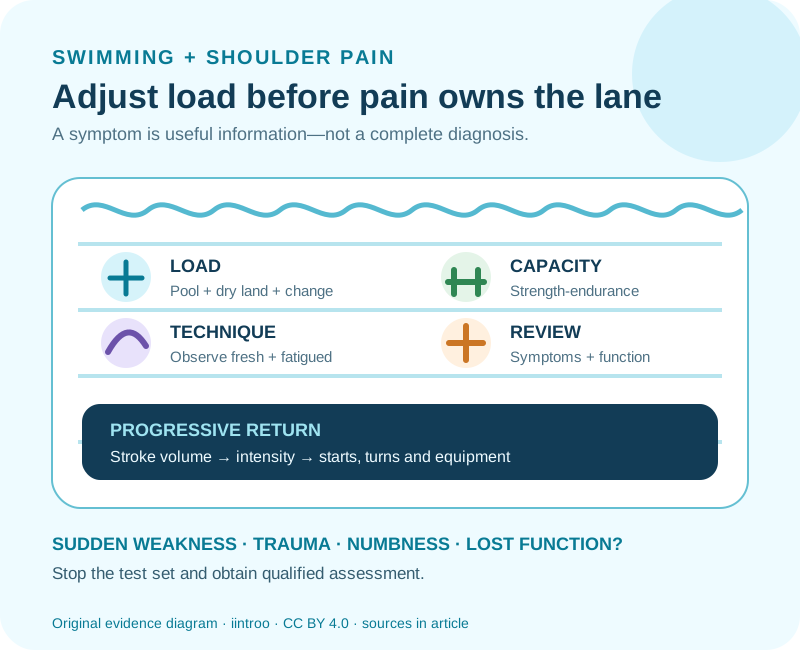
Key points
- Shoulder pain describes a symptom, not a single tissue diagnosis, and continuing to add volume can obscure an emerging problem.
- Training-load consistency, stroke technique and posterior shoulder strength-endurance are modifiable areas, but no single screening test predicts every injury.
- Sudden weakness, traumatic pain, deformity, neurological symptoms or pain that persists or limits function needs qualified assessment.
Name the symptom without guessing the structure
This guide is for competitive pool and open-water swimmers, including Masters and Para swimmers, plus coaches and support teams. Repeated overhead cycles can expose the shoulder to very high training volumes, but pain can arise from different combinations of tissue irritation, strength or control deficits, technique, previous injury and training change. 'Swimmer's shoulder' is therefore a description, not a complete diagnosis.
A 2025 review pooled highly variable injury studies involving 10,973 swimmers and found the shoulder was the most frequently reported region. Prevalence estimates varied widely because populations, definitions and methods differed. Those numbers show the scale of the issue, not the probability that a particular swimmer is injured or the structure causing pain.
Audit the change in exposure
Map recent pool distance, intensity, stroke distribution, paddles or resistance tools, starts and turns, gym work, competitions, travel and recovery. A new block may be reasonable on paper yet exceed the athlete's current capacity when several changes arrive together. Record symptoms by session and task rather than relying on a weekly total alone.
The 2024 evidence-practice study compared expert opinion with research and identified inconsistent load, stroke technique and low posterior shoulder strength-endurance as important, modifiable areas with some supporting evidence. It also found many strongly held expert ideas had little or conflicting research. Monitoring should guide a conversation, not produce a universal safe-volume threshold.
Review technique without blaming the swimmer
Observe the stroke when the swimmer is fresh and fatigued. Entry, catch, body rotation, breathing pattern and trunk or hip contribution may change under load. Disability, joint range, event distance and stroke specialty affect what efficient technique looks like. A technically different movement is not automatically faulty or painful.
Coaches and clinicians can coordinate small technique and workload changes, then evaluate the response. Avoid rebuilding an entire stroke from one video frame or using pain as proof of poor technique. Sudden pain after a fall, collision, start or gym lift needs assessment for trauma rather than a routine drill correction.
Develop capacity beyond elastic-band rituals
Dry-land training can address shoulder external-rotation and scapular strength-endurance, trunk control and the athlete's wider kinetic chain. The 2022 scoping review found some exercise programmes improved pain or risk-factor measures, but protocols, quality and outcomes varied. Better strength does not automatically mean lower injury risk.
Choose exercises the athlete can perform with appropriate technique and progress resistance, range and fatigue exposure over time. A short activation sequence can prepare a session, but it should not be advertised as insurance against pain. Programme decisions should consider age, growth, disability, previous injury and total training load.
Use function and symptoms to guide return
When symptoms require modified training, maintain suitable conditioning and gradually rebuild the tasks that matter: stroke volume, intensity, starts, turns, pulling equipment and dry-land lifts. Progress depends on the diagnosis and response, not a fixed number of pain-free days. Competition clearance is a shared clinical and performance decision.
Seek prompt assessment for deformity, sudden loss of strength, numbness, tingling, neck-related symptoms, major night pain, fever or pain after trauma. Persistent pain, repeated training modification or loss of function also deserves review. Early reporting is useful information, not a failure of toughness.