
Creatine and hair loss: one short trial narrows the claim, not every uncertainty
A 12-week trial found no creatine-related change in DHT or measured hair outcomes in trained men. It cannot exclude every longer-term or individual effect.
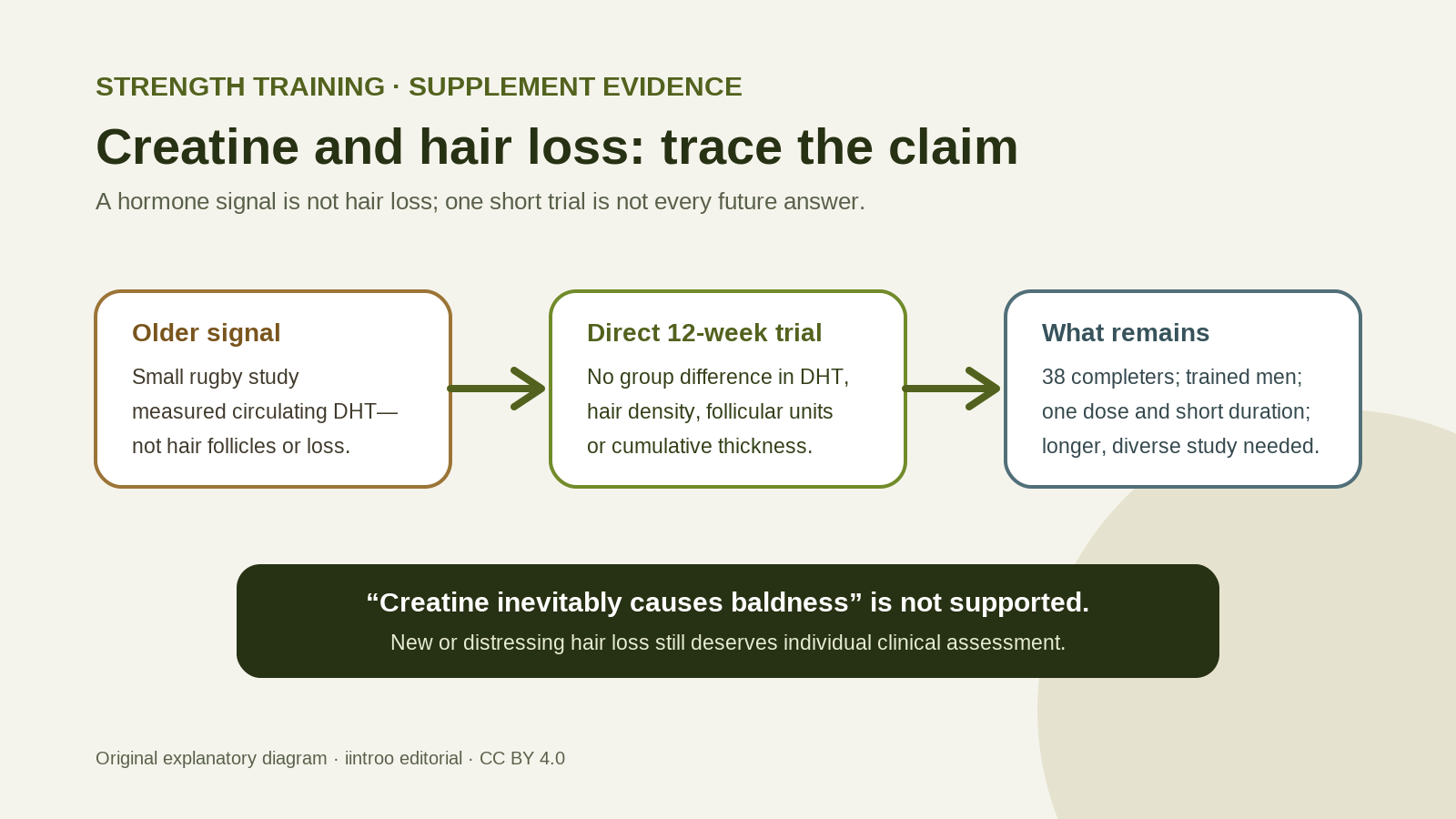
Key points
- The hair-loss concern largely grew from one small rugby study that measured DHT, not hair loss.
- A 2025 randomized trial in resistance-trained men found no between-group difference in DHT or measured hair outcomes after 12 weeks, but only 38 participants completed it.
- New or distressing hair loss deserves clinical assessment because genetics, autoimmune disease, illness, energy deficiency, medicines and other factors can contribute.
Trace the claim back to what was actually measured
This guide is for adult athletes and support teams who have seen claims that creatine inevitably causes baldness. The concern largely traces to a small 2009 study in male rugby players. It reported a change in circulating dihydrotestosterone, or DHT, during a short creatine protocol. It did not measure hair density, shedding or follicle change. DHT is biologically relevant to androgenetic hair loss in susceptible follicles, but a blood-hormone change is not the same outcome as clinically measured hair loss.
The claim was repeatedly amplified beyond the study's design: from one small sample, one hormone and three weeks to a prediction about every user. Later narrative reviews noted that the DHT finding had not been consistently reproduced. That background is important because the new direct trial answers a more relevant question, but it should not be treated as the final possible study on every person, dose and duration.
Read the first direct hair trial with its boundaries
The 2025 randomized trial assigned 45 resistance-trained men aged 18 to 40 to five grams per day of creatine monohydrate or maltodextrin placebo for 12 weeks. Thirty-eight completed the study. Investigators measured total and free testosterone, DHT and the DHT-to-testosterone ratio, plus trichogram and imaging outcomes including hair density, follicular units and cumulative hair thickness. They found no significant creatine-versus-placebo interaction for the hormone or hair outcomes.
That is the first randomized evidence to measure follicles directly and it weighs against a common short-term claim. It remains one modest trial in trained adult men. Twelve weeks may miss slower change; the study was not designed around people with established androgenetic alopecia; and it does not determine effects in women, adolescents, older adults or people using other doses and products. Absence of a group difference is not a guarantee that no participant will ever notice shedding.
Sources: 1
Separate general creatine safety from a hair diagnosis
Large safety reviews across creatine trials report similar overall side-effect frequencies to placebo and no consistent serious safety signal in generally healthy study populations. Most performance evidence concerns creatine monohydrate, not every blend sold with stimulants, herbs or proprietary ingredients. These data help frame overall supplement decisions but cannot diagnose the reason for a receding hairline, patchy loss or sudden diffuse shedding.
Hair loss can reflect genetic androgen sensitivity, alopecia areata, recent illness, thyroid or iron problems, rapid weight change, low energy availability, traction, medicines, scalp disease and other causes. Sudden shedding, smooth patches, scalp inflammation, eyebrow or body-hair loss, systemic symptoms or significant distress deserves assessment by an appropriate clinician. Do not stop prescribed medicine or begin hormone-blocking treatment from a social-media explanation.
Make a supplement decision without promising certainty
First define why creatine is being considered and whether the likely benefit is relevant to the athlete's sport and training. A sports dietitian can review food, evidence, dose, medical history and monitoring. Athletes subject to anti-doping rules remain responsible for what enters their body; independent batch testing can reduce, not eliminate, contamination risk. A marketing claim that a product is pharmaceutical grade or hair safe is not independent evidence.
If an athlete starts or stops a supplement, record the product, batch, timing, training, illness, diet changes and hair concern rather than changing several variables at once. Standardised photographs may help a clinician follow a real pattern, but obsessive daily inspection can magnify normal variation. This page does not prescribe creatine, guarantee hair safety, diagnose alopecia or recommend a hair-loss treatment. The current evidence makes inevitable hair loss an unsupported claim while leaving appropriate room for longer and more diverse research.