
Cricket in the heat: plan for long innings, sun and medical emergencies
Cricket heat risk changes with sun, humidity, wind, clothing, role and time at the crease. Use a local policy, cooling access and rehearsed emergency plan.
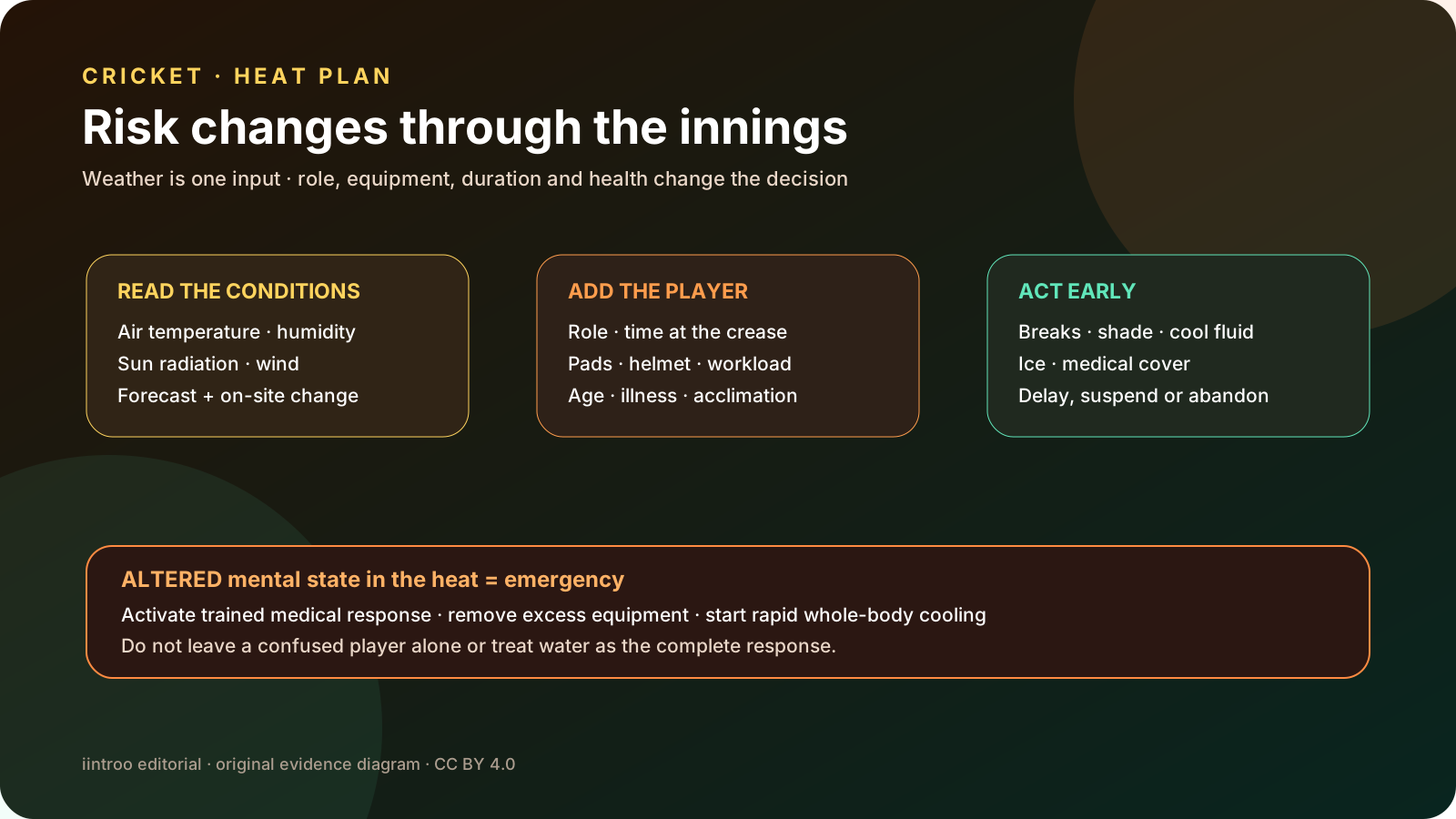
Key points
- Cricket heat stress cannot be judged from air temperature alone; humidity, sun, wind, clothing, equipment, role, duration and athlete factors also matter.
- A field study of 38 elite male cricketers found core temperature rose more in batters with time at the crease, but the small selected sample does not define a universal threshold.
- Altered mental state in a hot exercising player is a medical emergency. Event staff need a rehearsed rapid-cooling and emergency-services pathway.
Measure the setting, then add the cricket role
This guide is for players, coaches, umpires, clubs and tournament organisers. Cricket may combine hours of radiant sun with helmets, pads, repeated sprints and limited opportunities to leave the field. A batter spending a long period at the crease, a wicketkeeper in protective equipment, a fast bowler completing repeated run-ups and an umpire standing all day do not have identical heat loads.
Cricket Australia's community Heat Stress Risk Index combines shaded air temperature, humidity, wind and sun exposure, then links the score with management actions. It also uses a more conservative tool for players under 18. Apply the current policy for the competition and location; do not invent a universal temperature cut-off from this article.
Forecast early and keep measuring at the ground
Assign responsibility for checking the forecast, calculating the applicable heat index, repeating observations as conditions change and communicating decisions to teams and officials. Confirm shade, cool drinking fluid, ice, first aid, emergency access and a suitable rapid-cooling area before play. A policy only protects participants when someone is authorised to act on it.
Current playing conditions and local regulations determine available intervals and whether play is delayed, suspended or abandoned. ICC Test Match conditions permit extra drinks intervals in extreme heat, while Cricket Australia's community guidance links higher risk scores with more frequent or longer breaks and suspension. Organisers should use the rule that actually governs their match.
Preparation is individual, not a drinking contest
Heat acclimation, hydration, clothing, warm-up and cooling should be planned for the forecast conditions and the player's role. Hydration needs vary with sweat loss, body size, work rate, food, climate and access to breaks. Encourage normal pre-session hydration and accessible drinks rather than forcing every player to consume the same large volume.
Overdrinking can contribute to exercise-associated hyponatraemia, while dehydration and illness may increase heat strain. Recent fever, vomiting or diarrhoea, medications and underlying health conditions can change risk and deserve professional advice. Urine colour, thirst or body-mass change can add context but no single measure diagnoses heat illness or guarantees safety.
Know the emergency pattern
Confusion, collapse, agitation, loss of coordination or another altered mental state during exercise in the heat should raise immediate concern for exertional heat stroke. Activate the venue medical and emergency plan, remove excess equipment and begin the trained rapid whole-body cooling pathway without unnecessary delay. The IOC consensus emphasises early recognition, appropriate core-temperature assessment by medical personnel and cool-first, transport-second management where exertional heat stroke is suspected.
Muscle cramping, dizziness, headache, nausea, unusual fatigue or declining performance also require the player to stop and be assessed; they are not reliable on-field tests of the exact diagnosis. Do not send a confused player to a car, shower or hotel alone, and do not treat drinking water as the complete response to a neurological emergency.
Use evidence without pretending every player responds alike
A field study measured core temperature in 38 elite Australian male cricketers across six four-day matches. Batters showed larger rises related to time spent batting than fielders. The study helps identify long batting exposure as a priority, but it was small, male, elite and observational; it cannot predict a community player's temperature or prove that one intervention prevents illness.
After the match, document conditions, decisions, symptoms and the response so the plan can improve. This educational guide does not prescribe fluid volumes, diagnose heat illness or replace the competition's medical plan. Safety depends on current rules, local weather, trained people and the individual participant.