
Numb hands on the bike: treat handlebar palsy as a nerve warning
Hand tingling or weakness during cycling is not normal adaptation. Reduce pressure, review the whole bike position and seek assessment if symptoms persist.
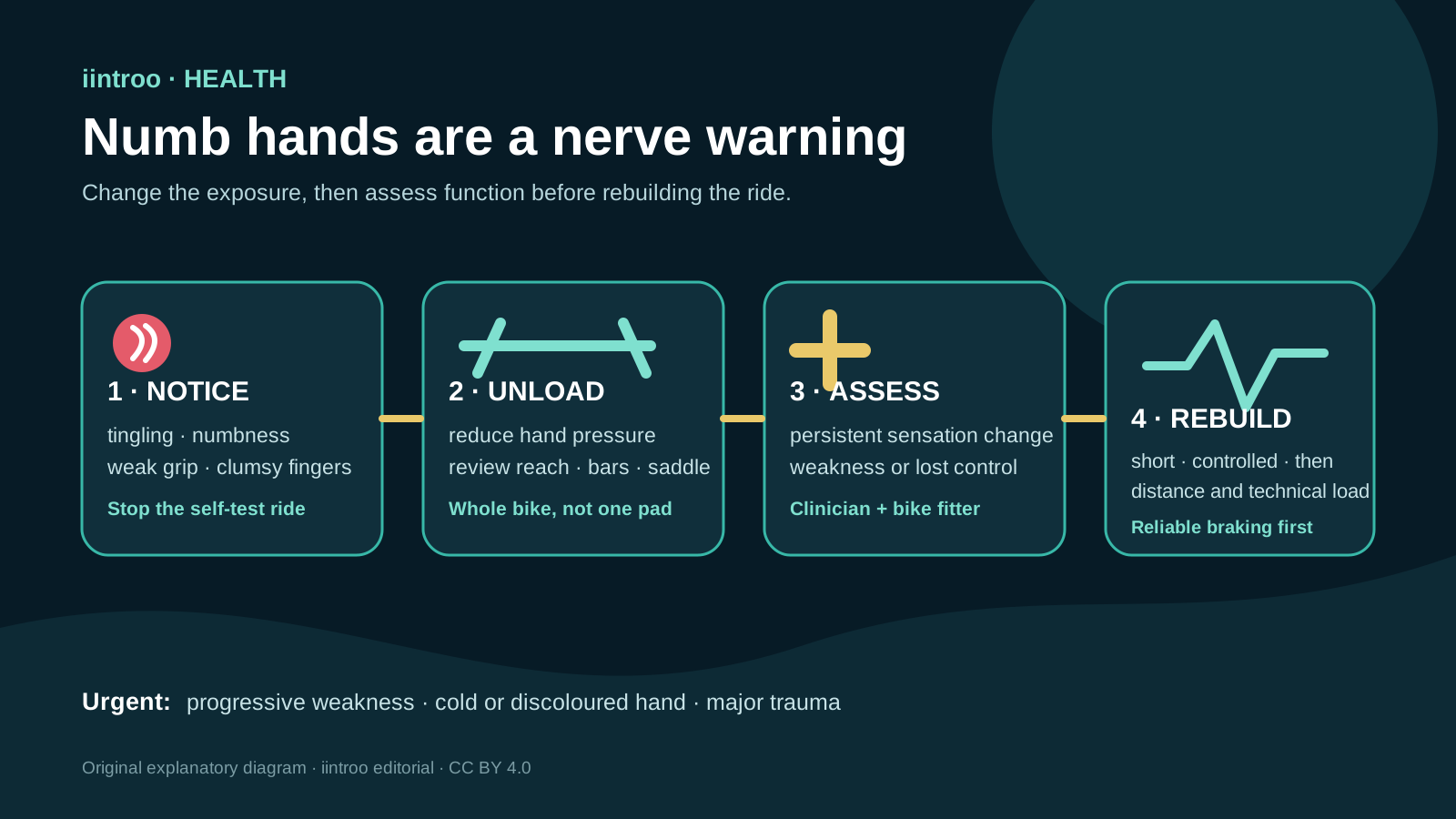
Key points
- Cyclist's palsy can affect the ulnar nerve, the median nerve or both; the symptom pattern does not identify the compression site by itself.
- Long rides, abrupt volume increases and sustained hand pressure are plausible contributors, but prevention evidence remains limited.
- Persistent numbness, loss of grip or finger weakness deserves clinical assessment rather than another long ride as a self-test.
Notice the difference between pressure and proof
This guide is for road, track, gravel, mountain-bike and handcycle riders who develop tingling, numbness, clumsiness or weakness in a hand during or after riding. The ulnar nerve may be compressed around the heel of the hand, while the median nerve can be affected at the wrist. Neck, elbow and other hand problems can produce overlapping symptoms. The fingers involved, the timing and the riding position help a clinician ask better questions; they do not provide a diagnosis on their own.
The available cycling literature is much thinner than the number of products sold to fix the problem. A 2021 narrative review found only 13 eligible studies, mostly case reports or small case series. A separate systematic review described 20 publications but concluded that no single common prevention or rehabilitation protocol is established. That evidence supports early recognition and qualified assessment, not a universal glove, bar shape or recovery timetable.
Change the exposure before testing the hand again
Stop or shorten the ride when sensation or hand control changes. Do not keep descending, sprinting or riding in traffic to see whether the symptoms disappear: braking, steering and emergency reactions depend on reliable grip and finger control. Record which hand and fingers were affected, whether weakness occurred, how long the change lasted, the route surface, hand position and recent training volume. A fall, new equipment or a large jump in distance may be relevant, but none proves the cause.
Review the whole rider–bike system rather than adding padding at the sore spot. Saddle position, reach, handlebar height and shape, wrist angle, core endurance, road vibration and time spent in one grip can redistribute load. Change hand position when the terrain and control demands allow, avoid locking the elbows and rebuild duration gradually. Padded gloves or tape may improve comfort for some riders, yet they cannot guarantee nerve protection or compensate for a poorly matched position. A qualified bike fitter can help with setup; medical assessment answers a different question about the nerve.
Use function, not a calendar, for the return
Seek timely assessment when numbness persists off the bike, returns quickly, spreads, or is accompanied by reduced pinch, grip or finger coordination. Visible muscle wasting, progressive weakness, a cold or discoloured hand, severe pain after trauma or new neck symptoms needs prompt care. Examination may include the neck, elbow, wrist and hand; nerve-conduction testing or ultrasound can be useful in selected cases. A phone grip score or normal-looking hand cannot rule out a motor-predominant nerve injury.
Treatment depends on the site and severity. It may include temporary unloading, hand therapy, equipment changes and staged re-exposure; persistent or severe compression sometimes needs specialist intervention. Return first to comfortable daily hand use and then to short, controlled rides before adding distance, rough surfaces, sustained drops, racing or technical descents. Confirm that braking, shifting and emergency control are dependable without symptom recurrence. This page does not select a splint, injection, operation, bike fit or personal return date.