
Cyclo-cross in cold rain: plan for the stop, not only the race
Mud, rain, wind and repeated slowing can turn a cyclo-cross event into a cold-exposure problem. Monitor conditions, keep dry insulation ready and act on functional change.
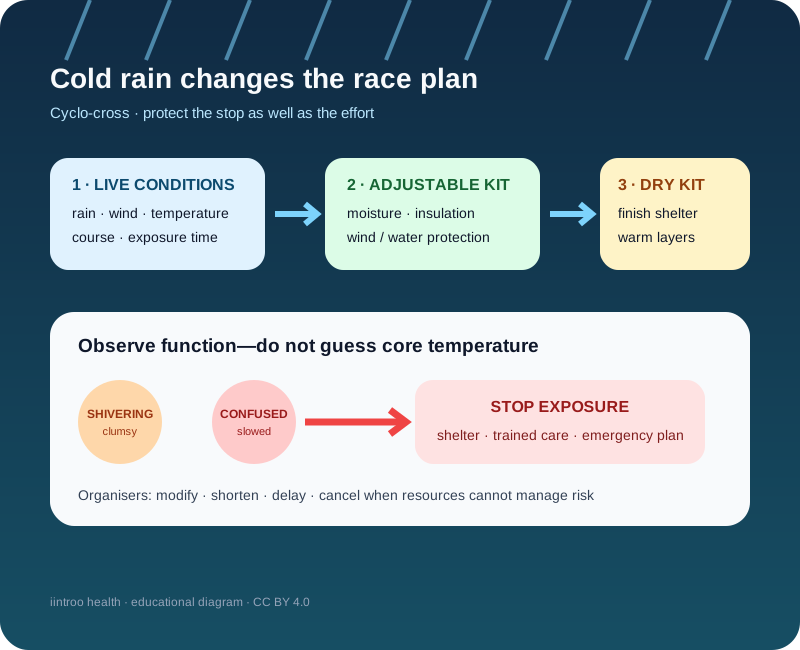
Key points
- Rain, mud, wind, sweat and slowing after a mechanical or crash can increase heat loss even when race effort initially feels warm.
- Hypothermia assessment should use behaviour, consciousness, shivering and physical function—not a guessed core temperature or one air-temperature cut-off.
- Organisers need authority to modify, shorten, delay or cancel when conditions and the available medical or warming resources cannot manage the risk.
Cold risk can rise when race intensity falls
This guide is for cyclo-cross riders, families, coaches, mechanics and organisers. Hard racing generates heat, but wet clothing, wind and repeated accelerations do not guarantee protection. A puncture, crash, queue at an obstacle, course hold or post-finish delay can sharply reduce heat production while evaporation and convection continue.
Risk is shaped by temperature, rain, wind, exposure time, clothing, body size, fatigue, energy availability, illness, medication and the ability to reach shelter. A single air-temperature threshold cannot represent every rider or venue. Monitor actual conditions at the exposed parts of the course, not only a distant forecast.
Build clothing around movement and the stop
Use adjustable layers and accessories suitable for the day's rules and conditions. The next-to-skin layer should manage moisture, while insulation and wind or water protection need to match exposure without causing uncontrolled sweating. Test visibility, braking, mounting, dismounting and dexterity in the complete setup.
Keep a labelled dry kit, warm outer layers and shelter accessible at the finish and technical area. Helpers should be ready for a rider who stops far earlier than planned. Wet gloves or shoes, muddy zips and numb hands can make self-care harder, so the plan must work after fatigue rather than only in a changing room.
Watch function, not bravado
Uncontrolled shivering, clumsiness, repeated stumbling, slowed responses, confusion, unusual apathy, slurred speech or reduced consciousness are reasons to stop exposure and activate trained medical care. Shivering can decrease in more severe hypothermia; its absence is not reassuring in a person whose function is worsening.
Protect the rider from further heat loss, handle a severely affected person gently and follow the event emergency plan. Do not rely on exercise, alcohol, a very hot shower or an untrained temperature measurement as treatment. Altered consciousness, cardiorespiratory instability or concern for severe hypothermia requires emergency services and appropriate transport.
Give the event team real authority
The current UCI rules define the cyclo-cross framework, while a USA Cycling championship guide provides one concrete severe-weather process: convene decision-makers and consider course changes, delayed starts, shortened races, combined categories, postponement or cancellation. That local plan is an example, not a universal international threshold.
Medical cover, heated shelter, communications, course access and support for volunteers and spectators should be part of the decision. A 2025 cycling review found no eligible cyclo-cross epidemiology studies through its search date; a later single-event study of 534 riders reported 36 injuries, mostly acute. One event cannot estimate cold-illness risk across all countries or courses.
Return after cold illness needs a cause-specific decision
A rider with suspected hypothermia, frostbite, a crash or another illness should not be sent back onto the course after simply feeling warmer. Assessment should consider injury, consciousness, hydration and energy status, medication, infection and the circumstances that caused the exposure.
This article provides general education and is not a field-treatment protocol. It does not set a universal clothing list, temperature limit or return time. Local emergency services, current federation rules and qualified clinicians take priority.