
Dancers and bone stress injury: act on focal pain before the next performance
Persistent, localised bone pain deserves early assessment. Review dance load, fuelling and whole-person health, then rebuild class, rehearsal and performance demands with individual guidance.
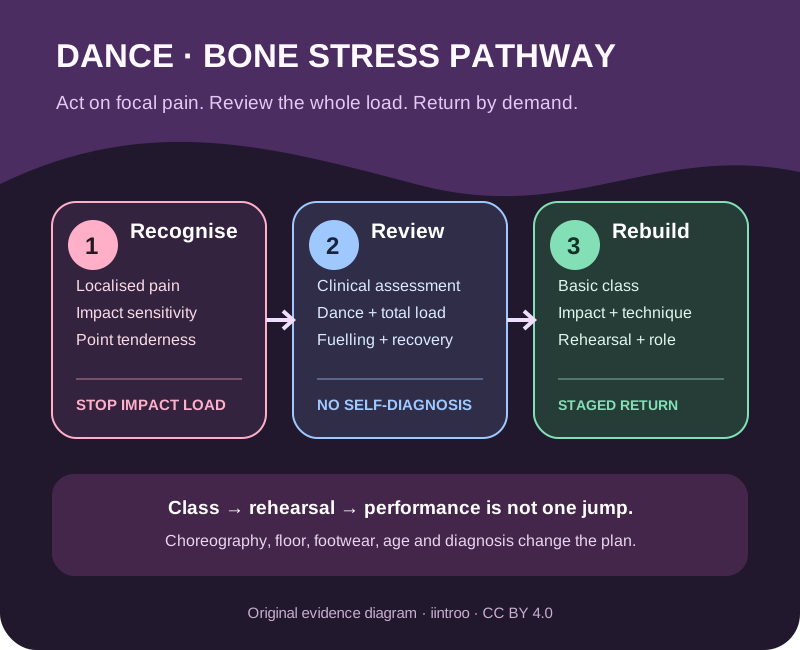
Key points
- Focal bone pain that worsens with jumping, landing or pointe work should not be treated as routine soreness.
- Bone stress injury risk is multifactorial; dance load, recovery, energy availability, bone health and previous injury can interact.
- Return to dance should rebuild specific demands in stages rather than follow one universal calendar.
Localised pain deserves a different response from ordinary fatigue
This guide is for dancers, parents, teachers, artistic staff and health teams. Bone stress injury develops when repeated loading outpaces the bone's ability to recover. Pain may begin gradually and feel very local. Symptoms that recur with jumping, landing, running, pointe work or one-leg loading—and tenderness at one spot—deserve assessment rather than repeated attempts to dance through them.
Stop the painful impact task and arrange review by a clinician familiar with bone stress and dance. Inability to bear weight, major swelling, deformity, a sudden crack, severe night pain or rapidly worsening symptoms needs prompt care. Pain location alone cannot distinguish a bone stress injury from tendon, joint or other problems, and an online hop test cannot provide clearance.
Look beyond the painful site
The international bone-stress consensus describes a multifactorial process. Recent increases in class, rehearsal, touring, choreography, jumping, flooring or cross-training can matter, as can previous bone stress injury, sleep, recovery, bone health, energy availability and other medical factors. No single body shape, dance genre or menstrual pattern proves the diagnosis.
The RED-D consensus adapts relative-energy-deficiency principles to dance and recommends considering nutrition, workload, endocrine and metabolic health, mental health and bone history together. RED-D can affect dancers of any sex and may occur with or without a diagnosed eating disorder. A teacher should create a confidential referral route, not diagnose from appearance, weight or casting history.
Fuel the work without prescribing from the studio
Regular access to enough food for growth, daily life, class, rehearsal and performance is part of bone-health support. Skipping meals, rigid food rules, repeated weight pressure or difficulty eating around a changing schedule deserves a private conversation with a sports dietitian and clinician. Do not copy another dancer's calorie target or use supplements as a substitute for assessment.
Blood tests, bone-density imaging and supplementation are clinical decisions based on history and examination. The RED-D consensus discusses screening and investigations, but a questionnaire or one laboratory value cannot establish the diagnosis alone. Menstrual change, recurrent injury, fatigue, mood change or declining performance can have several causes and should be assessed in context.
Rebuild dance demands, not just general fitness
Return begins when the treating team judges the injury ready for progressive loading. General daily function may come before plié, relevé, turns, jumps, pointe work, partnering and a full run-through. Increase technical complexity, impact, rehearsal duration and weekly density in a planned sequence while monitoring symptoms during and after each step.
A 2025 Delphi study identified functional tests that experts may use when considering readiness after lower-extremity injury, but it did not validate one pass-fail battery for every dancer or every bone. The choreography, role, floor, footwear, age and diagnosis change the decision. A pain-free single test is not permission for an unrestricted performance week.
Change the production system as well as the dancer
Companies and schools can record total class, rehearsal, performance, conditioning and travel exposure; provide breaks and food access; and allow early symptom reporting without threatening selection. The 2026 classical-ballet prevention study used dancer and stakeholder input, reinforcing that prevention is a shared organisational task rather than a dancer's private responsibility.
Evidence in dance remains limited by small samples, varied injury definitions and a strong emphasis on ballet and women. The practical standard is early assessment, coordinated care and progressive return—not a promise that one screening tool, exercise programme or nutrition rule prevents every bone stress injury.