
Concussion in Deaf and hard-of-hearing athletes: make assessment accessible
Concussion care for Deaf and hard-of-hearing athletes needs accessible communication and individual context, not a score compared blindly with hearing norms.
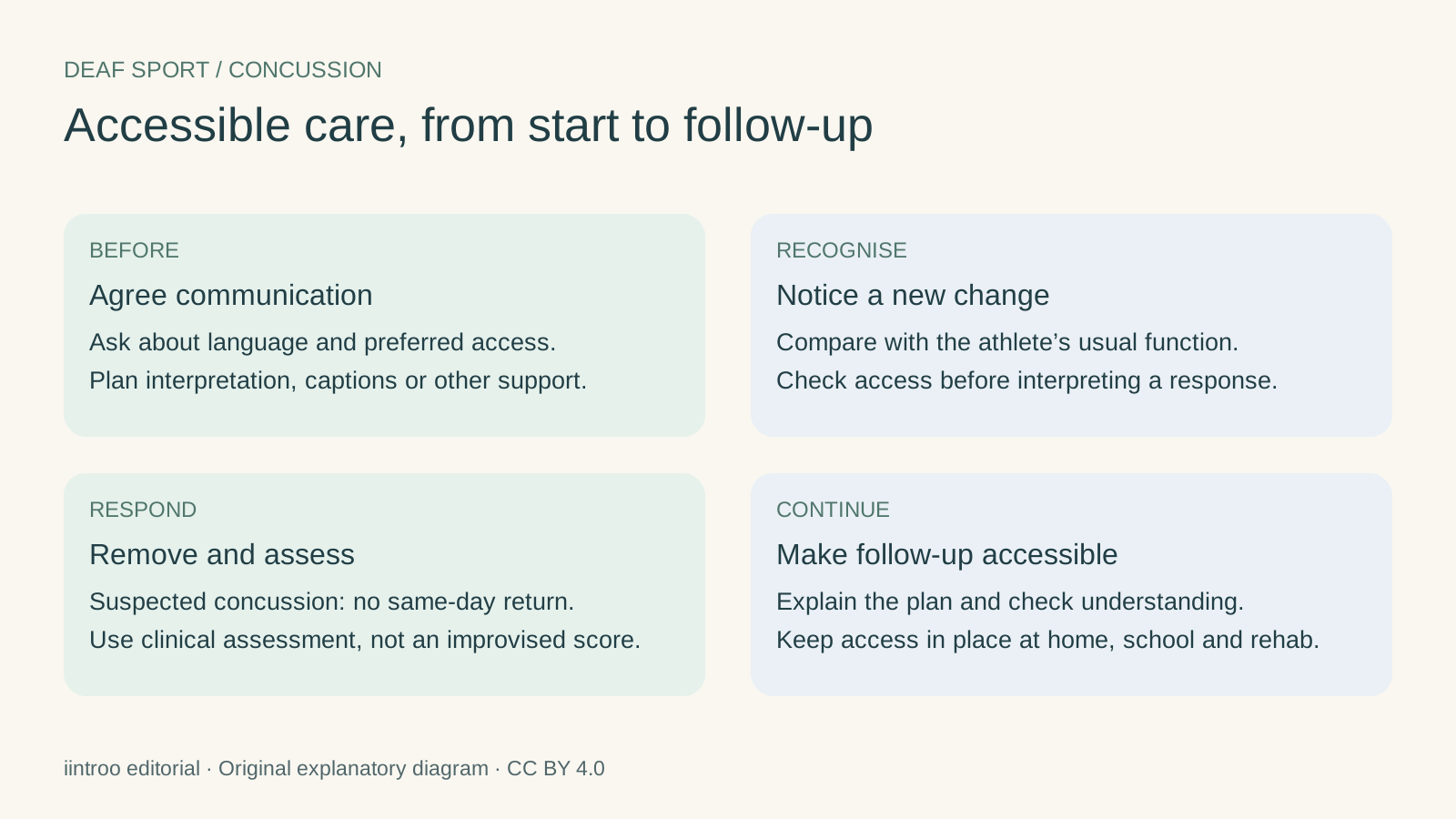
Key points
- Accessible communication is part of assessment, not an optional extra.
- Baseline group differences do not diagnose a new injury or describe every athlete.
- Suspected concussion still means removal, clinical assessment and no same-day return.
The safety rule stays the same; access must improve
This guide is for Deaf and hard-of-hearing athletes, coaches and medical teams across school, club and elite sport. A suspected concussion requires removal from play and healthcare assessment, with no same-day return. An athlete's hearing status does not make a head impact harmless, and communication difficulty should not delay emergency care.
The Amsterdam consensus recognises that standard concussion tools have not been validated across the full range of athletes with disabilities. Clinical interpretation needs the person's usual function and circumstances. That does not justify dismissing a new symptom as part of deafness or creating an improvised pass mark.
What the 2026 baseline study actually found
A cross-sectional study compared 64 Deaf or hard-of-hearing NCAA Division III athletes with 64 hearing athletes matched on sex and sport-contact category. Baseline profiles differed across balance, cognitive and eye-movement measures; some eye-tracking results favoured the Deaf or hard-of-hearing group. SCAT6 symptom counts and severity were not significantly different.
These were preinjury assessments, not a trial of concussion diagnosis or recovery. The groups differed in age, and the collegiate sample was small. The findings cannot establish postinjury test accuracy, cognitive inferiority or a universal vestibular problem. They support interpreting the whole profile rather than treating hearing-population averages as an automatic standard for every athlete.
Sources: 2
Comprehension is part of a valid test
An earlier retrospective study examined ImPACT baseline records from 143 Deaf or hard-of-hearing high-school athletes. Some scores differed from hearing norms, and a possible marker of misunderstanding task instructions appeared more often. The study did not demonstrate how accurately the test identifies a concussion after injury.
Before interpreting a result, clinicians should establish whether the athlete understood what the task required and whether the testing conditions were accessible. A missed spoken instruction is not, by itself, evidence of confusion. Equally, an accessible conversation can reveal genuine new confusion that should never be explained away.
Agree communication before the incident
Ask the athlete which language and communication methods work for them. Qualified sign-language interpretation, real-time captions or suitable written information may be needed depending on the interaction. Do not assume that everyone lipreads or that written English provides equivalent access. Medical history-taking and complex decisions may need more support than a short routine instruction.
These principles are consistent with US Department of Justice effective-communication guidance; its legal requirements are US-specific, not a statement of Turkish or worldwide law. A practical team plan should identify how support will be obtained at training, travel and competition. This is an accessibility plan, not a validated adaptation of a concussion test.
Sources: 5
Education, follow-up and escalation must also be accessible
A collegiate survey included 90 Deaf or hard-of-hearing and 72 hearing respondents. Knowledge scores differed, while attitude scores did not significantly differ. Low and unequal participation limits generalisation: the result points to an education-access question, not a universal trait of Deaf athletes. Teach recognition and reporting in formats the athlete can actually use.
After assessment, provide an accessible explanation of symptoms, follow-up and the individual return plan. Check understanding without turning the conversation into an examination. Repeated vomiting, seizures, a worsening persistent headache, increasing confusion, weakness or difficulty waking need emergency evaluation. New changes may emerge later, so communication arrangements must extend beyond the sideline and into home, school and rehabilitation.