
Diabetic retinopathy and sport: match exercise intensity to eye status
Exercise benefits diabetes care, but advanced retinopathy can change vigorous aerobic, resistance and impact activity. Eye status should guide the plan.
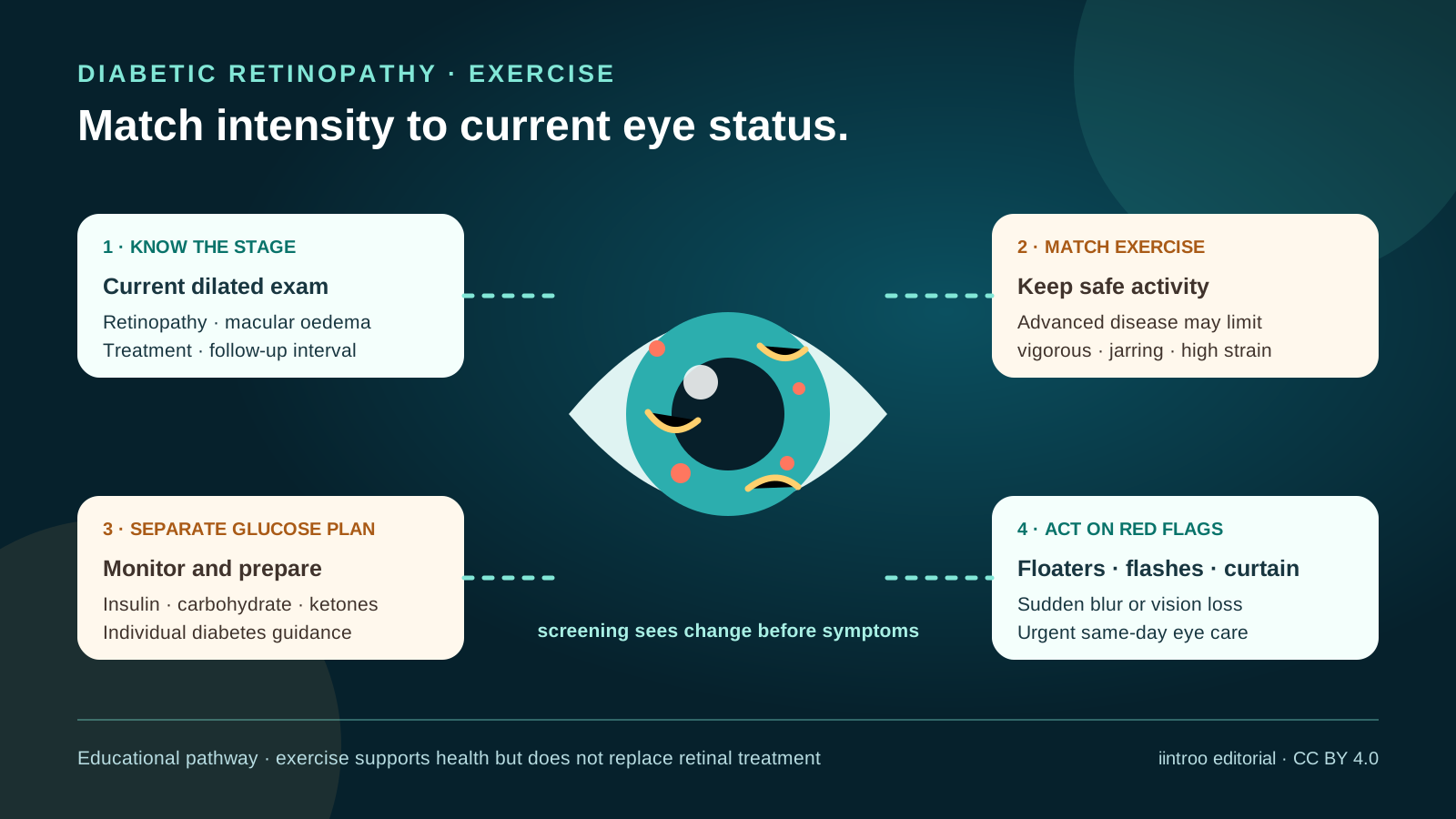
Key points
- Diabetic retinopathy can progress without visual symptoms, so current retinal screening matters even when training and vision feel normal.
- Regular physical activity supports overall diabetes and cardiovascular health, but severe nonproliferative or proliferative disease may require limits on vigorous, jarring or high-strain exercise.
- New floaters, flashes, a curtain or shadow, sudden blur or vision loss requires urgent eye assessment rather than a training modification alone.
Know the retinal stage rather than relying on normal vision
Diabetic retinopathy is a neurovascular complication in which chronic diabetes-related damage produces microaneurysms, haemorrhage, ischaemia and, in proliferative disease, fragile new vessels. Fluid leakage can cause diabetic macular oedema. Athletes may have no symptoms despite important disease, so visual sharpness, a phone test or an uneventful session cannot replace dilated examination or validated retinal screening. Type of diabetes, duration, glucose exposure, blood pressure, kidney disease, lipids and pregnancy can influence risk and follow-up.
The 2026 American Diabetes Association standards recommend an eye examination at diagnosis for type 2 diabetes and within the recommended interval after type 1 diabetes onset, with at least annual review when retinopathy is present and more frequent ophthalmology care if it progresses or threatens sight. Exact timing is individualized, and screening programmes may use retinal photography before referral. Pregnancy planning or pregnancy can alter surveillance needs. A coach does not need the retinal photographs, but the athlete may choose to share practical restrictions and emergency signs with relevant staff.
Preserve the benefits of activity while respecting advanced disease
Physical activity remains important for cardiovascular health, metabolic management, strength and wellbeing. Observational syntheses associate greater activity with lower retinopathy risk or complications, but association does not prove that exercise treats retinal disease. Lifestyle studies combine activity, diet and risk-factor changes, and trials rarely provide precise sport prescriptions for each retinal stage. Exercise does not replace retinal laser, injections, surgery or diabetes treatment when those are indicated.
ADA guidance states that vigorous aerobic or resistance exercise may be contraindicated in severe nonproliferative or proliferative retinopathy because of concern for vitreous haemorrhage or retinal detachment. Older position guidance also cautions against jumping, jarring, breath-holding and head-down high-strain activity in unstable advanced disease. These are not blanket restrictions for everyone with diabetes or mild retinopathy. An ophthalmologist should translate current eye findings into suitable intensity and movement limits.
Coordinate eye safety with the separate glucose plan
Retinal precautions do not replace exercise glucose management. Athletes using insulin or medicines that can cause hypoglycaemia still need their individual plan for monitoring, carbohydrate access, devices, ketones, illness and post-exercise risk. This page does not provide insulin doses, carbohydrate amounts or glucose thresholds. The existing type 1 diabetes sport guide covers those logistics in greater detail, while the eye team addresses retinal loading and follow-up.
For an athlete temporarily avoiding vigorous work, lower-intensity walking, cycling, controlled strength without straining, balance or mobility may be possible if both diabetes and ophthalmology teams agree. Progress should remain inside the stated eye restrictions rather than using symptom absence as permission to advance. Visual field loss, impaired contrast, recent eye treatment and reduced depth perception may change lighting, route, collision and fall risk. Guides, bright markings, a training partner or technique adjustments can support participation without presenting disability as exclusion. Event organisers should also plan accessible routes and clear emergency communication.
Act urgently on new visual symptoms and review after treatment
A sudden shower of floaters, flashes, a curtain or shadow, sudden blur, missing vision or rapid visual loss requires urgent same-day eye assessment; severe eye pain or neurological symptoms also need emergency evaluation. Do not finish the session, perform repeated head-down manoeuvres or assume that a wearable glucose reading explains the change. Vitreous haemorrhage and retinal detachment can occur without pain, and delay can threaten vision.
After laser, injection or vitreoretinal surgery, restrictions depend on the procedure, healing and any intraocular gas. Return should restore daily visual function and low-risk activity before vigorous resistance, impact, inversion, contact or remote sport, following the eye surgeon's plan. There is no universal retinal return date. This article cannot grade retinopathy, interpret imaging, change diabetes medicine or clear sport; it supports current screening, stage-specific ophthalmology advice, a separate glucose plan and prompt action on visual red flags.