
Diving ear pain: stop the descent, do not force equalisation
Ear pressure that will not clear is a reason to pause or end the dive—not a challenge to push through. Learn the warning signs and limits of online advice.
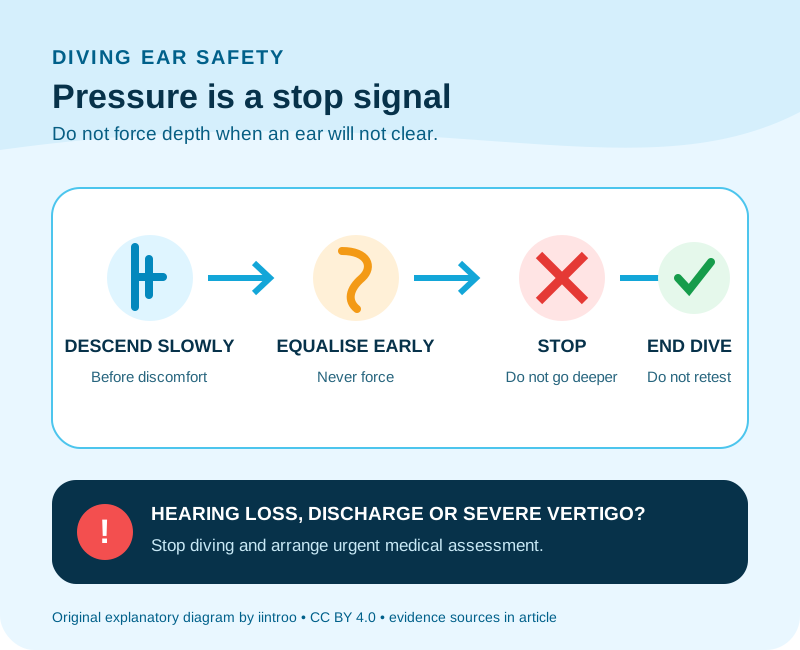
Key points
- Pain during descent means stop going deeper.
- Forceful equalisation can add risk rather than solve the cause.
- Hearing loss, severe vertigo or ear discharge after diving needs urgent assessment.
Who this guide is for
This guide is for recreational and competitive divers, instructors and event teams responding to ear pressure or pain during a descent. Middle-ear barotrauma occurs when pressure in the middle ear does not equalise with the surrounding water. Congestion, inflammation, technique and descent rate can all matter, so the symptom should not be reduced to toughness or experience.
DAN advises stopping the descent when discomfort begins, ascending slightly if needed and ending the dive safely if equalisation cannot be achieved. Do not continue deeper through pain. An instructor can teach technique and control the session, but cannot diagnose an ear injury underwater or provide return-to-dive clearance.
Pressure problems change with the phase of the dive
A 2026 structured review included 40 analytic studies and organised ear, nose and throat problems by descent, bottom time and ascent. It identified middle-ear barotrauma as the most frequent diving-related ENT injury, particularly during descent. Inner-ear barotrauma and inner-ear decompression illness were less common but carried greater risk of lasting hearing or balance problems.
That framework is useful because similar symptoms can have different causes and urgency. The review also found limited, heterogeneous evidence for postoperative return decisions. Previous ear surgery, implants, recurrent clearing difficulty or an existing hearing problem warrants individual advice from a clinician with diving-medicine knowledge before exposure.
Do not turn medication into a clearance test
Diving with a cold or congestion can make pressure equalisation more difficult. A decongestant or pain medicine may change symptoms without proving that the ear can tolerate pressure safely, and products can have side effects or wear off during a dive. This article does not recommend a drug, dose or timing strategy.
The 2017 systematic review included 62 papers covering outer-, middle- and inner-ear conditions, but much of the diving literature was observational or based on case series. That limits universal prevention and return rules. A product label, an online manoeuvre video or a previous successful dive is not a substitute for assessment when symptoms persist.
Know the post-dive warning signs
Ear fullness that lasts, blood or fluid from the ear canal, hearing change, tinnitus, severe dizziness, nausea or imbalance after a dive needs medical evaluation. DAN describes severe vertigo and nausea as reasons for emergency care. Do not put drops into an ear when an eardrum injury is possible, and do not make another dive to test whether the problem has settled.
Inner-ear barotrauma and inner-ear decompression illness can overlap. The evidence-based HOOYAH tool was designed for clinicians and uses the dive profile, symptom onset, examination and hearing information; it is not a self-diagnosis checklist. Give the clinician an accurate account of depth, timing, equalisation difficulty and associated symptoms.
Return requires function, not bravery
DAN states that return may be considered when a physician determines that healing is complete and Eustachian-tube function is adequate. The type of injury, ongoing symptoms, examination findings and planned diving environment all influence that decision. There is no responsible universal waiting period.
Before the next session, teams can check the descent plan, buddy communication and abort signal, while the diver follows individual medical advice. The safest choice when an ear will not clear is to stop early. Missing one dive is preferable to converting a manageable pressure problem into a hearing or balance injury.