
Dragon boating after breast cancer: build paddling around the person, not the diagnosis
Dragon boating can offer exercise, teamwork and community after breast cancer. Current evidence does not show that appropriately progressed exercise inevitably worsens lymphoedema, but individual assessment still matters.
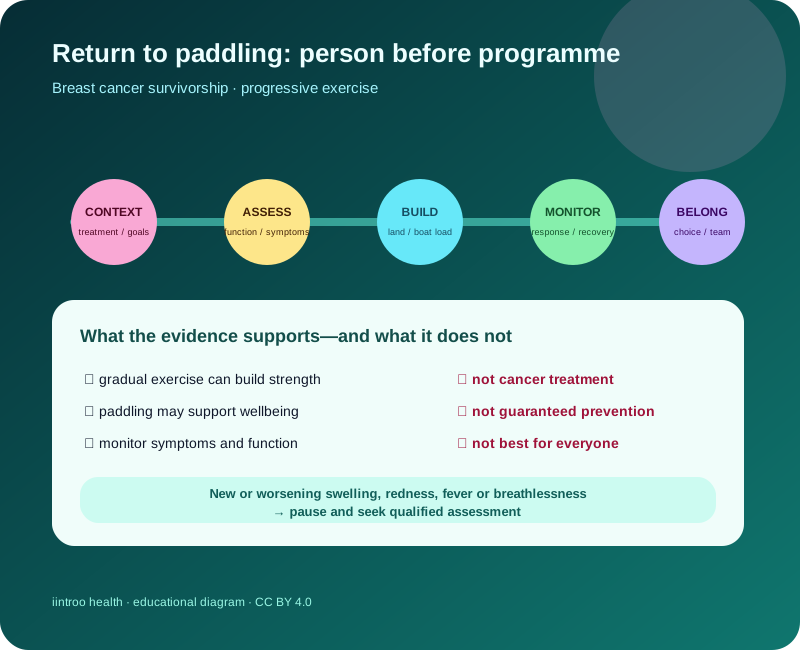
Key points
- Exercise research in people with or at risk of breast-cancer-related lymphoedema supports progressive activity rather than automatic avoidance of upper-limb loading.
- Dragon-boat studies report physical and psychosocial benefits, but many are small or observational and do not prove the sport is superior to other suitable exercise.
- Cancer treatment, lymphoedema, infection risk, bone health, fatigue, balance and current symptoms can change the plan; new or worsening swelling requires clinical review.
A sport and a survivorship community
This guide is for people considering dragon boating during or after breast-cancer treatment, plus families, coaches, clubs and clinical teams. International dragon-boat structures include Breast Cancer Paddler activity, while local clubs range from recreational community programmes to competitive crews. Participation can combine repeated paddling with teamwork, travel, identity and social support.
A 2026 scoping review found 33 eligible publications, including quantitative and qualitative studies. Many reported physical or psychosocial benefits, yet designs and outcomes varied and the review did not establish dragon boating as better than other activities. Positive experiences should be respected without turning one survivorship pathway into a prescription for everyone.
Lymphoedema risk is not a blanket ban on exercise
The 2026 exercise review included 46 randomised trials across people with or at risk of breast-cancer-related lymphoedema and found strong evidence for improvements in strength and upper-limb disability. This supports appropriately progressed exercise; it does not mean every workload, symptom or stage of treatment is automatically safe.
Lymphoedema can involve swelling, heaviness, tightness, altered sensation, skin change and reduced function, but symptoms have other possible causes. Assessment may consider surgery and radiotherapy, lymph-node treatment, infection history, cancer status, cardiovascular and bone health, medicines, fatigue, neuropathy, balance and the demands of the boat. A coach should not diagnose swelling or promise prevention.
Progress the whole paddling task
Start from the person's current function and clinical advice. A progression may include comfortable daily movement, land-based strength and mobility, paddle technique, short low-intensity water sessions and later changes to duration, stroke rate, resistance, race distance or crew role. Change one major variable at a time and review the response during the session and over the following day.
A small randomised study involved 31 women after breast surgery and compared dragon boating with home exercise. Its findings are useful but cannot define the ideal programme or predict one survivor's response. Larger exercise evidence includes many modes, not only paddling, and most dragon-boat literature is observational or qualitative.
Make the boat and club accessible
Discuss seating, entry and exit, paddle side, warm-up, travel, toilets, changing privacy, sun and heat exposure, flotation equipment, rescue, fatigue and how symptoms can be reported without losing team belonging. People may want to share a cancer history or lymphoedema status selectively; clubs should protect privacy and avoid making disclosure a public identity requirement beyond legitimate event and safety processes.
Follow current IDBF, national federation and event medical rules. A world-championship document or Breast Cancer Paddler classification does not replace local clinical advice. Support should also include people who prefer a mixed crew, another sport or exercise away from cancer-specific programming.
Know when to pause and seek care
New or increasing swelling, redness, warmth, fever, a wound, severe pain, sudden breathlessness, chest pain, marked dizziness, neurological symptoms or an unexpected functional decline needs timely assessment; urgent symptoms require local emergency care. Recurrent fatigue or pain may relate to treatment, infection, anaemia, heart or lung effects, bone problems or other causes that training modification alone cannot resolve.
This article provides general education and does not clear a person for dragon boating, diagnose lymphoedema or prescribe compression, exercise volume or cancer care. Decisions belong to the participant and qualified oncology, lymphoedema, rehabilitation and sports professionals who understand the individual's treatment and goals.