
Menopause in sport: adapt training to the athlete, not a universal rule
Sleep, temperature regulation, bleeding, mood, pelvic health and musculoskeletal symptoms can alter training. Track the individual pattern, protect recovery and bone health, and be honest about evidence gaps.
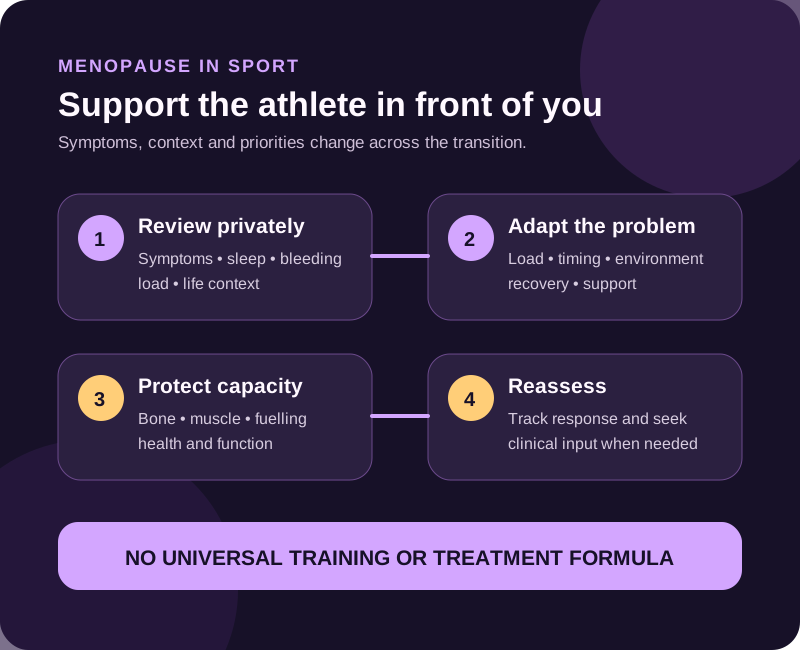
Key points
- Perimenopause and menopause experiences vary widely, so age or menstrual status alone cannot prescribe a training programme.
- Sleep, thermoregulation, bleeding, mood, pelvic and musculoskeletal symptoms should be discussed confidentially alongside training load and recovery.
- Athlete-specific intervention evidence remains limited; no universal supplement, hormone or exercise formula is supported for every athlete.
Start with the athlete's lived pattern
Menopause is a normal life stage, but the transition and its effects are not uniform. Changes in bleeding, hot flushes, night sweats, sleep, mood, concentration, pelvic symptoms, joint or muscle discomfort and recovery can overlap with work, caring responsibilities, training load and other health conditions.
A confidential conversation can connect symptoms with session timing, heat, travel, sleep opportunity and performance demands without assuming that menopause explains everything. Coaches should ask what support is useful and what information the athlete wants shared, rather than interpreting age or appearance as a diagnosis.
Adjust the training problem that is actually present
If disrupted sleep or temperature symptoms are reducing recovery, practical changes might include a cooler environment, flexible session timing, reduced high-intensity density or more recovery between demanding days. If pain, bleeding or pelvic symptoms are the main concern, the pathway may be different and should include appropriate clinical assessment.
Change one or two variables, document the response and reassess. There is no evidence-based reason to force every athlete into the same menopause-specific microcycle, and the article does not recommend matching training to unmeasured hormone fluctuations.
Keep bone, muscle and fuelling in view
The menopause transition is relevant to bone health, while resistance and suitable impact-loading exercise may support muscle and bone. The systematic-review evidence spans different populations, programmes and outcome measures, so it does not create one optimal set, repetition or impact prescription for a trained athlete.
Maintain access to adequate food, protein, calcium-rich foods and vitamin D assessment as appropriate to the individual and local guidance. Do not self-prescribe high-dose supplements or use weight loss as the default response to body-composition changes. A sports dietitian and clinician can consider health history, training and laboratory needs together.
Know when professional assessment matters
Heavy or unexpected bleeding, persistent pelvic symptoms, new focal bone pain, repeated stress injury, unexplained fainting, chest symptoms, severe mood deterioration or symptoms that substantially disrupt daily life should not be normalised as something an athlete must simply tolerate. Seek an appropriate clinician; urgent symptoms require local emergency care.
Menopausal hormone therapy can be appropriate for some people after an individual discussion of benefits, risks and contraindications. It is not a universal sports-performance treatment, and this guide does not prescribe hormones, supplements or medication.
Be candid about the research gap
Recent sports-medicine commentary and evidence mapping identify menopause as an under-researched area in athletes, especially at elite level. Much guidance therefore combines general menopause evidence, exercise science, clinical experience and athlete reports rather than large athlete-specific trials.
Track symptoms, function, training response, injury and wellbeing instead of promising that one intervention will restore a previous performance level. Good support is individualized, privacy-respecting and revisited as the transition changes; it is not a fixed programme attached to a label.