
Nosebleeds in sport: control bleeding, then assess the cause and impact
A sports nosebleed needs firm compression and removal from blood exposure. Trauma, recurrence and ongoing bleeding determine assessment and return.
Key points
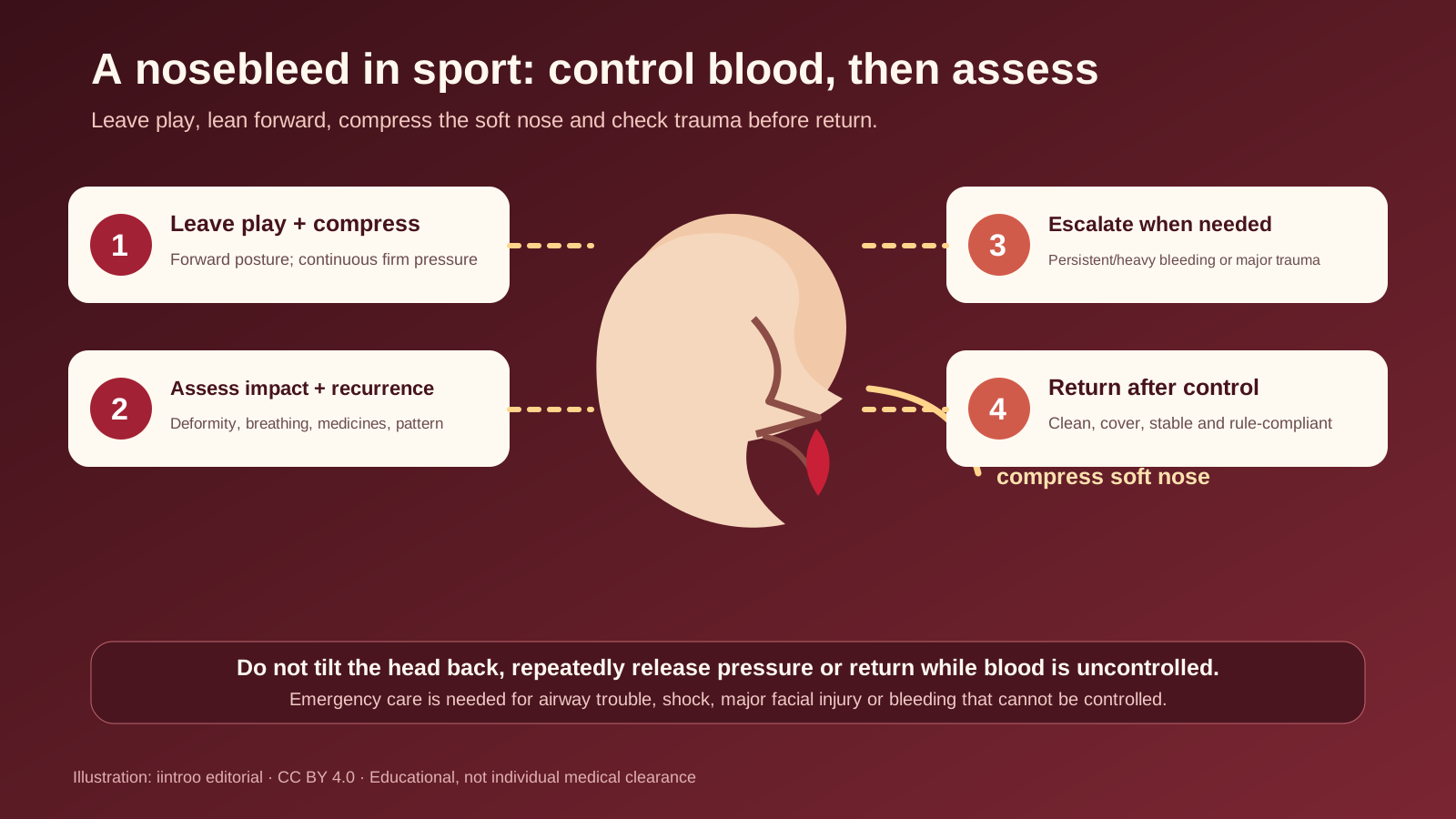
- Active nosebleeding requires removal from play, forward posture and firm sustained compression to the soft lower nose while staff assess trauma and severity.
- Persistent, recurrent or unilateral bleeding, anticoagulant use, a bleeding disorder or suspected facial injury changes the need for medical evaluation.
- Return depends on bleeding control, wound coverage, trauma assessment and the rules of the sport; stopping the blood does not clear concussion or fracture.
Stop exposure and control the immediate bleed
This guide is for athletes, coaches, officials and medical staff managing blood from the nose during boxing, rugby, winter, endurance or other sport. Move the athlete out of active play, sit them upright and leaning forward, and apply firm continuous pressure to the soft lower third of the nose. The AAO-HNS guideline recommends sustained compression for at least five minutes in people needing prompt management. Releasing every few seconds to check interrupts pressure and can prolong bleeding; tilting the head back hides swallowed blood.
Use gloves and follow the venue's blood-exposure procedure. Replace or clean contaminated equipment and clothing according to the applicable rules; do not let an athlete continue while active blood can contact others or the surface. Heavy ongoing bleeding, breathing difficulty, collapse, blood loss with weakness, a rapidly expanding swelling or major facial trauma requires emergency care. A nosebleed after a head strike also triggers assessment for concussion, eye, dental and facial injury rather than being treated as an isolated inconvenience.
Separate a simple anterior bleed from trauma and recurrence
Many nosebleeds arise from the front of the nasal septum after dryness, irritation or minor trauma, but the visible blood does not establish the source. Clinicians review the mechanism, duration, previous episodes, nasal medicines or substances, anticoagulant or antiplatelet use and personal or family bleeding history. Persistent unilateral bleeding, recurrent bilateral episodes with mucosal telangiectasias, suspected fracture or bleeding that continues despite proper compression needs a more specific assessment. The same evaluation considers airway and haemodynamic stability before local treatment.
Nasal obstruction, deformity, severe tenderness, clear fluid, eye symptoms, an abnormal bite or loss of consciousness after impact are not routine nosebleed features. Recurrent episodes during cold, dry or high-altitude training may justify prevention and ENT review rather than repeated self-cautery. Athletes should not insert improvised tissue deeply, use another person's spray or change prescribed anticoagulation. In the absence of life-threatening bleeding, current guidance prioritizes first-line local control before automatically reversing or withdrawing anticoagulant treatment.
Escalate treatment without turning evidence into a sideline prescription
When compression does not reveal or control the site, trained clinicians may use topical agents, cautery or nasal packing, with endoscopy for selected recurrent or difficult cases. Packing requires clear instructions about type, removal, warning signs and follow-up. A 2026 meta-analysis suggests topical tranexamic acid may reduce early rebleeding in adult anterior epistaxis, but protocols and outcomes were heterogeneous. Another 2026 review found administration method influenced results. These findings support clinical decision-making; they do not authorize athletes or coaches to self-prescribe a drug-soaked dressing.
Ongoing bleeding despite packing or cautery can require specialist arterial ligation or embolization. The threshold is different for a small dry-weather recurrence and for major post-impact bleeding in an athlete with a bleeding disorder. Cautery should be confined to an identified or suspected site by a competent clinician. Moisturizing measures and avoidance of additional nasal trauma may help selected recurrent anterior bleeds, but no home remedy guarantees prevention and petroleum-based products, sprays or medicines need individual safety review.
Return only after bleeding and the associated injury are addressed
Return during the same event depends on complete bleeding control, coverage of any wound, clean clothing and equipment, medical assessment where needed and the rules of the discipline. World Rugby, for example, requires a player with a blood injury to leave and permits return only after the bleeding is controlled or covered within its defined replacement process. Other federations have different procedures. A rule-based return window is not a medical guarantee and does not clear a concussion, nasal fracture or significant blood loss.
After a treated episode, build back from normal breathing and daily activity to training without rebleeding before contact, high pressure, repeated Valsalva or remote endurance exposure. Recurrent bleeding, worsening obstruction or new dizziness needs review. This article cannot identify the bleeding vessel, teach cautery or packing, choose medicine, change anticoagulation or clear a facial injury. It supports safe first aid, blood-exposure control, appropriate escalation and a return decision that considers both the nose and the mechanism that caused the bleed.