
Equestrian riding helmets: fit, fastening and replacement after impact
A certified riding helmet works as a system: the current standard, correct fit and secure harness all matter. Replace it after a significant impact even when the shell looks undamaged, and never treat it as concussion-proof.
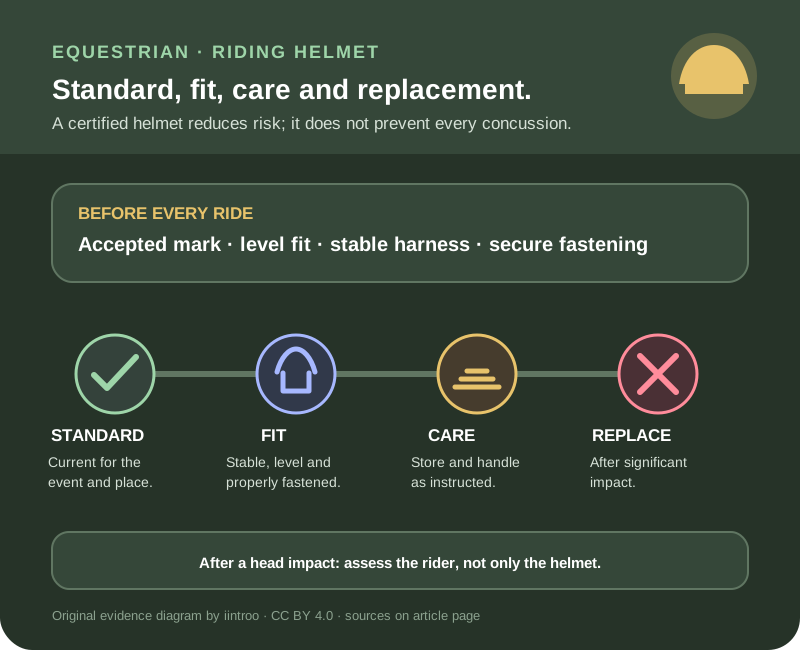
Key points
- The FEI's 2026 guidance requires accepted protective-headgear standards and stresses that fit and correct harness adjustment are essential to performance.
- A helmet that sustains a significant impact should be replaced even if no damage is visible because its ability to manage another impact may be reduced.
- Helmets can reduce severe head-injury risk but cannot prevent every concussion, so symptoms after a fall still require removal from riding and clinical assessment.
Treat the helmet as safety equipment, not a costume
This guide is for riders, families, coaches, riding schools and event organisers. Falls are the main mechanism behind equestrian head and spinal injuries. A protective helmet is one layer in a wider safety system that includes suitable instruction, horse-and-rider matching, safe facilities, event rules and an emergency plan. It cannot make riding risk-free.
Check the current rules for the discipline, federation, venue and country. The FEI publishes accepted testing standards and quality-assurance marks for competition. A familiar logo or an old approval label is not enough if the applicable list has changed, and a competition check does not replace day-to-day care of the helmet.
Fit and fastening determine whether protection stays in place
The FEI states that correct fit and retention-harness adjustment are essential and recommends trying a helmet on, ideally with qualified fitting support. The helmet should sit level, remain stable during normal head movement and fasten according to the manufacturer's instructions. Hair style, liners and seasonal headwear can alter fit, so recheck rather than assuming yesterday's setup still works.
Do not add unapproved padding, drill the shell or borrow a helmet merely because the labelled size looks right. Different head shapes can fit the same nominal size differently. Comfort matters because a helmet that causes pressure or movement is less likely to be worn consistently, but comfort alone does not prove certification or correct adjustment.
Replace after significant impact even without visible damage
The FEI recommends immediate replacement after a significant impact because the energy-absorbing structure may not perform adequately a second time. The British Horse Society similarly advises replacement after a fall, especially when the helmet contacts the ground. A smooth outer shell cannot confirm that the internal liner remains intact.
Follow the manufacturer and governing body's replacement instructions for drops, impacts, age and storage. The FEI gives a general three-to-five-year replacement range based on wear and frequency, but this is not permission to keep a damaged helmet until a date. Heat, chemicals, compression and careless transport can also degrade equipment; store it as the manufacturer directs.
Do not market a helmet as concussion-proof
A study of 216 helmets returned after real-world accidents found concussion in many reported head injuries, including cases without obvious helmet damage. That retrospective sample was dominated by jockey settings and cannot compare every design or prove causation, but it demonstrates why a helmet is not a concussion clearance device.
A 2024 survey of collegiate equestrians found no lower self-reported head-injury rate by brand or by one liner technology, and many riders did not plan to replace helmets after every fall. Survey recall, selection and brand comparisons limit that evidence. Choose an accepted, well-fitted helmet rather than relying on marketing claims that one feature eliminates concussion.
After a fall, assess the rider as well as the equipment
Stop riding after a suspected concussion or significant head impact and follow the event emergency plan. Worsening headache, repeated vomiting, seizure, increasing confusion, weakness, unequal pupils, severe neck pain or difficulty waking are emergency warning signs requiring urgent local medical care. A helmet inspection cannot determine whether the brain or spine is uninjured.
Return to riding depends on the clinical assessment, symptom recovery, balance, judgement, task demands and applicable rules. Replace the impacted helmet before return, document what happened and review the environment and supervision without blaming the rider. No online article can set an individual clearance date.