
Ringworm around horses: stop sharing tack and connect rider care with stable biosecurity
A circular rash or a horse with crusted hair loss may signal ringworm. Pause shared equipment, arrange human and veterinary advice, and clean deliberately.
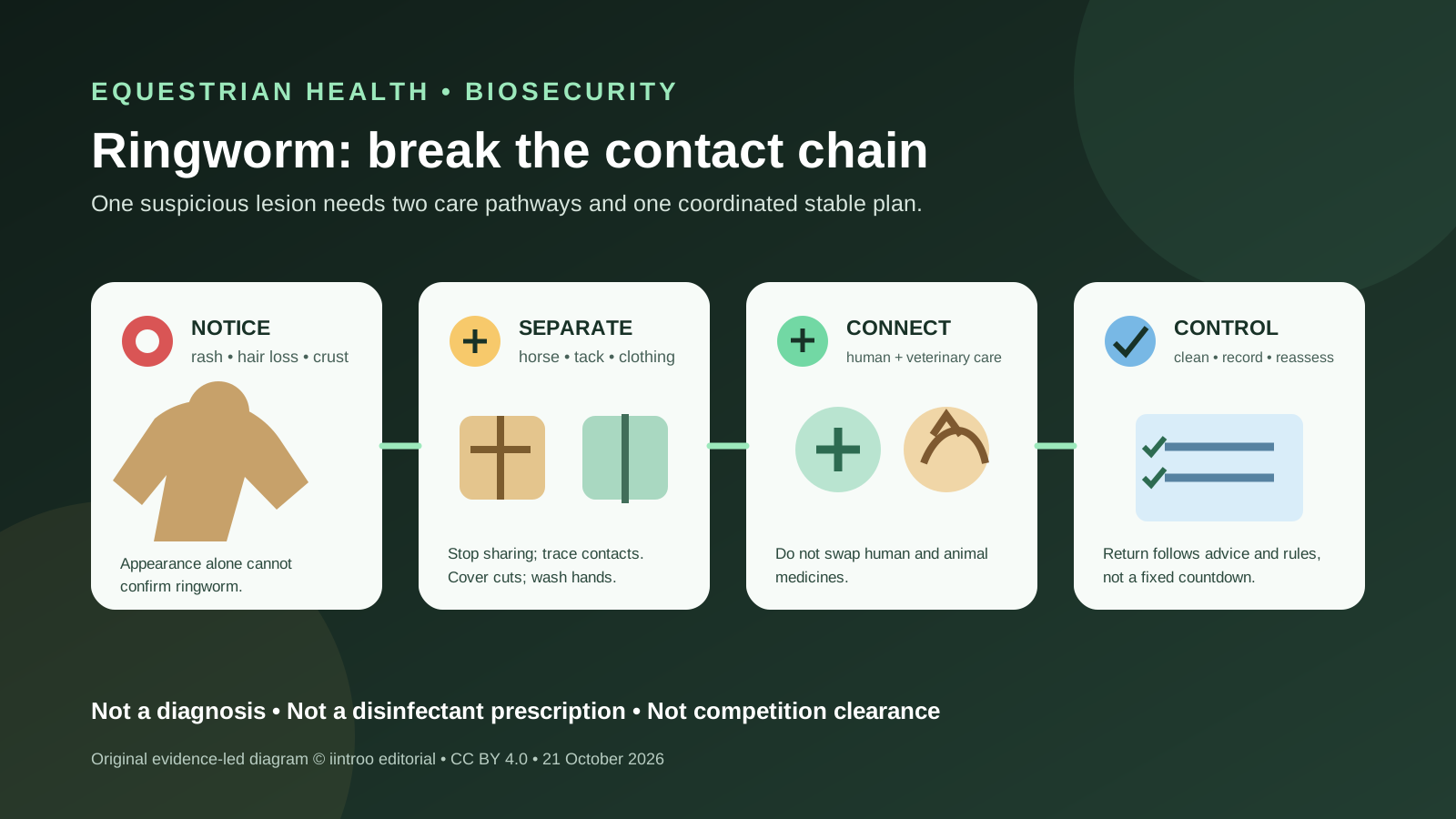
Key points
- Ringworm is a fungal infection, not a worm, and can pass through direct contact or contaminated equipment.
- A rash or a horse's hair-loss patch cannot be diagnosed reliably from appearance alone.
- Human treatment and veterinary control must be coordinated without sharing medicines or improvising disinfectants.
Recognise a shared-health problem without diagnosing it at the yard
This guide is for riders, grooms, coaches, parents, volunteers and event organisers. Ringworm is the everyday name for dermatophytosis, a fungal infection of skin and hair. It can affect people and horses and can spread by direct contact or through contaminated brushes, rugs, tack, clothing, bedding and surfaces. The name is misleading: no worm is involved.
In people, ringworm may appear as an itchy, scaly or ring-shaped rash. In horses it may produce circular areas of hair loss, broken hair or crusting. Those appearances overlap with other conditions, so a photograph is not a diagnosis. Cover a suspicious human lesion, avoid further direct skin contact and arrange appropriate medical or pharmacy advice; isolate a horse with suspicious lesions from shared equipment and ask a veterinarian to assess it.
Treat tack, clothing and hands as possible routes
The UK Health and Safety Executive notes that dermatophyte spores can persist for months and that people working at horse stables may be exposed through animals, bedding or equipment. A veterinary-school outbreak associated with one infected horse found that contaminated objects were the most likely route for three human cases, although person-to-person spread could not be ruled out. A small outbreak report describes possibility, not the frequency of transmission in every stable.
Stop moving grooming kits, saddlecloths, rugs, hats, towels and washable clothing between horses or riders until the stable plan is clear. Wash hands with soap and water after contact, cover cuts and abrasions, and change visibly contaminated clothing before entering another yard. Alcohol hand rub is not a substitute for removing dirt after animal handling. Do not share helmets simply to keep one rider competing if the lining cannot be managed according to the manufacturer's instructions.
Clean deliberately rather than spraying everything
Separate equipment first, remove hair and organic material, then clean and disinfect using a product, dilution, contact time and surface compatibility advised by the veterinarian, manufacturer and local authority. More chemical is not automatically safer: mixing products can create toxic gases, and soaking leather, helmet liners or protective materials may damage them. Porous items that cannot be cleaned may need to stay out of use or be discarded under professional advice.
Keep a record of affected horses, riders, equipment and locations so contacts can be traced. NSW event guidance treats ringworm as a contagious condition within a wider horse-event biosecurity plan. The stable should decide who controls movement, who contacts the veterinarian, where dedicated kit is stored and how cleaning is documented. A tidy-looking coat or one wiped saddle does not prove spores are gone.
Match the person to the right clinical pathway
A clinician or pharmacist can advise on a limited body rash under local guidance. Scalp involvement, widespread or worsening lesions, infection of nails, pregnancy, immune suppression, uncertainty about the diagnosis or failure to improve deserves medical assessment. Pain, pus, rapidly spreading redness, fever or feeling unwell may indicate another or additional problem and should not be managed as routine ringworm at the stable.
Do not use a horse's antifungal product on human skin, and do not put a rider's cream on the horse. Product concentrations, formulations and treatment plans differ, and steroid-containing creams can alter the appearance of fungal infection. A 2026 scoping review found gaps and inconsistencies between human and veterinary guidance on zoonotic dermatophytosis, reinforcing the need for coordinated professional advice rather than one shared household remedy.
Return when transmission controls and participation needs are addressed
There is no universal number of days away from riding that applies to every lesion, treatment, event rule and stable outbreak. Follow human healthcare advice, the treating veterinarian's plan and the organiser's current biosecurity rules. A rider who can cover a lesion still must not share contaminated clothing or equipment, while an affected horse may require isolation and veterinary clearance that cannot be inferred from the rider's treatment.
Youth and Para riders may need help with transfers, communication, skin inspection or dedicated adaptive tack. Provide that support without public identification or blame. Ringworm is common and treatable, but silence allows equipment and contacts to carry the problem farther. This article supports recognition and planning; it does not diagnose a rash, select a medicine, certify a disinfectant or clear a horse or rider for competition.