
Wrestling skin infections: report lesions before contact
Early reporting, hygiene, skin checks and medical clearance protect the affected wrestler, training partners and opponents better than simply covering a lesion.
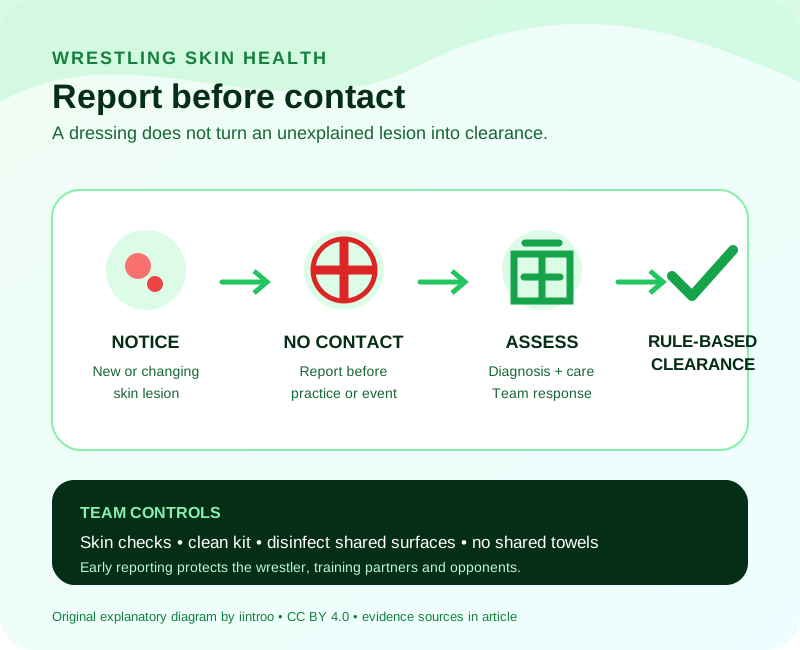
Key points
- A covered lesion is not automatically safe for contact.
- Do not share towels, razors, clothing or personal equipment.
- Diagnosis and return decisions must follow qualified medical assessment and current competition rules.
Who this guide is for
This guide is for wrestlers, coaches, parents and event teams responding to a new rash, sore, blister, crusted area or changing skin lesion. Wrestling combines close skin contact with shared mats and equipment, so a problem that looks small can affect a whole room. Visual similarity between bacterial, fungal and viral conditions makes self-diagnosis unreliable.
Stop skin-to-skin training and report the lesion before practice or weigh-in. Seek assessment from a healthcare professional familiar with wrestling skin conditions. Fever, rapidly spreading redness, severe pain, drainage, red streaks or feeling systemically unwell needs prompt medical care.
Sources: 1
Prevention needs more than mat cleaning
The 2025 UWW guidance describes a programme combining athlete education, routine skin checks, personal hygiene, mat and equipment disinfection, clean clothing and access to qualified care. CDC likewise advises athletes not to share towels, razors, washcloths, clothing or other personal items and to keep cuts and wounds clean and covered.
Shower after training, launder kit after use and follow the product instructions for approved surface cleaning. Cleaning cannot compensate for an athlete continuing contact with an unexplained lesion. Teams also need a confidential way to report concerns without punishment or embarrassment.
Evidence shows variation, not one prevalence
A review of contact-sport infections describes bacterial, viral and fungal conditions as important causes of missed participation. A tinea gladiatorum systematic review included 13 studies, 4,818 wrestlers and 391 mat samples from Turkey, Iran and the United States.
Reported wrestler prevalence ranged from 2.4% to 90.62%, with extreme statistical heterogeneity. That spread reflects different populations and methods; the pooled estimate should not be treated as the expected risk in one club. The evidence supports surveillance and prevention, not diagnosing a lesion from a photograph or assuming the mat is always the source.
Covering does not create clearance
UWW provides condition-specific return guidance and a standard medical-release process because contagiousness depends on the diagnosis, treatment and lesion status. A dressing can protect some non-contagious areas, but it does not make an infectious lesion safe or replace event medical authority.
Do not borrow a treatment interval from another condition or competition. The treating professional and current federation or event rules determine eligibility. This article deliberately does not reproduce medication doses, treatment durations or clearance cut-offs for self-use.
Sources: 1
Respond as a team
If a case is suspected, identify recent close-contact sessions, clean shared areas and equipment according to the venue protocol, and help exposed athletes monitor their skin. Do not share medicines or start preventive antibiotics without medical direction. Unnecessary antibiotic use can cause harm and contribute to resistance.
Record when the lesion appeared, how it changed and which sessions involved contact. Early, non-stigmatising reporting supports faster assessment and limits disruption. The goal is safe care and transmission control—not hiding a skin problem to preserve a lineup.