
Esports sleep: manage late training without blaming every screen
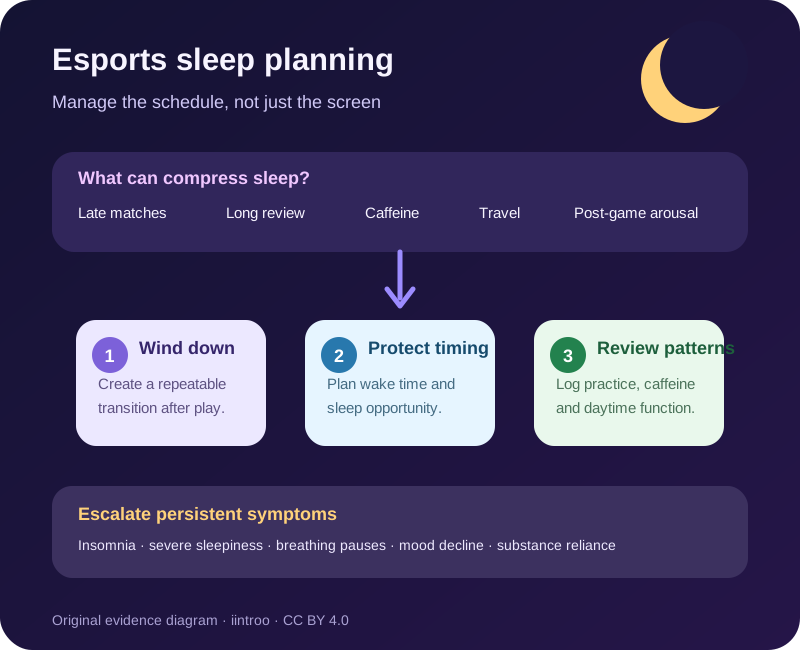
Late matches, long practice blocks, caffeine, travel and post-game arousal can compress sleep. Use schedule data and a team wind-down plan instead of assuming one universal bedtime or relying on a tracker score.
Key points
- Small esports studies report late sleep timing and short sleep in some professional players, but they cannot establish one profile for every game, team or country.
- A 2026 seven-night study found poorer subjective sleep after gameplay ended one to two hours before bed, but the sample was small and observational, so timing is a planning signal rather than proof of causation.
- Persistent insomnia, loud snoring or breathing pauses, severe daytime sleepiness, mood deterioration or reliance on substances to sleep or stay awake deserves professional assessment.
Start with the schedule, not a stereotype
This guide is for esports players, coaches, team managers, parents and event organisers. Competitive gaming can involve evening matches, international time zones, long review sessions and a stimulating performance environment. Those conditions can compress or delay sleep, but 'gaming ruins sleep' is too broad to explain an individual player's pattern.
A 2026 meta-analysis found no significant overall difference in sleep duration between esports participants and non-participants in its initial pooled analysis. The authors stressed heterogeneity, mostly cross-sectional designs and moderate risk of bias. Some teams and individuals have meaningful problems; the evidence does not justify labelling every esports player as unhealthy.
Read small objective studies as signals, not universal rules
A 2026 study followed 24 esports athletes for about seven nights, producing 187 valid nights of actigraphy and diary data. Average sleep was about six hours and 42 minutes. On nights when gameplay ended one to two hours before bed, participants reported poorer sleep quality than on nights without gameplay. Because exposure was not randomly assigned, stress, match importance, caffeine and other factors may also explain the association.
An earlier multinational pilot involved 17 male professional first-person-shooter players and found a median sleep onset near 03:43 and median sleep duration of 6.8 hours. The sample was tiny, all male and spread across three countries. It demonstrates that delayed patterns can occur in professional teams, not that all players need the same bedtime or that a late chronotype is itself a disorder.
Build a repeatable downshift after late play
When training must finish late, reserve a predictable transition between high-arousal play and attempted sleep. Move tactical debriefs, emotionally charged review and non-essential ranked play earlier when possible. Use lower light, ordinary off-screen routines and a quiet sleep environment during the final part of the evening. The useful intervention is a workable team schedule, not a ban on all technology.
Caffeine and energy drinks can extend alertness beyond the match. Record dose and timing rather than relying on memory, and review late use with a sports dietitian or clinician. Alcohol or unprescribed sedatives are not recovery tools. Travel, school or work, pain, anxiety and competition pressure should be included in the same discussion.
Monitor patterns without turning sleep into another ranking
For two weeks, a simple log can track practice end, match importance, caffeine, attempted sleep, wake time and daytime sleepiness. Compare clusters of nights rather than reacting to one poor score. Consumer wearables can estimate patterns but are not diagnostic instruments and may misclassify quiet wakefulness as sleep.
The athlete sleep consensus recommends individual assessment because needs vary with age, training load, travel and health. A consistent wake time and sufficient sleep opportunity may be more practical starting points than chasing one perfect duration. Coaches should avoid using private sleep data for selection, punishment or public comparison.
Escalate persistent symptoms and protect younger players
Persistent difficulty falling or staying asleep, severe daytime sleepiness, loud snoring or witnessed breathing pauses, worsening mood, panic, or growing dependence on stimulants or sedatives warrants assessment by a qualified health professional. Sudden inability to stay awake while driving or another safety-critical task requires immediate action and no further driving.
For adolescents, late competition must be considered alongside school start times, growth and family responsibilities. Teams can publish finish-time expectations, cap optional late practice, schedule recovery after international events and provide confidential access to support. Better sleep planning is a health and performance process, not a promise that one routine will win more matches.