
Exercise muscle cramps: why more salt or magnesium is not a universal fix
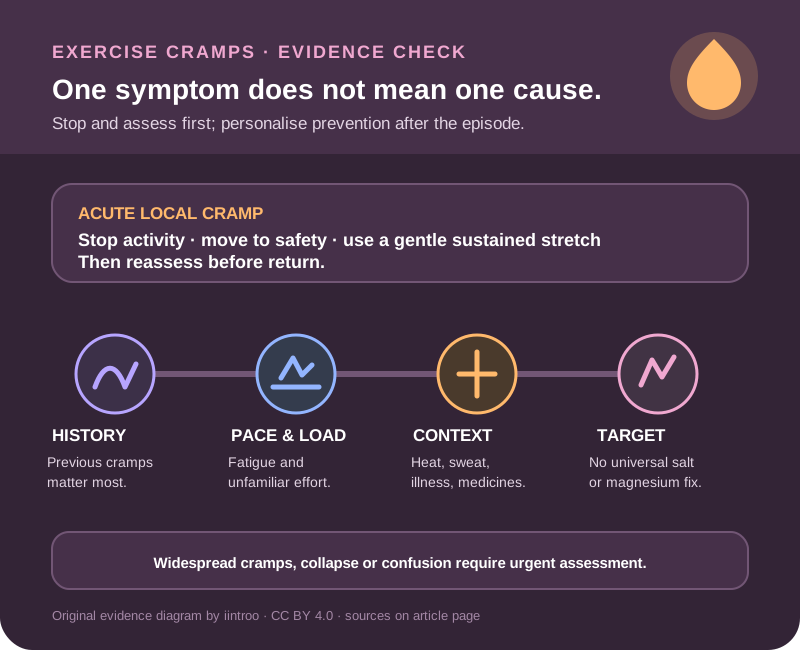
Exercise-associated cramps have multiple possible contributors. Stop, protect the athlete and use gentle stretching for an acute local cramp; then review pace, fatigue, prior history, heat and individual fluid needs instead of prescribing the same supplement to everyone.
Key points
- A prior history of exercise-associated cramps is the most consistent risk factor in a 2026 systematic review; hydration and blood-electrolyte measures were not consistently associated.
- Gentle static stretching remains a reasonable immediate response for a local exercise-associated cramp, followed by review of individual contributors.
- Magnesium has not been adequately tested for exercise-associated cramps, and evidence from other cramp populations should not be marketed as proof for athletes.
Start by identifying the event, not assuming the cause
This guide is for athletes, coaches, event staff and families. An exercise-associated muscle cramp is a painful involuntary contraction during or shortly after activity. A local cramp in a fatigued working muscle is different from widespread cramping with collapse, confusion, severe heat illness, marked weakness or another systemic problem. The latter requires urgent medical assessment and the event emergency plan.
Mechanisms remain debated and may differ between athletes and episodes. Fatigue-related neuromuscular changes, unusual pace or load, heat, illness, medication, fluid and sodium balance can interact. A single visible sign such as heavy sweating does not prove that sodium loss caused the cramp.
Use the newest risk review without overclaiming
A 2026 systematic review and meta-analysis found that previous cramping was the only factor consistently associated with another episode. Measures of body-mass change, blood sodium and most other electrolyte markers were not consistently associated. Studies varied in design, sport, measurement and timing, so absence of a consistent association does not prove fluids and electrolytes never matter.
Record the context: prior episodes, distance and intensity, recent training, environmental heat, illness, medication, food and fluid intake, and whether the athlete exceeded familiar pace or duration. This history supports an individual plan; it is not a formula that predicts the next cramp.
Respond to a local cramp safely
Stop the provoking activity and move to a safe place. Gentle, sustained static stretching of the affected muscle can be self-applied or guided by an appropriately trained responder until the contraction eases. Do not force a painful joint position, use aggressive massage on a suspected injury or send the athlete straight back into maximal effort.
Assess for heat illness, injury and other warning signs before return. If cramping is severe, widespread, recurrent without a clear exercise trigger, accompanied by dark urine, persistent weakness, chest symptoms, confusion or collapse, seek qualified medical care. Those features cannot be managed as a simple sideline cramp.
Match fluids and electrolytes to actual need
The Australian Institute of Sport notes that electrolyte products can be useful when replacing large, prolonged or salty sweat losses, but also calls cramp prevention with sodium contentious. More sodium does not compensate for drinking far beyond sweat losses, and overdrinking can contribute to dangerous exercise-associated hyponatraemia.
A practical plan considers duration, environment, access to drinks, previous response and estimated losses, ideally with a sports dietitian or clinician when needs are complex. Do not copy a team-mate's dose, concentrate products beyond directions or treat thirst, cramp and hydration as interchangeable diagnoses.
Be sceptical of a universal magnesium cure
The 2020 Cochrane review found magnesium unlikely to provide meaningful prevention for idiopathic cramps in older adults, while evidence in pregnancy was uncertain. Crucially, it found no randomised trials that establish benefit for exercise-associated cramps. Results from different cramp populations cannot be converted into an athlete guarantee.
Magnesium deficiency or another medical condition requires individual assessment rather than supplement marketing. Supplements can cause gastrointestinal effects, interact with medication or carry contamination risk. Prevention should first address the athlete's pattern, preparation, pacing and recovery, with supplements used only for a justified purpose and checked against anti-doping and clinical requirements.