
Exertional rhabdomyolysis: when muscle pain after training is not normal soreness
Severe muscle pain, swelling, weakness or dark urine after hard exercise can signal exertional rhabdomyolysis. Treat it as urgent, not ordinary soreness.
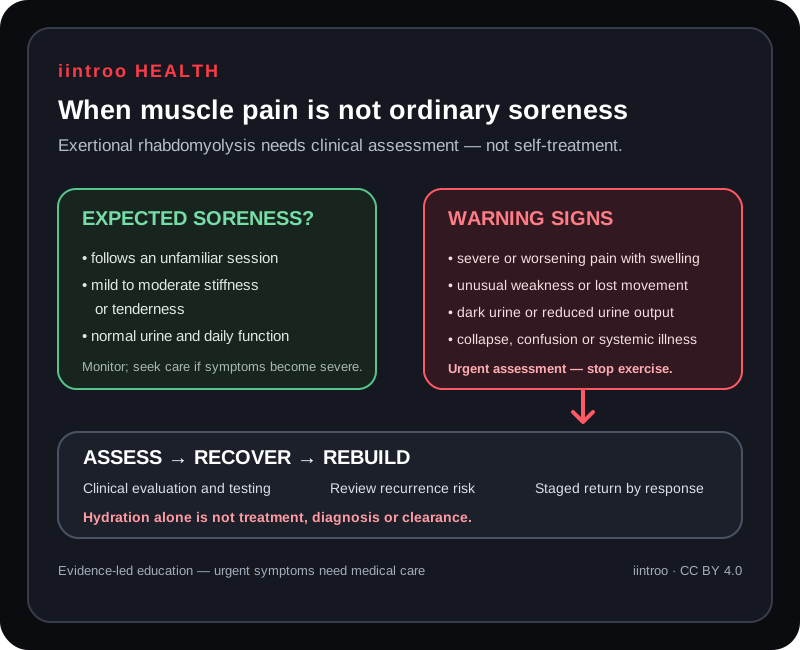
Key points
- Severe or disproportionate muscle pain, swelling, weakness or dark urine after exercise requires urgent medical assessment.
- Diagnosis cannot be made from soreness, urine colour or a creatine-kinase number without clinical context and appropriate testing.
- Return to training follows medical recovery, recurrence-risk review and a gradual rebuild; hydration alone is not a clearance test.
Know when soreness has crossed a warning line
This guide is for athletes, coaches, event staff and health teams. Delayed-onset muscle soreness is common after unfamiliar exercise, but severe or worsening pain, marked swelling, unusual weakness, reduced movement or dark brown urine after hard exercise can signal exertional rhabdomyolysis. Symptoms may occur with or without heat stress.
Rhabdomyolysis involves muscle-cell breakdown and release of intracellular contents; complications can include kidney injury and dangerous electrolyte disturbance. A 2023 systematic review included 25 studies and 772 patients, but cases, sports and reporting varied. Its average laboratory values do not provide a safe self-diagnosis threshold.
Escalate early instead of trying to drink through it
Severe symptoms, dark urine, reduced urine output, collapse, confusion, breathing difficulty, chest symptoms or rapidly increasing swelling require urgent medical assessment. Activate the venue emergency plan and give responders the exercise history, timing, heat exposure, illness, medicines, supplements and any known sickle cell trait or metabolic condition.
Do not send an affected athlete back into training or rely on water, stretching, massage or a sports drink as treatment. Clinicians decide the examination, blood and urine tests, fluid strategy and whether hospital monitoring is needed. Excessive unsupervised fluid intake can also cause harm.
Look for the transition that raised demand
Cases often follow an abrupt mismatch between recent preparation and exercise demand: a first session after inactivity, high-volume eccentric work, repeated all-out efforts, punitive conditioning or training in heat. Illness, dehydration, medicines, supplements, substance use and individual susceptibility may alter risk, but none proves the diagnosis by itself.
The CSCCa and NSCA transition guidance focuses on the first weeks after inactivity because conditioning errors can cluster there. Coaches can plan progressive volume, intensity and work-to-rest ratios, provide acclimatisation and recovery, and prohibit exercise as punishment. These controls reduce avoidable spikes but cannot guarantee prevention.
Diagnosis and recurrence risk belong with clinicians
Creatine kinase can rise after demanding exercise without clinical rhabdomyolysis, and urine may look normal in some cases. Interpretation depends on symptoms, examination, kidney function, electrolytes, urine findings, exercise history and change over time. A single laboratory number copied from another athlete is not a clearance standard.
Clinical review also considers prolonged symptoms, recurrent episodes, an event after modest exercise, relevant family history, medicines and possible metabolic or genetic contributors. Most athletes do not need every specialised test, while some need further evaluation before resuming intense training.
Return only after recovery, then rebuild in stages
Return follows resolution of the acute illness and clinician review of symptoms, examination and relevant laboratory results. A staged plan may move from daily activity and light aerobic work to controlled strength training, sport-specific practice and normal training density, with monitoring after each step. The pace is individual.
Stop and seek review if pain, swelling, weakness, dark urine or systemic symptoms return. A published four-phase programme described one cluster of collegiate football players and can illustrate principles, but it is not a universal prescription. This article does not diagnose rhabdomyolysis, prescribe fluids or set a return date.