
Fabry disease in sport: plan for heat, pain and changing heart or kidney risk
Fabry disease can affect sweating, pain, exercise capacity, the heart and kidneys. Training should follow current organ assessment, symptoms and recovery.
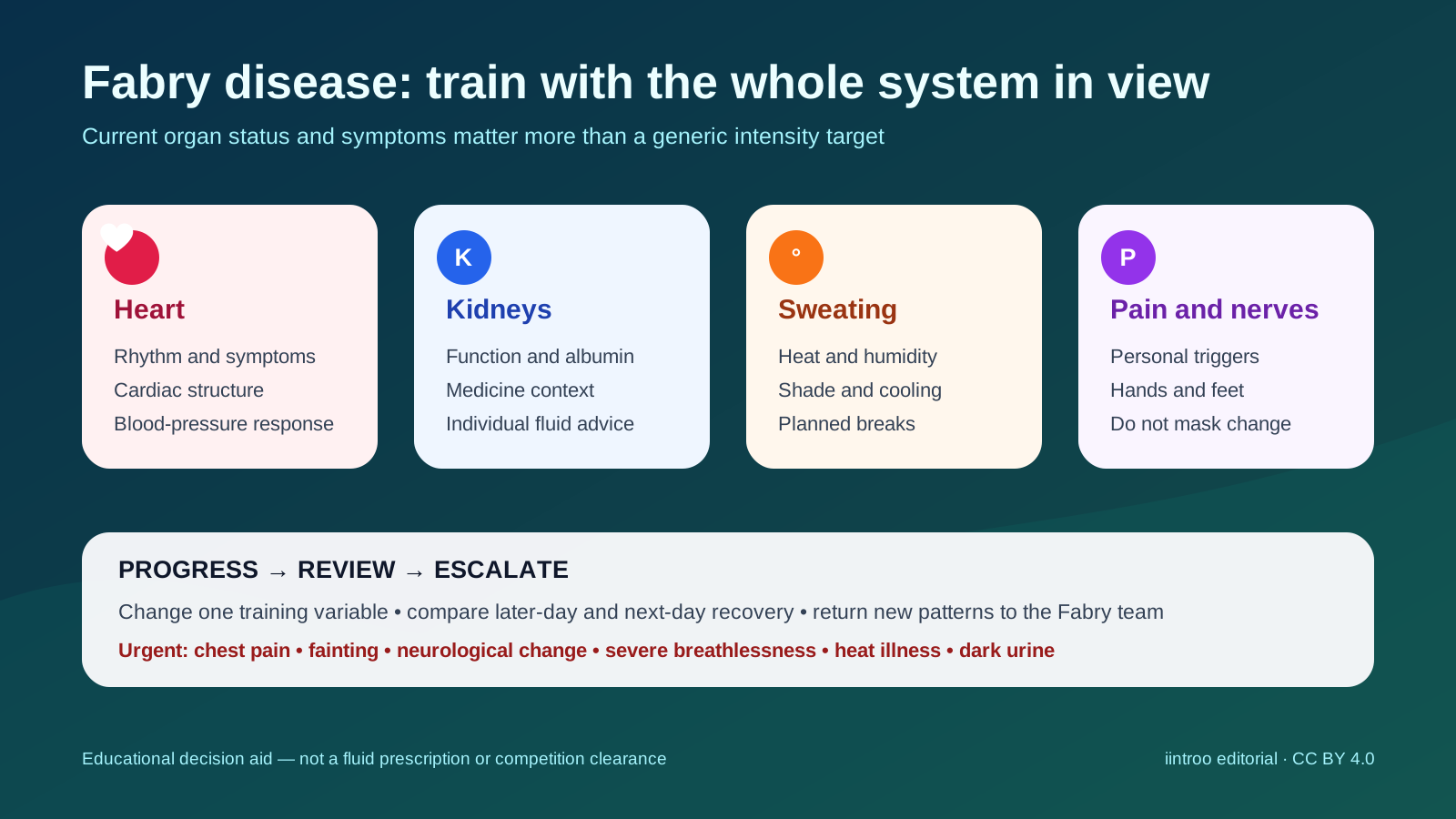
Key points
- Fabry disease is multisystem and expression varies, including among women; a genetic result or enzyme value alone does not define exercise capacity.
- Preserved functional capacity can support recreational activity, but intense competition needs individualized review when cardiac, renal or cerebrovascular disease is present.
- Exertional chest pain, fainting, new palpitations, severe breathlessness, neurological deficit, heat illness or dark urine needs prompt assessment.
Treat Fabry disease as a changing multisystem context
This guide is for people with diagnosed Fabry disease, families, coaches and clinical teams. Fabry disease is an X-linked lysosomal disorder caused by pathogenic GLA variants and reduced alpha-galactosidase A activity. Glycosphingolipid accumulation can affect peripheral nerves, sweating, the gastrointestinal system, kidneys, heart and brain. Classic and later-onset phenotypes differ, and women can have substantial disease because X-chromosome inactivation is variable. A family history, treatment status or laboratory marker does not by itself predict today's safe workload.
Current assessment may include symptoms, blood pressure, electrocardiography, rhythm monitoring, echocardiography or cardiac MRI, kidney function and urine albumin, neurological history and treatment review. Cardiopulmonary exercise testing can help clinicians investigate limitation and blood-pressure or heart-rate responses when appropriate. Coaches should not interpret fibrosis, left-ventricular wall thickness, estimated filtration rate or enzyme-replacement response. The useful question is how the athlete's current organ status and symptoms change the demands of this specific sport and environment.
Keep exercise evidence proportionate
The cardiovascular consensus says people with preserved functional capacity should not be discouraged from recreational sport, while advising against intense competition. That recommendation is not a blanket prohibition or clearance. It reflects concern that cardiomyopathy, myocardial fibrosis, arrhythmia, conduction disease, blood-pressure abnormalities or previous stroke can change risk. Kidney disease, anaemia, neuropathic pain, reduced sweating and skeletal-muscle factors may also limit performance, so unexplained slowing should not automatically be trained through.
Intervention evidence is small. A 12-month pilot involved 14 adults and reported improved cycle performance and wellbeing, but it had no large control group and cannot supply a standard programme. A 2024 review found plausible cardiac, pulmonary, muscle and neurological contributors while calling exercise a potential adjunct, not disease-modifying therapy. A 2026 study of 88 people with classic Fabry disease linked reduced capacity with early lactate accumulation, cardiac geometry and atrial function. Associations from one cohort do not prove that training will reverse those mechanisms.
Design for heat, pain and recovery
Reduced sweating can make hot or humid exercise difficult, while burning pain in the hands and feet may be triggered by heat, cold, fever, stress or exertion. Use the individual's history and clinical advice to choose cooler times, shade, ventilation, appropriate clothing and planned breaks. Measure environmental conditions when possible and preserve access to fluids, but do not prescribe a universal volume or electrolyte product. Kidney function, medicines and cardiac status can all change fluid advice; aggressive drinking can be harmful in some clinical contexts.
Progress duration, intensity or resistance one variable at a time and compare symptoms during the session, later that day and the next morning. Record pain, unusual fatigue, palpitations, dizziness, breathlessness, swelling, urine change and recovery, not only pace and heart rate. Wearables can miss arrhythmia and cannot assess kidney injury or heat illness. Avoid using analgesics or supplements to mask a recurrent pattern. When symptoms change after a treatment infusion, infection, travel or medication adjustment, return the observation to the Fabry team rather than improvising a training solution.
Stop for organ warning signs and return by assessment
Stop exercise and seek urgent assessment for chest pain, fainting, sustained or new palpitations with symptoms, severe or rapidly worsening breathlessness, a new one-sided weakness or speech change, confusion, collapse or signs of heat stroke. Severe muscle pain with weakness or dark urine, sharply reduced urine, or rapidly increasing swelling also needs prompt evaluation. A normal smartwatch trace, single blood-pressure reading or symptom improvement after rest does not rule out cardiac, neurological, renal or heat-related illness.
After an acute event or a material change in cardiac, kidney or neurological findings, return through stable daily activity, easy conditioning and then sport-specific work with the responsible clinicians. There is no universal ejection fraction, filtration value, pain score or symptom-free interval that clears every athlete. This article cannot diagnose Fabry disease, interpret genetic or organ tests, prescribe fluids or exercise, change disease-specific therapy, or clear competition. It offers a framework that keeps meaningful activity connected to longitudinal multisystem care.