
Fencing lower-limb injury: record lunge load before prescribing fixes
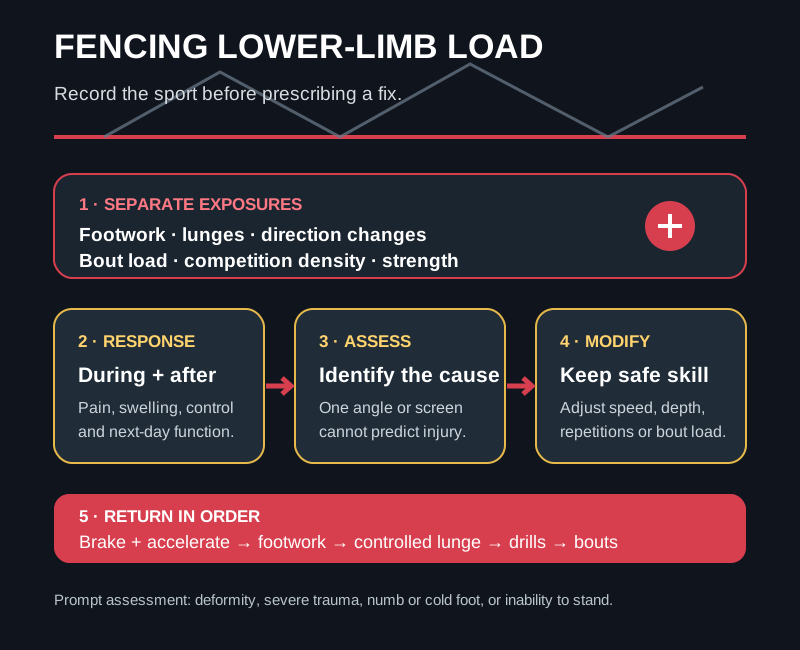
The lunge is fast, asymmetric and repeated, but one screen or movement angle cannot predict injury. Track weapon-specific exposure, respond to pain early and rebuild fencing tasks progressively.
Key points
- Prospective competition studies report a low rate of time-loss injury, while the injuries that do occur are commonly lower-limb sprains and strains.
- A 2025 systematic review rated the evidence for many fencing injury factors from very low to moderate quality.
- Return to fencing should rebuild footwork, lunges, weapon-specific actions and bout demands rather than follow a universal number of rest days.
Separate competition incidence from the athlete's daily load
This guide is for fencers, coaches, parents and health teams across foil, épée, sabre and wheelchair fencing. A five-year analysis of 809 international competitions recorded 176 time-loss injuries across 637,776 athlete exposures, an incidence of 0.28 per 1,000 exposures. Most were lower-limb sprains or strains. That low competition rate does not mean training pain should be ignored.
The 2025 systematic review included 19 studies and judged their methodological quality from very low to moderate. Reported prevalence varied widely because studies counted different problems, populations and time periods. Use the evidence to identify questions—not to tell an individual fencer that injury is inevitable or impossible.
Record what the legs are actually doing
Fencing combines repeated advances, retreats, lunges, sudden stops and asymmetrical positions. A useful training record separates footwork volume, high-intensity lunges, change-of-direction drills, bout minutes, competition density, strength work and a recent change of weapon or stance. Note which leg is symptomatic and how the response changes during the session and over the following day.
Biomechanics research has concentrated mainly on experienced male foil fencers and the lunge. The scoping review rated the overall evidence as fair and highlighted limited scope. Movement data can inform coaching, but one angle, balance score or functional screen does not validate a universal injury-prediction rule.
Modify exposure without erasing the sport
When symptoms emerge, a coach and clinician can adjust lunge depth, speed, repetition, footwork distance, bout volume or strength load while preserving safe technical practice. The correct choice depends on the suspected problem and examination. A generic corrective-exercise list cannot distinguish an ankle sprain, tendon complaint, bone stress injury or referred pain.
Warm-up can progress from general temperature and movement preparation into weapon-specific footwork and controlled lunges. Surface grip, footwear condition and piste setup also belong in the conversation. Evidence does not support claiming that a single warm-up, screen or strength exercise prevents every fencing injury.
Assessment matters when function changes
Pain that changes stance, push-off, landing or direction change; recurrent giving way; swelling; inability to bear weight; or symptoms that persist despite reduced exposure warrant assessment by an appropriately qualified clinician. Deformity, severe pain after trauma, a cold or numb foot, or inability to stand needs prompt medical evaluation through the event plan.
The FIE Medical Handbook describes medical planning and duty-of-care requirements for major competitions. It is an event-coverage document, not a rehabilitation protocol. Local clubs still need a clear route for first aid, referral, medical records and communication with minors' caregivers.
Return through footwork, then fencing pressure
Return is a shared decision based on the diagnosis, daily function, clinical findings and response to progressively demanding tasks. Rebuild acceleration and braking, advances and retreats, controlled lunges, weapon-specific drills and bout sequences before competition becomes the first full test. Fatigue and opponent unpredictability should be introduced deliberately.
Published studies describe group patterns; they do not supply a single safe return date. Record symptoms during and after progression, and agree who can stop or modify the session. Clearance should not be inferred from a normal-looking lunge on video alone.