
Fencing protective equipment: inspect every layer before the bout
A mask, jacket, plastron, glove and weapon work as one safety system. Current rules, careful checks and prompt injury response matter at every level.
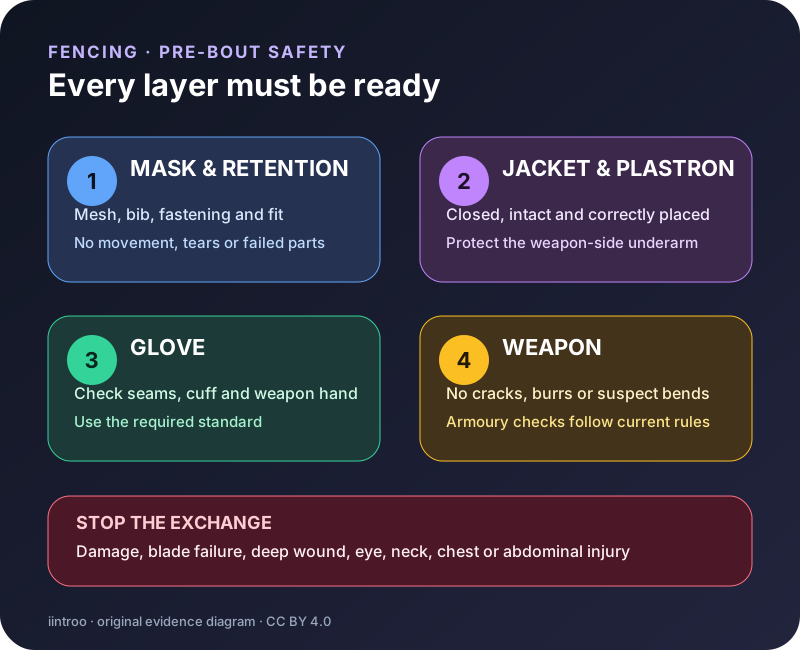
Key points
- FIE rules require compliant protective clothing during official training and competition, but explicitly state that equipment cannot guarantee safety.
- Recent surveillance finds strains and sprains are more common than penetrating trauma; rare lacerations and punctures still justify strict equipment checks.
- Damaged clothing, a failed mask fastening, an unsafe glove or a suspect blade should end the exchange before medical or armoury assessment.
Treat protection as a connected system
This guide is for fencers, coaches, parents, referees, armourers and event medical teams. The current FIE material rules describe equipment and clothing as a protective system that must permit movement while reducing avoidable injury. The technical rules require full compliant clothing for partnered warm-up and training at an official FIE venue, not only once the bout begins.
A mask, retention system, jacket, breeches, long socks, underarm plastron, glove, weapon and body cord each cover a different failure route. One certified item does not compensate for a torn seam, poor fit or damaged component elsewhere. Domestic and age-grade rules may add requirements, so check the applicable federation documents rather than relying on an old kit list.
Keep the injury evidence in proportion
A 2026 analysis of US emergency-department data estimated 5.72 fencing injuries per 1,000 athlete-years; sprains and strains were the largest category, while lacerations formed 16.8% and fingers were the most common location. The database captures only injuries that reached an emergency department and cannot measure every bout, club practice or equipment condition.
A 2025 systematic review found wide variation in reported injury frequency and very low to moderate study quality. Penetrating injuries are uncommon but can be severe. A case-based prevention project identified sabre-glove vulnerability and supported a stronger glove standard; it demonstrates how a specific hazard prompted a rule change, not that every modern glove eliminates risk.
Make the pre-bout check routine
Before fencing, inspect the mask mesh, bib, fastening and retention devices; close the jacket fully; confirm that the underarm plastron sits on the correct side; check the glove, especially where blade contact can occur; and examine the weapon for bends, cracks, burrs or other damage under the federation's armoury process. Clothing should be clean, intact and correctly sized rather than stretched across openings.
Stop immediately when a blade breaks, a mask shifts, a fastening fails or clothing tears. Do not straighten, tape or conceal a suspect component simply to finish the pool. Club equipment also needs a documented inspection and retirement process. The precise test belongs to trained armourers and current rules; a visual glance by a teammate is not homologation.
Respond to an injury before resetting the score
A puncture, deep cut, uncontrolled bleeding, eye or neck injury, chest or abdominal penetration, breathing difficulty, fainting, new weakness or altered sensation needs the event emergency plan and prompt medical care. Leave an embedded object in place for trained responders, keep the athlete still and do not let competition urgency turn a serious wound into a walk-off injury.
Smaller wounds also need removal from play, cleaning and clinical assessment when deep, contaminated, numb, function-limiting or involving a joint, tendon or nail. Tetanus status and infection risk are clinical questions. This article does not teach wound closure or declare that a fencer is safe because bleeding has stopped.
Return follows the injury and the equipment fix
After an injury, return depends on diagnosis, wound healing, pain, movement, strength, grip, weapon control and the ability to fence safely in full kit. A clinician may need to coordinate with the coach and armourer so that the cause of the incident and the athlete's recovery are both addressed. There is no universal number of days for a cut, fracture or tendon injury.
Document the damaged item and circumstances, preserve it when an investigation is required and report through the relevant event or federation process. Prevention is strongest when medical, coaching and equipment information meet; replacing one part without understanding the failure can leave the same hazard in the next bout.