
Field hockey hand injuries: protection needs fit, skill and prompt assessment
A glove may reduce impact exposure but cannot make the hand invulnerable. Choose permitted protection that preserves grip, train safer stick position and assess deformity or lost function early.
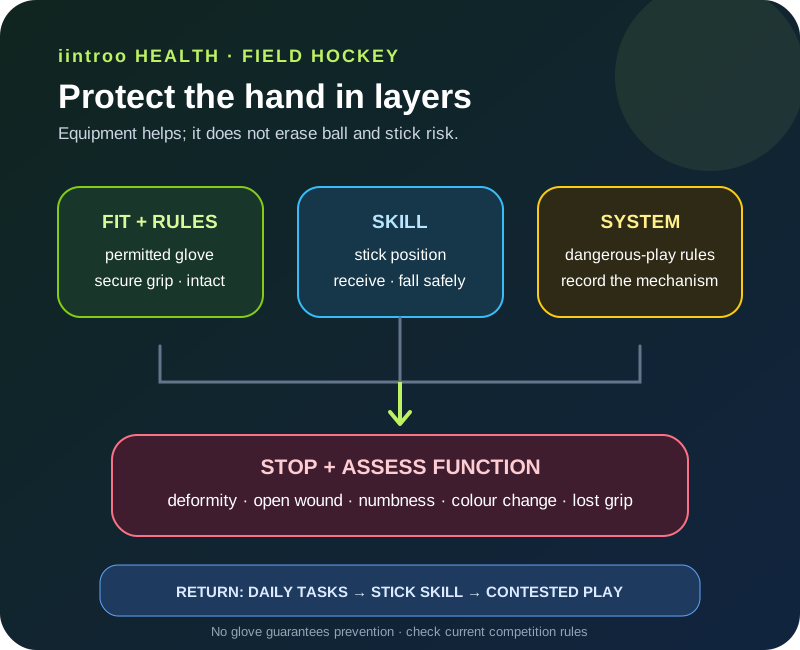
Key points
- Field hockey exposes hands to balls, sticks and the turf; older surveillance found more hand and finger injuries in ungloved collegiate field-hockey players than in selected gloved stick sports, but it does not prove one glove prevents every injury.
- Current FIH rules and competition requirements define permitted equipment. Protection must fit, remain intact and preserve safe grip and stick control without creating a hazard to others.
- A deformed finger, open wound, marked swelling, numbness, colour change or inability to grip needs prompt assessment rather than tape and immediate return.
Understand the exposure without inventing a risk number
This guide is for field-hockey players, families, coaches, officials and health teams. Hands can be struck by the ball or another stick, trapped during a fall or cut by turf and equipment. A systematic review found considerable variation in injury definitions and rates, so one study cannot predict an individual player's risk or a safe position for every phase of play.
A 16-year collegiate surveillance analysis reported higher odds of hand, finger and related fracture injuries in ungloved field-hockey athletes than in selected gloved stick sports. It was observational, involved historical US collegiate data and did not test a specific modern hockey glove. Treat it as a reason to improve protection and surveillance, not proof of guaranteed prevention.
Choose protection inside the current rules
Check the FIH edition, national association and competition regulations that apply to the event. Field-player gloves, goalkeeper hand protectors and penalty-corner equipment have different functions and requirements. A product marketed for another sport is not automatically permitted or suitable for hockey.
Protection should fit securely, cover the intended area, remain intact and allow a safe grip and controlled release of the stick. Replace damaged or compressed equipment according to manufacturer guidance. Test new protection in supervised practice before competition; do not modify it in a way that could catch the stick or endanger another player.
Train the situation as well as the equipment
Coaching can address stick and hand position, receiving technique, safe falling, awareness in congested play and lawful management of aerial or fast balls. Goalkeepers need position-specific practice in full equipment. Officials and coaches also control avoidable exposure by enforcing dangerous-play rules and stopping damaged equipment from being used.
A glove is one layer, not permission to place the hand in the path of a ball or stick. Teams should record the mechanism and activity for every hand injury. Recent FIH tournament surveillance shows why consistent, severity-aware recording matters, but tournament data cannot replace local training and match exposure records.
Stop and assess loss of hand function
Remove rings and stop play after a significant impact. Deformity, an open wound, rapidly increasing swelling, marked tenderness, inability to move or grip, numbness, a cold or pale digit, or blood under the nail with severe pressure needs prompt clinical assessment. Do not straighten a suspected fracture or dislocation on the sideline unless an appropriately trained clinician is responsible.
Milder pain can still conceal fracture, tendon or ligament injury. Tape may support a diagnosed problem, but it should not be used to hide function loss or delay assessment. Skin breaks also need cleaning and coverage under the event's first-aid procedures.
Return from daily tasks to contested play
Return depends on the diagnosis and may rebuild wound healing, range, grip, strength, stick handling, receiving, tackling and then contact or high-speed ball exposure. The athlete should be able to use permitted protection without compensating or losing stick control. A calendar date alone does not establish readiness.
This article provides general education. It does not diagnose a hand injury, recommend one glove model or guarantee prevention. Persistent or function-limiting symptoms need qualified assessment, and current competition rules should always be checked directly.